An oil to meet the VAG norms.
The cost to do this is very high. This research all started because
soemoene was looking at buying Motul oil for his RS4 and I had heard
rumours that the 8100 E-Tech 0W40 was being discontinued (it is). It is
replaced by a better oil (hard to believe), the 8100 X-Lite 0W30. Please
read on for all the info...
First let me explain that for
every formula that Motul wants to get certified and pass the tests to
meet a VAG standard it as to be tested by VAG on that particular motor. I
assume this is the case for all car manufacturers too.
Multiply
every formula by each standard and multiply it again by the each
manufacturer. You can see this adds up quickly to very big amounts of
money for the oil manufacturing company.
In the case of Motul every time they get a
letter of approval for a formula/blend it cost them
2680 Euros. The letter is renewed every
3 years.
However, this is chicken feed because when you consider that before
they get the renewal letter with the same approval they earned 3 years
prior they have to completely re do the actual testing on the motor.
Recently they got and oil approved by VAG to meet their VW 505.01 standard, the cost for that formula alone was
250,000 Euros! And they will have to repeat it in 3 years.
OK,
so let's talk about the new X-Lite 0W30 that replaces the E-Tech 0W40.
These oils are 100% synthetic and are Ester based. Because of the more
stringent pollutions norms coming into effect in Europe, Motul decided
to improve the 0W40 by replacing it with the new 0W30. You will see by
the graphs (provided to me by Motul) where it falls within the whole
scheme of things.
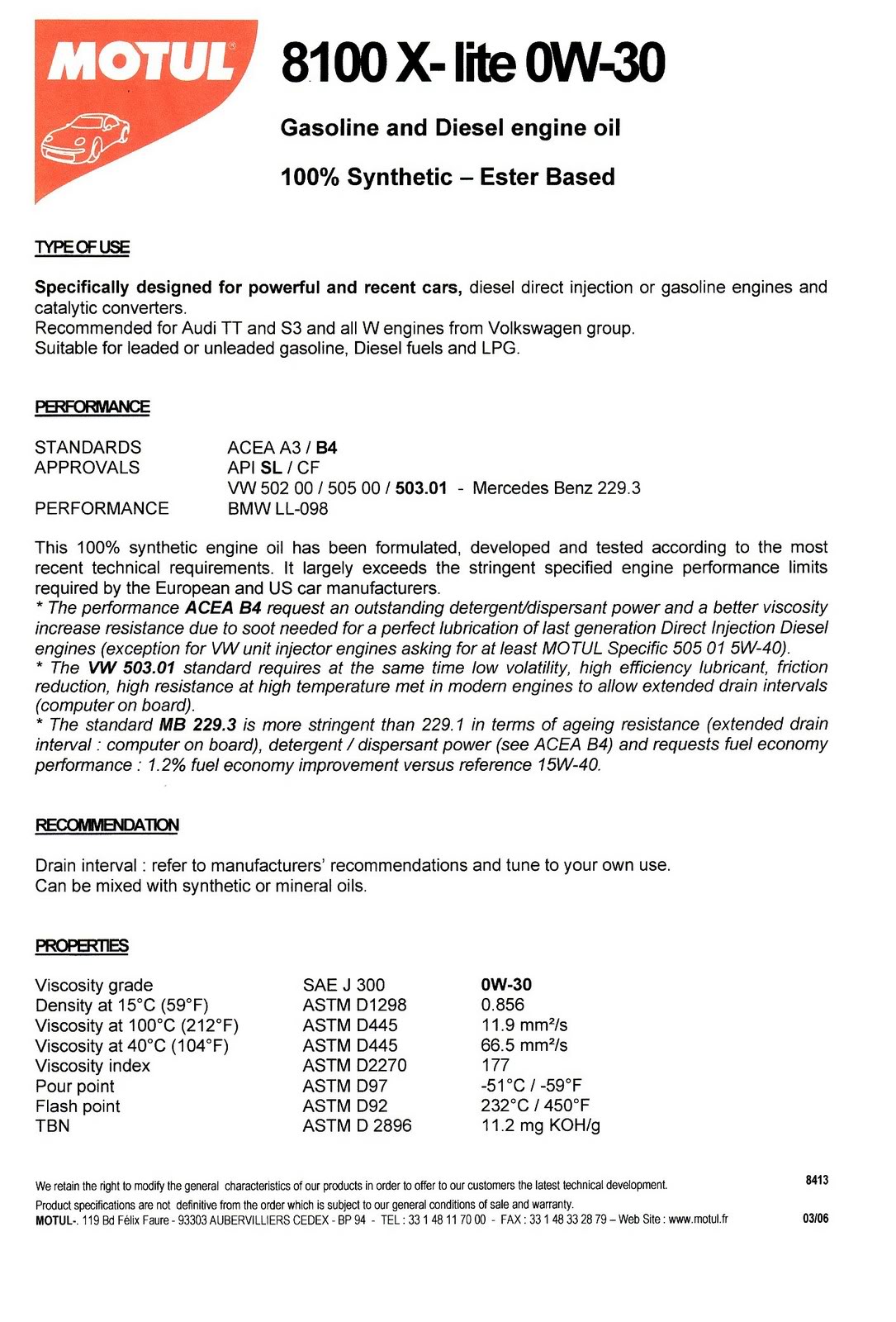
First the approval letter/spec sheet for the X-Lite 0W30.
Now let's see how the new pollution norms affect the oils.
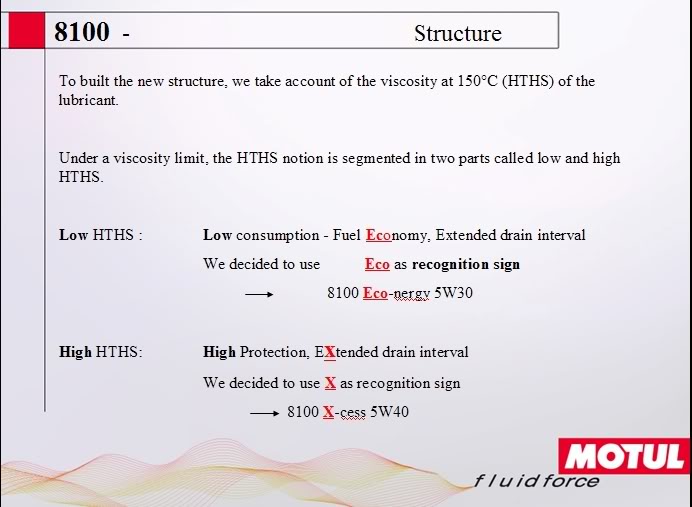
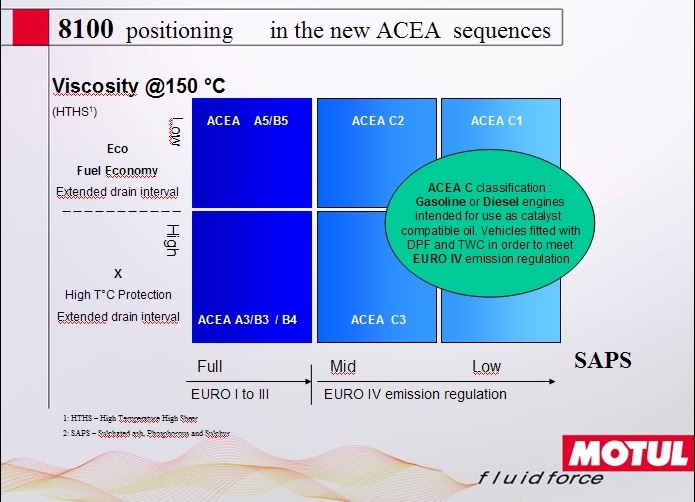
We
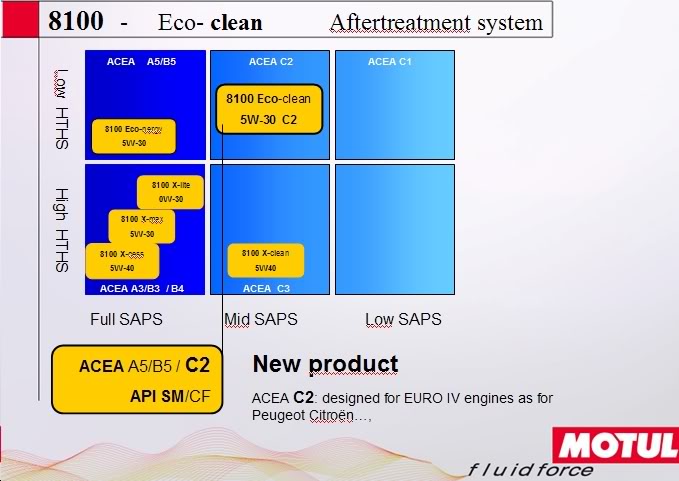
can see here that the 8100 line of oils is first broken up into two
categories;the "low HTHS" and the "high HTHS". To meet the high HTHS an
oil must keep a constant viscosity from 100 degrees C up to 150 degrees
C.
The low HTHS are for LOW consumption/fuel ECOnomy with extended
change intervals. All oil formulas falling within this group will be
labelled ECO-???? Example: 8100 ECO-energy 5W30.
The high
HTHS formulas are for HIGH protection, EXtended drain intervals. They
will be labelled with an X-???? Example: 8100 X-cess 5W40.
Now
we can see that the two categories (low and high HTHS) are subdivided
further into several anti pollution categories. The older EURO 1
to 3 standards and the new EURO 4 standard.
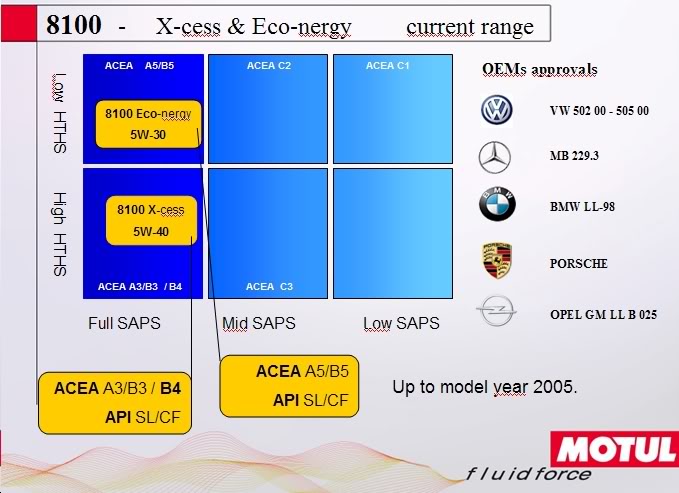
The
first two formulas we see here on this graph show one in the LOW HTHS
category and one in the HIGH HTHS category. On the right you can see for
which car manufacturer they are approved and which standard within a
car manufacturer they are approved. In the case of VAG, these two blends
meet only the VW 502.00 and VW 505.00 standards.
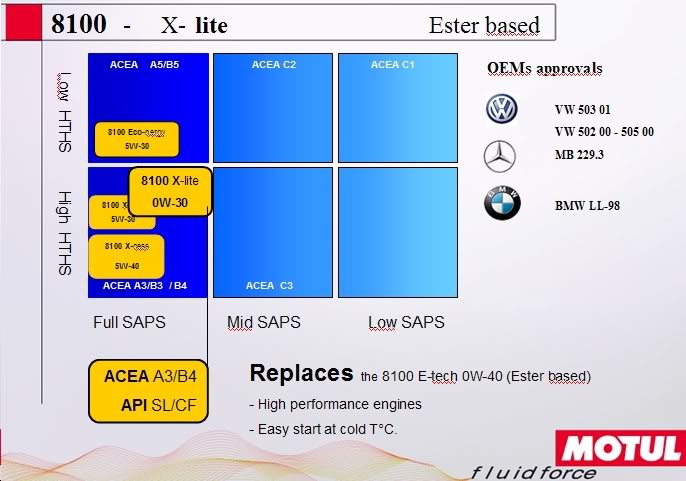
Finally
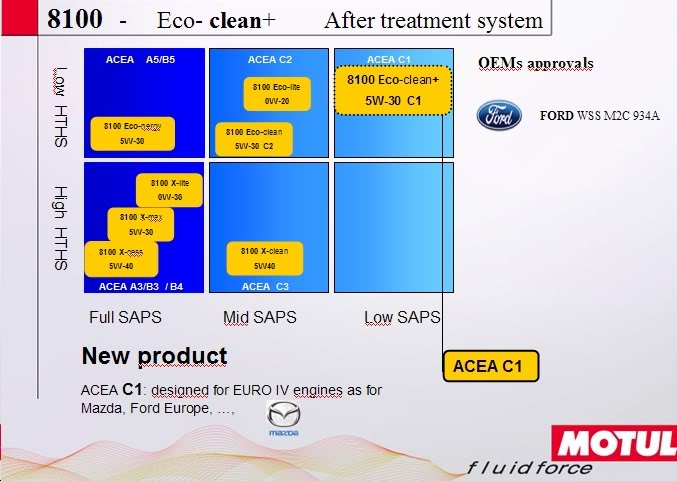
the new 8100 X-Lite 0w30 and where it sits. Well it's in the HIGH HTHS
category so it offers a higher protection but it also sits close to the
LOW HTHS so it also as improved fuel economy. It also sits close to the
newer EURO 4 pollution norm so it is also less pollutant. It is also an
extended drain interval oil and it not only meets the VW 502.00 and VW
505.00 standards but also gets the more stringent VW 503.01 rating.
Because it uses a very complex blend of Ester based ingredients and
draws some of the technology from the Double Ester V300 Competition oil,
Motul as managed to make this oil very versatile.
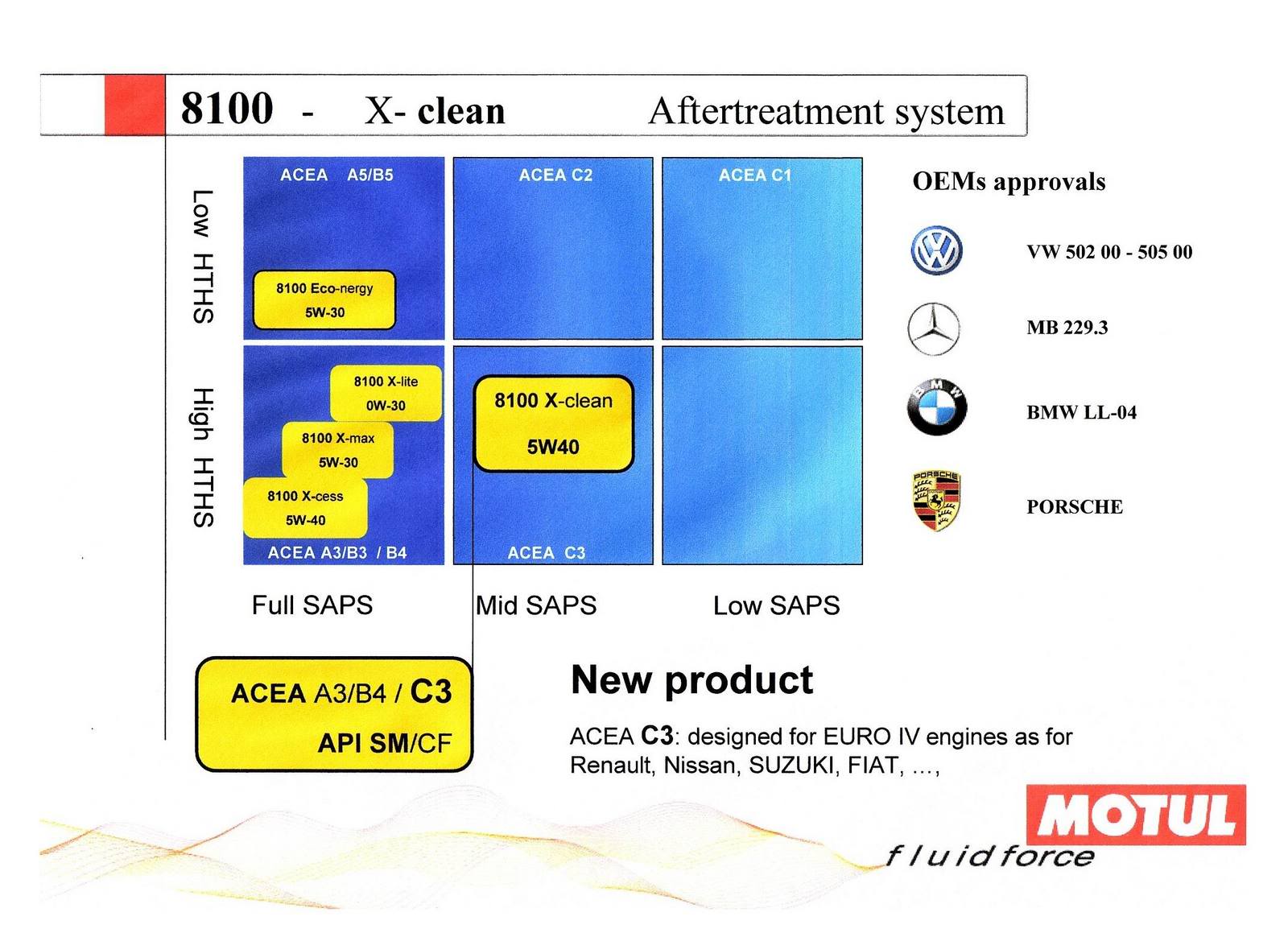
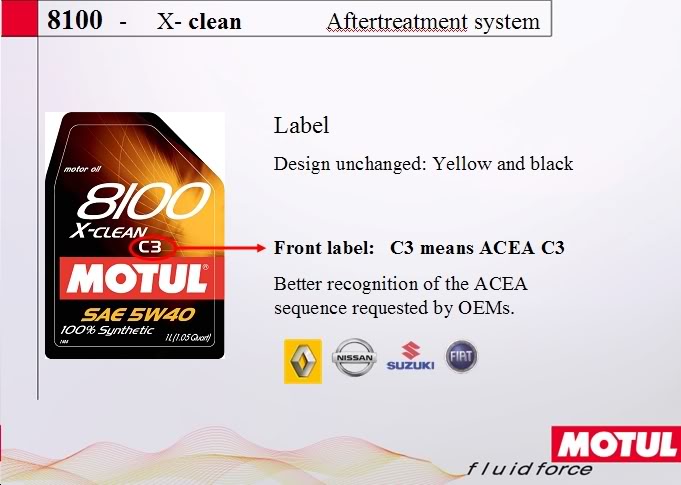
The new 8100 X-Clean 5W40 meets the new EURO 4 norms and is also certified VW502.00 and VW 505.00.
Here is how the jug is labelled.
Here's another example of a EURO 4 oil. This one is not approved by VAG. However it is approved for Peugeots and Citroens.
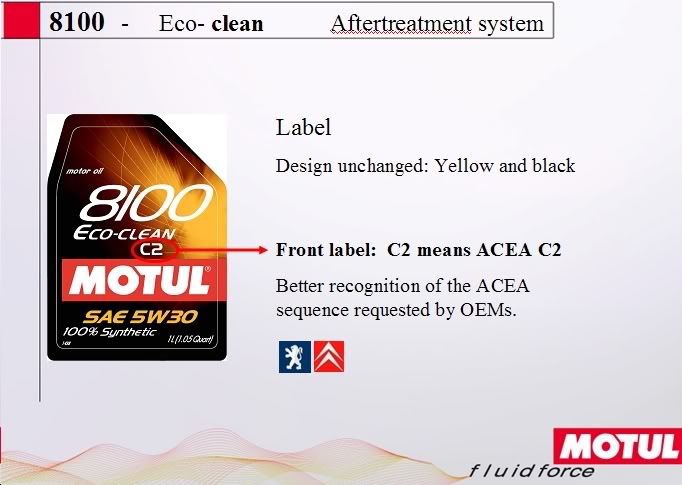
The C2 label on the jug.
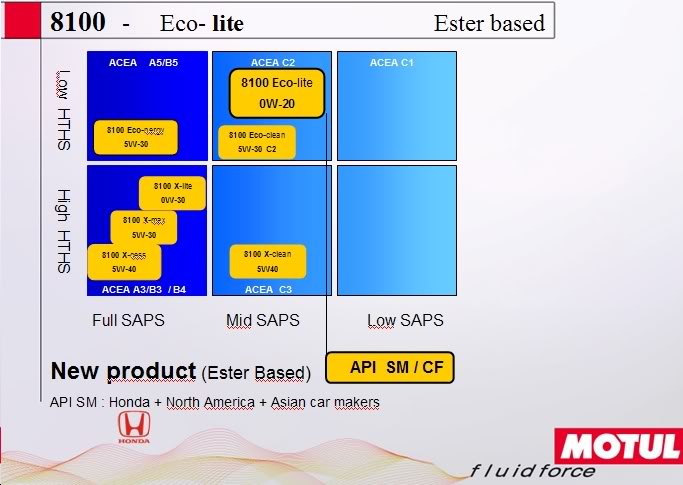
Check
out the low 0W20 weight on this one (8100 Eco-Lite). For Honda, North
America and Asian car makers. We might see some of the stuff here.
Finally we made it to the C1 category. Good for Mazda and Ford Europe only.