How to Troubleshoot the ABS (ABS)
How to Troubleshoot the ABS
ABS Indicator
- If the system is OK, the ABS indicator goes off 2 seconds after turning the ignition switch ON (II).
- The ABS indicator comes on when the ABS control unit detects a problem in the system. However, even though the system is operating properly, the indicator will come on under these conditions:
- Only the drive wheels rotate
- One drive wheel is stuck
- The vehicle goes into a spin
- The ABS continues to operate for a long time.
- The vehicle is subjected to an electrical signal disturbance
- Only the drive wheels rotate
To determine the actual cause of the problem, question the customer about the problem, taking the above conditions into consideration.
- When a problem is detected and the ABS indicator comes on, there are cases when the indicator stays on until the ignition switch is turned OFF, and cases when the indicator goes off automatically when the system returns to normal.
- DTC 61 or 62: The ABS indicator goes off automatically when the system returns to normal.
- DTC 11, 13, 15, 17, 31, 32, 33, 34, 35, 36, 37, 38, 54, 71, or 81: The ABS indicator stays on until the ignition switch is turned OFF whether or not the system returns to normal.
- DTC 12, 14, 16, 18, 21, 22, 23, 24, 41, 42, 43, 44, 51, 52, or 53: The ABS indicator goes off after the ignition switch is turned OFF and then back ON (II), the vehicle is driven, and the system is OK.
- DTC 61 or 62: The ABS indicator goes off automatically when the system returns to normal.
Brake system Indicator
The brake indicator in the gauge assembly will come on under these conditions:
- Parking brake lever pulled up
- Low brake fuild in the brake master cylinder reservoir
- ABS control unit detects a problem that effects the EBD
Diagnostic Trouble Code (DTC)
- The memory can hold any number of DTCs. However, when the same DTC is detected more than once, the more recent DTC is written over the earlier one.
Therefore, when the same problem is detected repeatedly, it is memorized as a single DTC. - The DTCs are indicated in the order they occurred, beginning with the most recent.
- The DTCs are memorized in the EEPROM (non-volatile memory). Therefore, the memorized DTCs are not cleared when the battery is disconnected, the ignition switch is turned off, or the system returns to normal. Do the specified procedures to clear the DTCs.
Self-diagnosis
- Self-diagnosis can be classified into two categories:
- Initial diagnosis:
Done right after the ignition switch is turned ON (II) and until the ABS indicator goes off - Regular diagnosis:
Done right after the initial diagnosis until the ignition switch is turned OFF
- Initial diagnosis:
- When a problem is detected by self-diagnosis, the system does the following:
- Turns the ABS indicator and possibly the brake system indicator on
- Memorizes the DTC
- Stops ABS operation
- Turns the ABS indicator and possibly the brake system indicator on
Kickback
The pump motor operates when the ABS is functioning, and the fluid in the reservoir is forced out to the master cylinder, causing kickback at the brake pedal.
Pump Motor
- The pump motor operates when the ABS is functioning.
- The ABS control unit checks the pump motor operation when the vehicle is driven the first time after the ignition switch is turned ON (II). You may hear the motor operate at this time, but it is normal.
How to Troubleshoot ABS DTCs
The troubleshooting flowchart procedures assume that the cause of the problem is still present, and the ABS indicator and possibly the brake system indicator are still on. Following the flowchart when the ABS indicator does not come on can result in incorrect diagnosis.
The connector illustrations show the female terminal connectors with a single outline and the male terminal connectors with a double outline.
| 1. | Question the customer about the conditions when the problem occured, and try to reproduce the same conditions for troubleshooting. Find out when the ABS indicator and possibly the brake system indicator came on, such as during ABS control, after ABS control, when the vehicle was at a certain speed, etc. |
| 2. | When the ABS indicator and possibly the brake system indicator does not come on during the test-drive, but troubleshooting is done based on the DTC, check for loose connectors, poor terminal contact, etc., before you start troubleshooting. |
| 3. | After troubleshooting, clear the DTC, and test-drive the vehicle. Make sure the ABS indicator and possibly the brake system indicator does not come on. |
How to Retrieve ABS DTCs
Honda PGM or HDS Tester Method:
| 1. | With the ignition switch OFF, connect the Honda PGM or HDS Tester (A) to the 16P data link connector (DLC) (B) under the left side of the dashboard.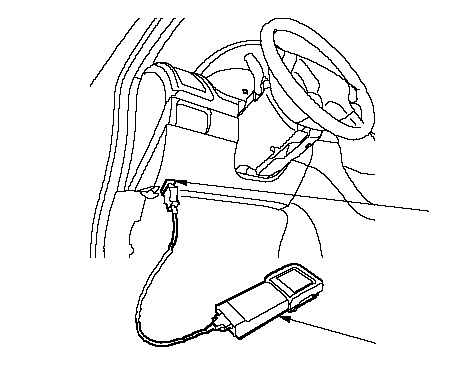 AB AB |
| 2. | Turn the ignition switch ON (II), and follow the prompts on the PGM Tester to display the ABS DTC(s) on the screen. After determining the DTC, refer to the ABS DTC Troubleshooting Index. NOTE: See the Honda PGM Tester user's manual, or the HDS help menu for specific instructions. |
How to Clear ABS DTCs
Honda PGM or HDS Tester Method:
| 1. | With the ignition switch OFF, connect the Honda PGM Tester (A) to the 16P data link connector (DLC) (B) under the left side of the dashboard.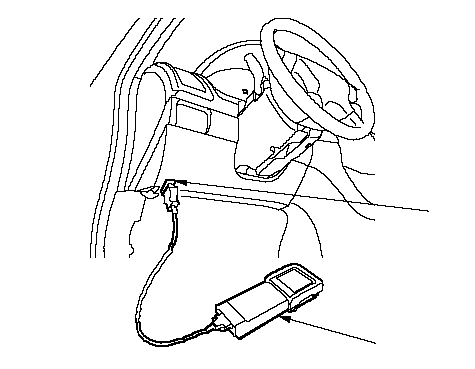 AB AB |
| 2. | Turn the ignition switch ON (II), and clear the DTC(s) by following the screen prompts on the PGM or HDS Tester. NOTE: See the Honda PGM Tester user's manual, or the HDS help menu for specific instructions. |