A/C Refrigerant Discharge
A/C Refrigerant Discharge
 |
|
Use only a gauge set for refrigerant HFC-134a (R-134a).
If accidental system discharge occurs, ventilate work area before resuming service.
Additional health and safety information may be obtained from the refrigerant and lubricant manufacturers.
| 1. | Connect the R-134a gauge set as shown.
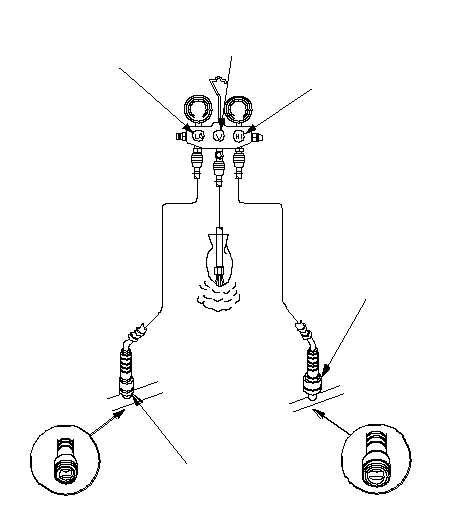 13 mm16 mmTHREE VALVE GAUGE:LOW-PRESSURE VALVEEVACUATION VALVEHIGH-PRESSURE VALVELOW-PRESSURE QUICK JOINTHIGH-PRESSURE QUICK JOINT
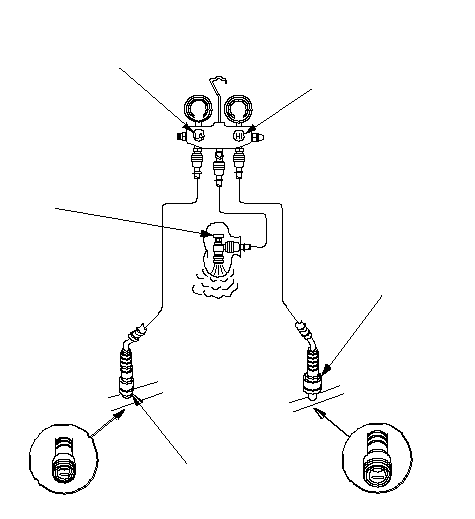 13 mm16 mmTWO VALVE GAUGE:LOW-PRESSURE VALVEHIGH-PRESSURE VALVELOW-PRESSURE QUICK JOINTHIGH-PRESSURE QUICK JOINTEVACUATION STOP VALVE |
| 2. | Disconnect the center hose of the gauge set, and place the free end in a shop towel. |
| 3. | Open the evacuation valve (two valve gauge: evacuate stop valve). |
| 4. | Slowly open the high-pressure valve slightly to let refrigerant flow from the center hose only. Do not open the valve too wide. Check the stop towel to make sure no oil is being discharged with the refrigerant.
|

| 5. | After the high-pressure gauge reading has dropped below 980 kPa (10 kgf/cm2, 140 psi), open the low side valve to discharge both high and low sides of the system. |
| 6. | Note the gauge reading, and as system pressure drops, gradually open both high and low side valves fully until both gauges indicate 0 kPa ( 0 kgf/cm2, 0 psi). |