СИСТЕМА ЗАРЯДКИ > ПРОВЕРКА БЕЗ СНЯТИЯ С АВТОМОБИЛЯ

для подготовки Нажмите здесь


1. CHECK BATTERY CONDITION

ПРИМЕЧАНИЕ:
If the battery is weak or if the engine is difficult to start, perform the following procedures.

  1. Check the battery for damage and deformation. If severe damage, deformation or leakage is found, replace the battery.

  1. Check the electrolyte quantity of each cell.

    1. For maintenance-free batteries:

      1. If the electrolyte quantity is below the lower line, replace the battery.
      2. If the electrolyte quantity is above the lower line, check the battery voltage when cranking the engine. If the voltage is less than 9.6 V, recharge or replace the battery.

        УКАЗАНИЕ:
        Before checking the battery voltage, turn off all the electrical systems (headlights, blower motor, rear defogger, etc.).

    2. For non-maintenance-free batteries:

      1. If the electrolyte quantity is below the lower line, add distilled water to each cell. Then, recharge the battery and check the electrolyte's specific gravity.

        Standard specific gravity:
        1.25 to 1.29 at 20°C (68°F)

      2. If the electrolyte quantity is above the lower line, check the battery voltage when cranking the engine. If the voltage is less than 9.6 V, recharge or replace the battery.

        УКАЗАНИЕ:
        Before checking the battery voltage, turn off all the electrical systems (headlights, blower motor, rear defogger, etc.).


2. CHECK BATTERY TERMINAL AND FUSE
  1. Check that the battery terminals are not loose or corroded.
    If the terminals are corroded, clean the terminals.

  1. Measure the resistance of the H-fuse and fuses.

    Standard resistance:
    Below 1 Ω

    If the results are not as specified, replace fuses as necessary.


3. CHECK V-RIBBED BELT


B000543E03
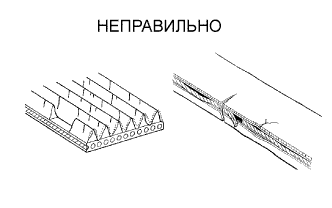
  1. Check the belt for wear, cracks and other signs of damage.
    УКАЗАНИЕ:
    Replace the drive belt, if the following defects are found:
    1. The belt is worn out and wire is exposed.
    2. The cracks reach the wire in more than one place.
    3. The belt has chunks missing from the ribs.


    B075171E05
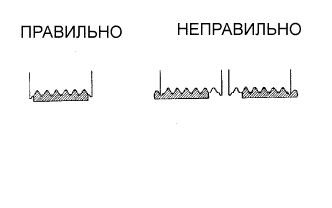
  1. Check that the belt fits properly in the ribbed grooves.

    УКАЗАНИЕ:
    With your hand, confirm that the belt has not slipped out of the grooves on the bottom of the pulley.


4. VISUALLY CHECK GENERATOR WIRING
  1. Check that the wiring is in good condition.


5. LISTEN FOR ABNORMAL NOISE FROM GENERATOR
  1. Check that the generator does not emit any abnormal noise while the engine is running.


6. CHECK CHARGE WARNING LIGHT CIRCUIT
  1. Turn the engine switch on (IG). Check that the charge warning light turns on.

  1. Start the engine and check that the light turns off.
    If the light does not operate as specified, troubleshoot the charge warning light circuit.


7. CHECK CHARGING CIRCUIT WITHOUT LOAD


A157436E01
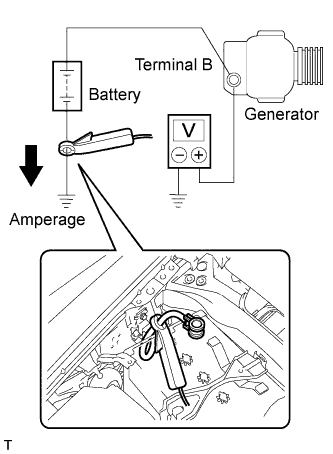
  1. Check the charging circuit.

    1. Put the vehicle in a no-load test condition and run the engine at 2000 rpm. Using a voltmeter and ammeter, measure the battery voltage and amperage.

      Standard amperage:
      10 A or less

      Standard voltage:
      13.2 to 14.8 V

      If the result is not as specified, replace the generator.

      УКАЗАНИЕ:
      If the battery is not fully charged, the ammeter reading will sometimes be more than the standard amperage.


8. CHECK CHARGING CIRCUIT WITH LOAD


A157437E01
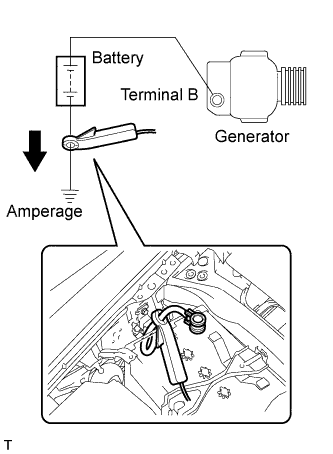
  1. Put the vehicle in a load test condition (set the headlights to high beam and set the heater blower switch to Hi) and run the engine at 2000 rpm. Using an ammeter, measure the amperage.

  1. Check the reading on the ammeter.

    Standard amperage:
    30 A or more

    If the ammeter reading is less than the standard amperage, replace the generator.

    УКАЗАНИЕ:
    1. l If the ammeter reading is less than the standard amperage even though the battery is fully charged, the load is not sufficient. Therefore, operate the wiper motor, rear window defogger, etc. to increase the load, and perform the measurement again.
    2. If the battery is not fully charged, the ammeter reading will sometimes be less than the standard amperage.