FRONT BRAKE > INSTALLATION

for Preparation Click here


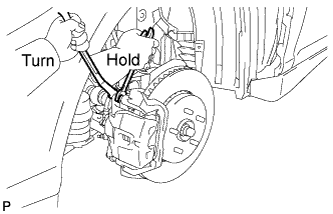
1. INSTALL DISC BRAKE CYLINDER ASSEMBLY


    C112541E01
  1. Install the disc brake cylinder assembly with the 2 bolts.

    Torque:
    34 N*m{ 350 kgf*cm , 25 ft.*lbf }

  1. Connect the flexible hose with the union bolt and a new gasket.

    Torque:
    29 N*m{ 300 kgf*cm , 21 ft.*lbf }


2. ADD RESERVOIR WITH BRAKE FLUID
  1. Add brake fluid to the MAX line in the reservoir.

    Fluid:
    SAE J1703 or FMVSS No. 116 DOT3

    CAUTION:
    1. Add brake fluid carefully and check that the reservoir level remains between the MIN and MAX lines while bleeding the brakes.
    2. Do not stand the fluid can on the reservoir inlet when bleeding the brake actuator. Doing so will cause brake fluid to overflow.


3. DISABLE BRAKE CONTROL (ECB)


  1. When using the intelligent tester:

    NOTICE:
    1. Refer to the intelligent tester operator's manual for further details.
    2. Bleed the air by following the steps displayed on the intelligent tester.


    1. Move the shift lever to the P position and apply the parking brake.
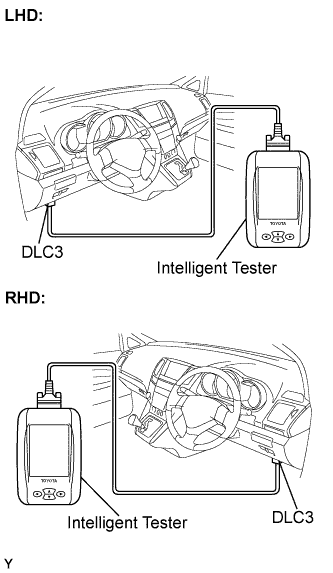


    2. E109221E06
    3. Connect the intelligent tester to the DLC3 with the ignition switch off as shown in the illustration.

    4. Turn the ignition switch to the ON position and turn on the intelligent tester.

      NOTICE:
      Do not start the engine.

    5. Turn the intelligent tester on and select "DIAGNOSTIC MENU"→"ABS/VSC"→"ECB UTILITY"→"ECB INVALID".

      CAUTION:
      If the pump motor operates while air remains inside the brake actuator hose, air will enter the actuator, and this will make bleeding the brakes more difficult.

      NOTICE:
      After the brake actuator assembly has been replaced, remove the ABS motor relay before bleeding the brakes.


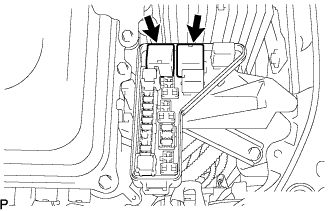
  1. When removing the ABS motor relay:


      C108426
    1. Remove the 2 ABS motor relays with the ignition switch off in order to disable brake control.

      CAUTION:
      If the pump motor operates while air remains inside the brake actuator hose, air will enter the actuator, and this will make bleeding the brakes more difficult.

      NOTICE:
      After the brake actuator assembly has been replaced, remove the ABS motor relay before bleeding the brakes.


4. BLEED FRONT BRAKE SYSTEM

HINT:
Air can be easily bled from the front brake system if air has been bled from the master cylinder when replacing the brake master cylinder assembly.

NOTICE:
  1. If brake fluid leaks onto any painted surface of the vehicle, wash or otherwise remove it completely.
  2. Bleed the air by following the steps displayed on the intelligent tester.

  1. Depress the brake pedal several times and bleed the front brake system from the bleeder plugs on the front brake cylinder RH and LH.

    HINT:
    Repeat the procedure until air is completely bled from the front brake system.

  1. Tighten the bleeder plugs after bleeding.

    Torque:
    8.3 N*m{ 85 kgf*cm , 74 in.*lbf }


5. CANCEL BRAKE CONTROL (ECB) DISABLE
  1. Install the 2 motor relays (skid control relay No.2). (If they have been removed.)

  1. Complete brake control prevention following the prompts on the tester screen. (If brake control has been prevented using the intelligent tester.)


6. CHECK CLEAR DTC
(Click here)


7. PERFORM ACCUMULATOR ZERO DOWN

CAUTION:
  1. Never bleed air from the brake hydraulic system without using the intelligent tester. Failure to use the intelligent tester could cause serious injury or an accident.
  2. Be sure to perform this procedure before replacement, removal, or installation of the actuator.

NOTICE:
Perform accumulator zero down by following the steps displayed on the intelligent tester.

  1. Connect the intelligent tester to the DLC3 with the ignition switch off

  1. Depressurize the accumulator.

    1. Check that the parking brake is applied and turn the ignition switch to the ON position.

    2. Turn on the intelligent tester and select "DIAGNOSTIC MENU" → "ABS/VSC" → "ECB UTILITY" → "ZERO DOWN" on the intelligent tester.

    3. When the buzzer sounds, turn the ignition switch off.

  1. Circulate the fluid in the accumulator.

    1. Depressurize the accumulator 5 times.

      HINT:
      1. Accumulator pressure is released and accumulated repeatedly, which circulates the fluid inside the accumulator, when repeating accumulator zero down.
      2. The pump motor rotates and the accumulator is pressurized every time the ignition switch is turned from off to on.


8. CHECK BRAKE FLUID LEVEL
  1. After performing accumulator zero down (accumulator depressurizing), return the fluid in the accumulator back to the reservoir and then adjust the fluid level in the master cylinder reservoir to the MAX level.

    HINT:
    1. After performing accumulator zero down (accumulator depressurizing), fluid is built up in the accumulator by turning the ignition switch to the ON position and the fluid level of the reservoir lowers.
    2. If the fluid level is adjusted without performing accumulator zero down (accumulator depressurizing), fluid is sent from the accumulator to the reservoir. The fluid level may exceed the MAX level, but it is normal.


9. CHECK BRAKE FLUID LEAKAGE


10. INSTALL FRONT WHEEL

Torque:
103 N*m{ 1,050 kgf*cm , 76 ft.*lbf }


11. CHECK CLEAR DTC
(Click here)