DTC    P2238    Oxygen (A/F) Sensor Pumping Current Circuit Low (Bank 1 Sensor 1)

DTC    P2239    Oxygen (A/F) Sensor Pumping Current Circuit High (Bank 1 Sensor 1)

DTC    P2241    Oxygen (A/F) Sensor Pumping Current Circuit Low (Bank 2 Sensor 1)

DTC    P2242    Oxygen (A/F) Sensor Pumping Current Circuit High (Bank 2 Sensor 1)

DTC    P2252    Oxygen (A/F) Sensor Reference Ground Circuit Low (Bank 1 Sensor 1)

DTC    P2253    Oxygen (A/F) Sensor Reference Ground Circuit High (Bank 1 Sensor 1)

DTC    P2255    Oxygen (A/F) Sensor Reference Ground Circuit Low (Bank 2 Sensor 1)

DTC    P2256    Oxygen (A/F) Sensor Reference Ground Circuit High (Bank 2 Sensor 1)

for Preparation Click here


DESCRIPTION

HINT:
  1. Although the DTC titles say oxygen sensor, these DTCs relate to the Air-Fuel Ratio (A/F) sensor.
  2. Sensor 1 refers to the sensor mounted in front of the Three-Way Catalytic Converter (TWC) and located near the engine assembly.

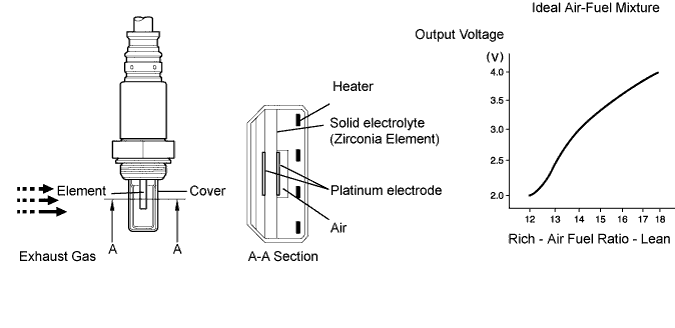
The A/F sensor generates voltage* that corresponds to the actual air-fuel ratio. This sensor voltage is used to provide the ECM (Included in HV Control ECU) with feedback so that it can control the air-fuel ratio. The ECM determines the deviation from the stoichiometric air-fuel ratio level, and regulates the fuel injection time. If the A/F sensor malfunctions, the ECM is unable to control the air-fuel ratio accurately.
The A/F sensor is the planar type and is integrated with the heater, which heats the solid electrolyte (zirconia element). This heater is controlled by the ECM. When the intake air volume is low (the exhaust gas temperature is low), a current flows into the heater to heat the sensor, in order to facilitate accurate oxygen concentration detection. In addition, the sensor and heater portions are narrower than the conventional type. The heat generated by the heater is conducted to the solid electrolyte though the alumina, therefore the sensor activation is accelerated.
In order to obtain a high purification rate of the carbon monoxide (CO), hydrocarbon (HC) and nitrogen oxide (NOx) components in the exhaust gas, a TWC is used. For the most efficient use of the TWC, the air-fuel ratio must be precisely controlled so that it is always close to the stoichiometric level.
*: Value changes inside the ECM. Since the A/F sensor is the current output element, a current is converted to a voltage inside the ECM. Any measurements taken at the A/F sensor or ECM connectors will show a constant voltage.

A107164E03


DTC No.
DTC Detection Condition
Trouble Area
P2238
P2241
  1. A/F sensor admittance: Less than 0.022 1/Ω
  2. AF+ voltage 0.5 V or less for 5.0 seconds or more
  3. AF+ - AF- voltage 0.1 V or less for 5.0 seconds or more
    (2 trip detection logic)
  1. Open or short in A/F sensor (bank 1, 2 sensor 1) circuit
  2. A/F sensor (bank 1, 2 sensor 1)
  3. A/F sensor heater
  4. A/F HTR relay
  5. A/F sensor heater and relay circuits
  6. HV Control ECU
P2239
P2242
AF+ voltage more than 4.5 V for 5.0 seconds or more
(2 trip detection logic)
  1. Open or short in A/F sensor (bank 1, 2 sensor 1) circuit
  2. A/F sensor (bank 1, 2 sensor 1)
  3. A/F sensor heater
  4. A/F HTR relay
  5. A/F sensor heater and relay circuits
  6. HV Control ECU
P2252
P2255
AF- voltage 0.5 V or less for 5.0 seconds or more
(2 trip detection logic)
  1. Open or short in A/F sensor (bank 1, 2 sensor 1) circuit
  2. A/F sensor (bank 1, 2 sensor 1)
  3. A/F sensor heater
  4. A/F HTR relay
  5. A/F sensor heater and relay circuits
  6. HV Control ECU
P2253
P2256
AF- voltage more than 4.5 V for 5.0 seconds or more
(2 trip detection logic)
  1. Open or short in A/F sensor (bank 1, 2 sensor 1) circuit
  2. A/F sensor (bank 1, 2 sensor 1)
  3. A/F sensor heater
  4. A/F HTR relay
  5. A/F sensor heater and relay circuits
  6. HV Control ECU

HINT:
  1. DTCs P2238, P2239, P2252 and PP2253 indicate malfunctions related to bank 1 A/F sensor circuit.
  2. DTCs P2241, P2242, P2255 and PP2256 indicate malfunctions related to bank 2 A/F sensor circuit.
  3. Bank 1 refers to the bank that includes cylinder No. 1.
  4. Bank 2 refers to the bank that includes cylinder No. 2.


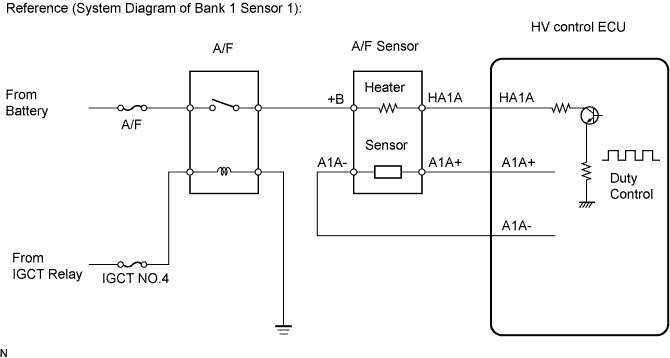
WIRING DIAGRAM

Refer to DTC P2195 (Click here).

INSPECTION PROCEDURE

HINT:
Intelligent tester only:
Malfunctioning areas can be identified by performing the A/F Control function provided in the Active Test. The A/F Control function can help to determine whether the Air-Fuel Ratio (A/F) sensor, Heated Oxygen (HO2) sensor and other potential trouble areas are malfunctioning.

The following instructions describe how to conduct the A/F Control operation using the intelligent tester.
  1. Connect the intelligent tester to the DLC3.
  2. Put the engine in inspection mode (Click here).
  3. Start the engine and turn the tester ON.
  4. Warm up the engine at an engine speed of 2,500 rpm for approximately 90 seconds.
  5. On the tester, enter the following menus: Powertrain / Engine / Active Test / Control the Injection Volume for A/F Sensor.
  6. Perform the A/F Control operation with the engine in an idling condition (press the Right or Left button to change the fuel injection volume).
  7. Monitor the output voltages of the A/F and HO2 sensors (AFS B1S1 and O2S B1S2 or AFS B2S1 and O2S B2S2) displayed on the tester.

HINT:
  1. The A/F Control operation lowers the fuel injection volume by 12.5 % or increases the injection volume by 25 %.
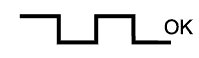
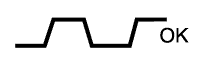
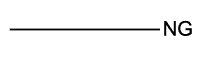
  2. Each sensor reacts in accordance with increases and decreases in the fuel injection volume.


Standard:

Tester Display
(Sensor)
Injection Volume
Status
Voltage
AFS B1S1 or AFS B2S1
(A/F)
+25 %
Rich
Less than 3.0
AFS B1S1 or AFS B2S1
(A/F)
-12.5 %
Lean
More than 3.35
O2S B1S2 or O2S B2S2
(HO2)
+25 %
Rich
More than 0.55
O2S B1S2 or O2S B2S2
(HO2)
-12.5 %
Lean
Less than 0.4

NOTICE:
The Air-Fuel Ratio (A/F) sensor has an output delay of a few seconds and the Heated Oxygen (HO2) sensor has a maximum output delay of approximately 20 seconds.


Case
A/F Sensor (Sensor 1)
Output Voltage
HO2 Sensor (Sensor 2)
Output Voltage
Main Suspected Trouble Areas
1
Injection Volume
+25 %
-12.5 %
A103184
Injection Volume
+25 %
-12.5 %
A103184
-
Output Voltage
More than 3.35 V
Less than 3.0 V
A107708
Output Voltage
More than 0.55 V
Less than 0.4 V
A103186
2
Injection Volume
+25 %
-12.5 %
A103184
Injection Volume
+25 %
-12.5 %
A103184
  1. A/F sensor
  2. A/F sensor heater
  3. A/F sensor circuit
Output Voltage
Almost
no reaction
A103185
Output Voltage
More than 0.55 V
Less than 0.4 V
A103186
3
Injection Volume
+25 %
-12.5 %
A103184
Injection Volume
+25 %
-12.5 %
A103184
  1. HO2 sensor
  2. HO2 sensor heater
  3. HO2 sensor circuit
Output Voltage
More than 3.35 V
Less than 3.0 V
A107708
Output Voltage
Almost
no reaction
A103185
4
Injection volume
+25 %
-12.5 %
A103184
Injection Volume
+25 %
-12.5 %
A103184
  1. Injector
  2. Fuel pressure
  3. Gas leakage from exhaust system
    (Air-fuel ratio extremely lean or rich)
Output Voltage
Almost
no reaction
A103185
Output Voltage
Almost
no reaction
A103185
Following the A/F Control procedure enables technicians to check and graph the output voltages of both the A/F and HO2 sensors.

HINT:
Read freeze frame data using the intelligent tester. The ECM records vehicle and driving condition information as freeze frame data the moment a DTC is stored. When troubleshooting, freeze frame data can help determine if the vehicle was running or stopped, if the engine was warmed up or not, if the air-fuel ratio was LEAN or RICH, and other data from the time the malfunction occurred.

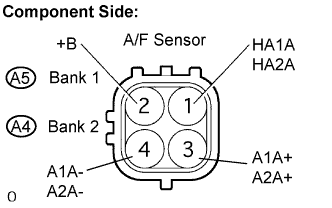
1.INSPECT AIR FUEL RATIO SENSOR (HEATER RESISTANCE)


    A052607E13
  1. Disconnect the A4 or A5 Air-Fuel Ratio (A/F) sensor connector.

  1. Measure the resistance between the terminals of the A/F sensor connector.

    Standard resistance:
    Tester Connection
    Specified Condition
    HA1A, HA2A (1) - +B (2)
    1.8 to 3.4 Ω at 20°C (68°F)
    HA1A, HA2A (1) - A1A-, A2A- (4)
    10 kΩ or higher

  1. Reconnect the A/F sensor connector.


NG
REPLACE AIR FUEL RATIO SENSOR
OK


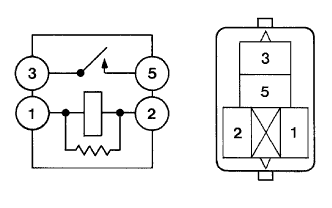
2.INSPECT A/F RELAY


    B016200E02
  1. Remove the A/F relay from the engine room R/B.

  1. Measure the A/F relay resistance.

    Standard resistance:
    Tester Connection
    Specified Condition
    3 - 5
    10 kΩ or higher
    3 - 5
    Below 1 Ω
    (when battery voltage applied to terminals 1 and 2)

  1. Reinstall the A/F HTR relay.


NG
REPLACE A/F RELAY
OK


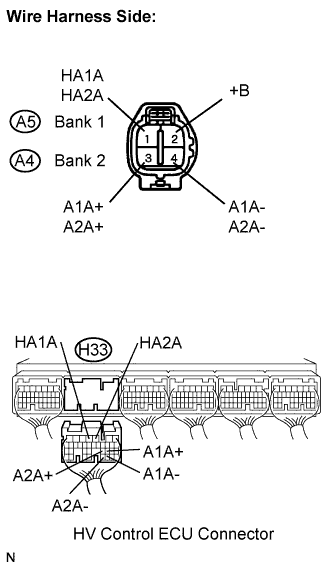
3.CHECK HARNESS AND CONNECTOR (A/F SENSOR - HV CONTROL ECU)


    A110913E03
  1. Disconnect the A4 and A5 A/F sensor connector.

  1. Turn the ignition switch ON.

  1. Measure the voltage between the +B terminal of the A/F sensor connector and body ground.

    Standard voltage:
    Tester Connection
    Specified Condition
    +B (A4-2) - Body ground
    9 to 14 V
    +B (A5-2) - Body ground
    9 to 14 V

  1. Turn the engine switch off.

  1. Disconnect the H33 HV Control ECU connector.

  1. Check the resistance.

    Standard resistance (Check for open):
    Tester Connection
    Specified Condition
    HA1A ( A5-1) - HA1A (H33-4)
    Below 1 Ω
    A1A+ (A5-3) - A1A+ (H33-22)
    Below 1 Ω
    A1A- (A5-4) - A1A- (H33-30)
    Below 1 Ω
    HA2A (A4-1) - HA2A (H33-3)
    Below 1 Ω
    A2A+ (A4-3) - A2A+ (H33-23)
    Below 1 Ω
    A2A- (A4-4) - A2A- (H33-31)
    Below 1 Ω

    Standard resistance (Check for short):
    Tester Connection
    Specified Condition
    HA1A ( A5-1) or HA1A (H33-4) - Body ground
    10 kΩ or higher
    A1A+ (A5-3) or A1A+ (H33-22) - Body ground
    10 kΩ or higher
    A1A- (A5-4) or A1A- (H33-30) - Body ground
    10 kΩ or higher
    HA2A (A4-1) or HA2A (H33-3) - Body ground
    10 kΩ or higher
    A2A+ (A4-3) or A2A+ (H33-23) - Body ground
    10 kΩ or higher
    A2A- (A4-4) or A2A- (H33-31) - Body ground
    10 kΩ or higher

  1. Reconnect the HV Control ECU connector.


  1. Reconnect the A/F sensor connector.


    A103833E07


NG
REPAIR OR REPLACE HARNESS AND CONNECTOR
OK

REPLACE HV CONTROL ECU