CAUTION
Brake fluid contains polyglycol ethers and polyglycols. Avoid contact with
the eyes and wash your hands thoroughly after handling brake fluid. If you
do get brake fluid in your eyes, flush your eyes with clean, running water
for 15 minutes. If eye irritation persists, or if you have taken brake fluid
internally, IMMEDIATELY seek medical assistance.
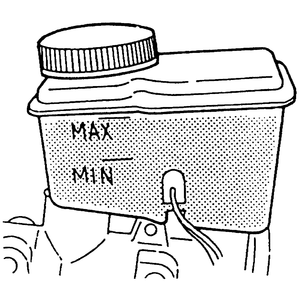
| Fig. 1: Inspect the brake fluid level by simply looking
through the fluid reservoir. The level should be maintained at a MAX
(full) reading
|
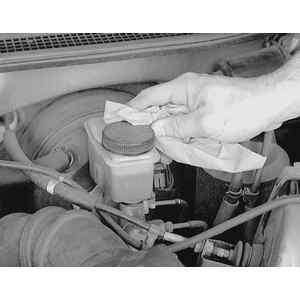
| Fig. 2: Before removing the brake fluid reservoir cap,
wipe the area clean to ensure no debris falls into the reservoir
|
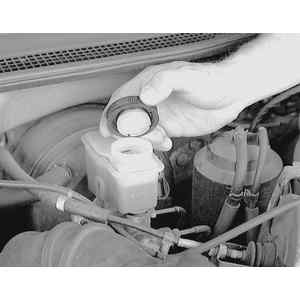
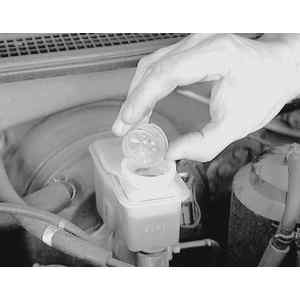
| Fig. 3: Remove the fluid reservoir cap by turning it
counterclockwise
|
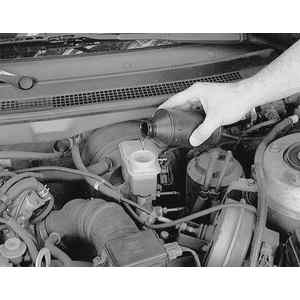
| Fig. 4: Add the proper grade of clean, fresh brake
fluid from an unopened container until the full mark is achieved
|
| Fig. 5: Inspect this screen for any debris which may
have fallen into the reservoir and clean it as necessary
|
All Mazda vehicles except the 1990–92 626 and MX-6 are equipped with a combination brake/clutch fluid reservoir. The fluid level should be between the MIN and MAX lines located on the side of the reservoir.
If it is necessary to add fluid, first wipe away any accumulated dirt or grease from the reservoir. Then remove the reservoir cap by twisting counterclockwise. Add fluid to the proper level. Avoid spilling fluid on any painted surface as it will harm the paint finish. Replace the reservoir cap.
The brake master cylinder has a translucent reservoir which enables the fluid level to be checked without removing the reservoir cap. The brake fluid level should be between the MIN and MAX lines located on the side of the reservoir.
If it is necessary to add fluid, first wipe away any accumulated dirt or grease from the reservoir. Then remove the reservoir cap by twisting counterclockwise. Add fluid to the proper level. Avoid spilling brake fluid on any painted surface as it will harm the paint finish. Replace the reservoir cap.