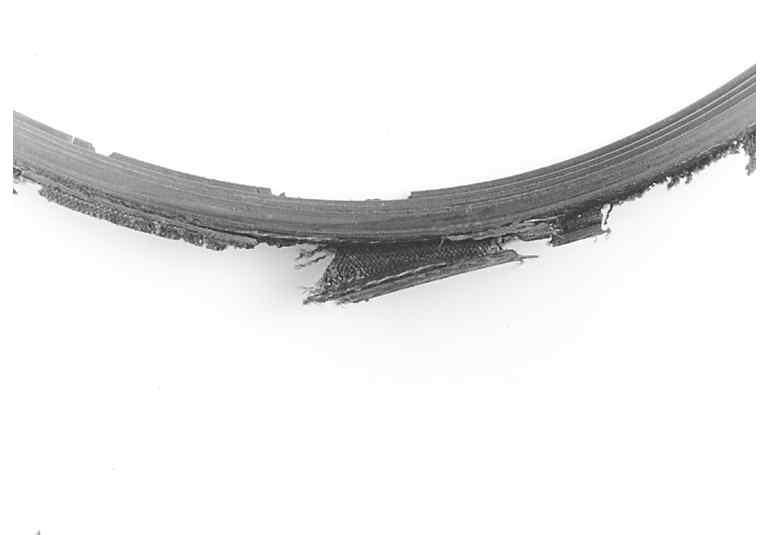
Inspect the belts for signs of glazing or cracking. A glazed belt will be perfectly smooth from slippage, while a good belt will have a slight texture of fabric visible. Cracks will usually start at the inner edge of the belt and run outward. All worn or damaged drive belts should be replaced immediately. It is best to replace all drive belts at one time, as a preventive maintenance measure, during this service operation.
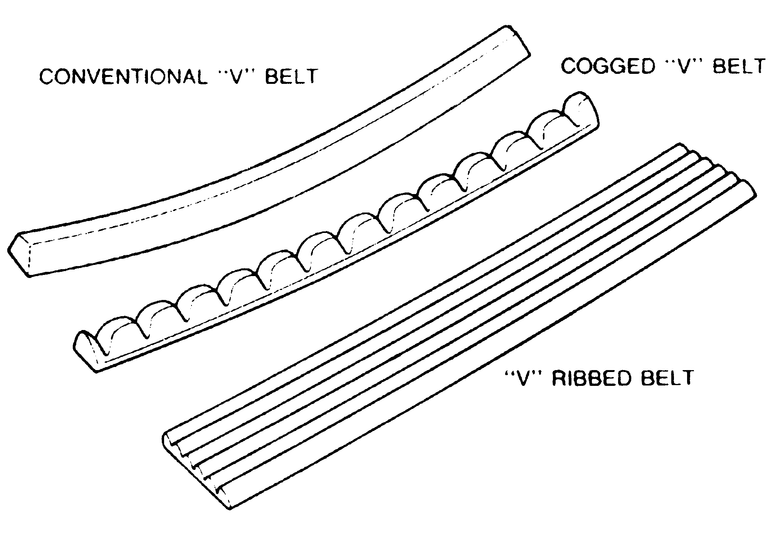
| Fig. 1: There are typically 3 types of accessory drive
belts found on vehicles today
|
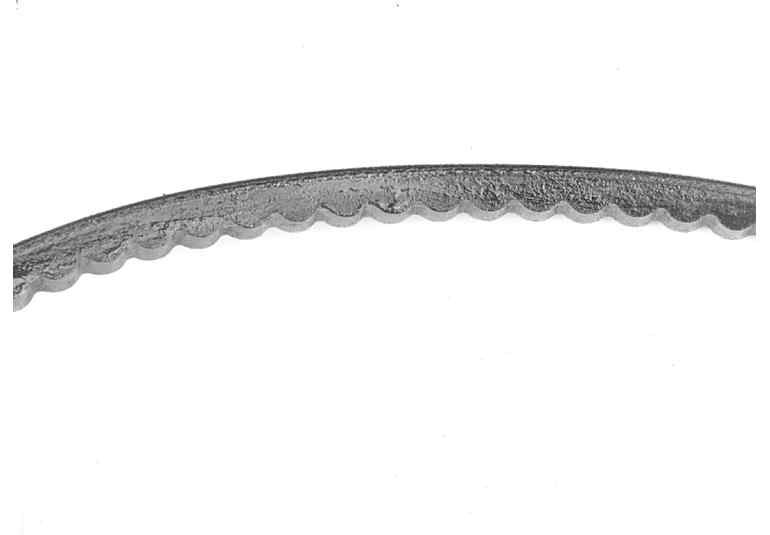
| Fig. 2: An example of a healthy drive belt
|
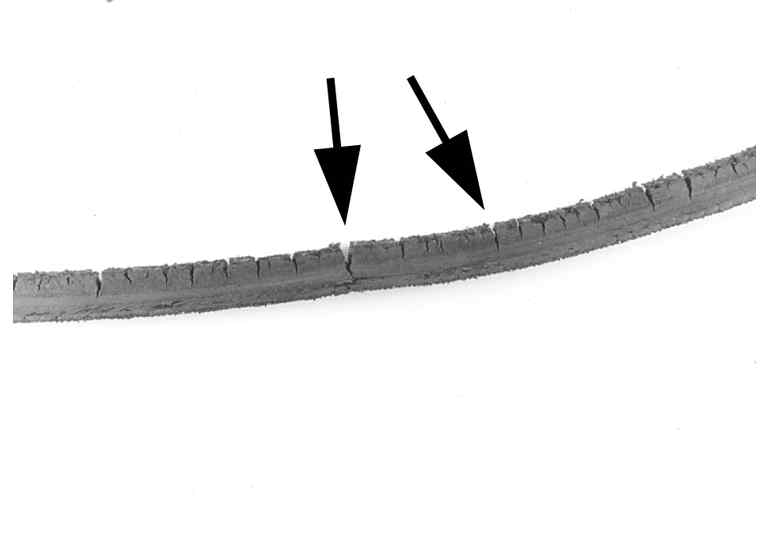
| Fig. 3: Deep cracks in this belt will cause flex, building
up heat that will eventually lead to belt failure
|
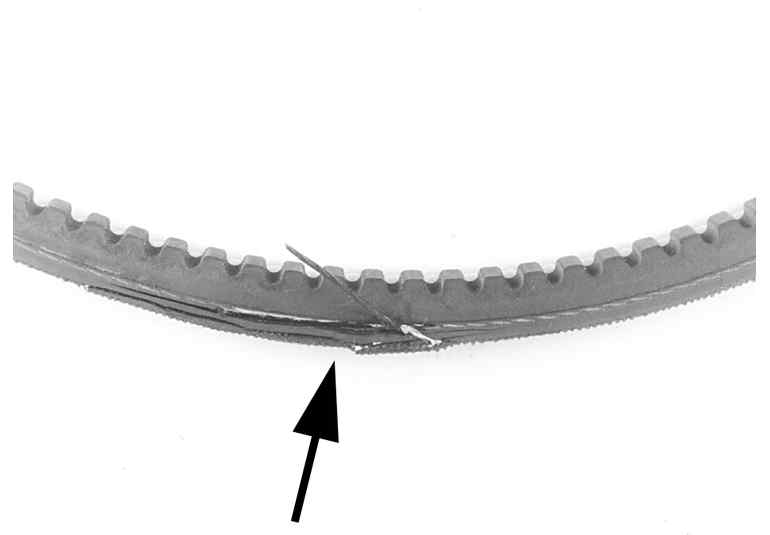
| Fig. 4: The cover of this belt is worn, exposing the
critical reinforcing cords to excessive wear
|
| Fig. 5: Installing too wide a belt can result in serious
belt wear and/or breakage
|
Check the drive belts for cracks, fraying, wear and proper tension every 6,000 miles. It is recommended that the belts be replaced every 24 months or 24,000 miles.
| Fig. 6: Measuring the drive belt deflection using
the straight edge method
|
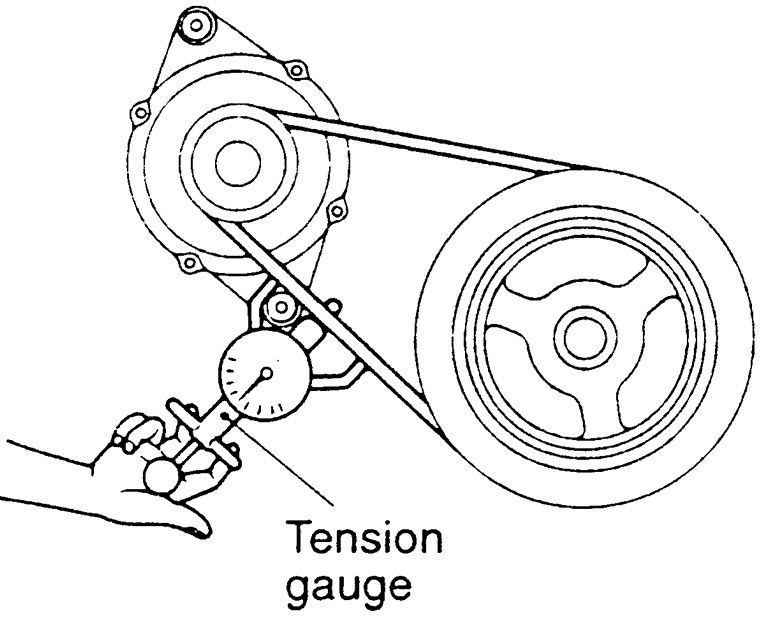
| Fig. 7: Use a suitable tension gauge to check for
correct belt tension
|
Air Conditioning Compressor Drive Belt
Alternator/Water Pump Drive Belt
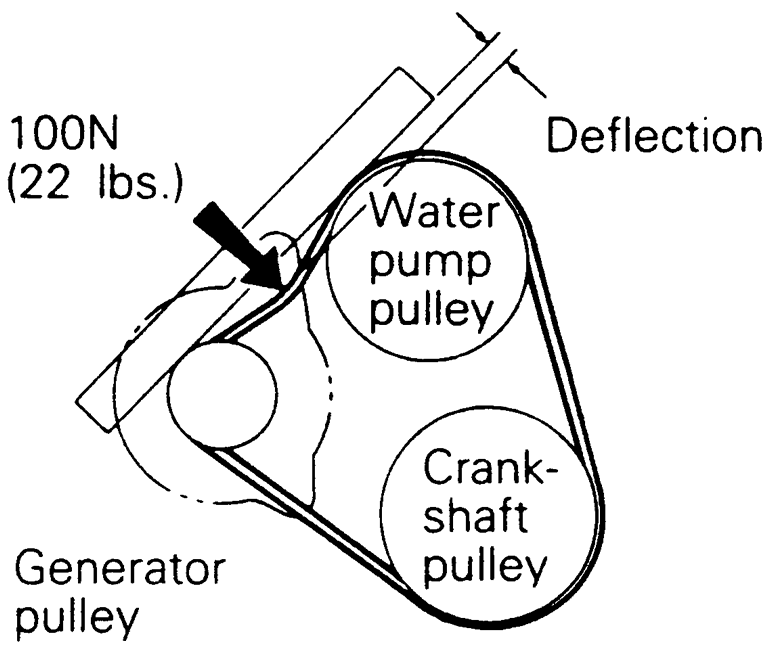
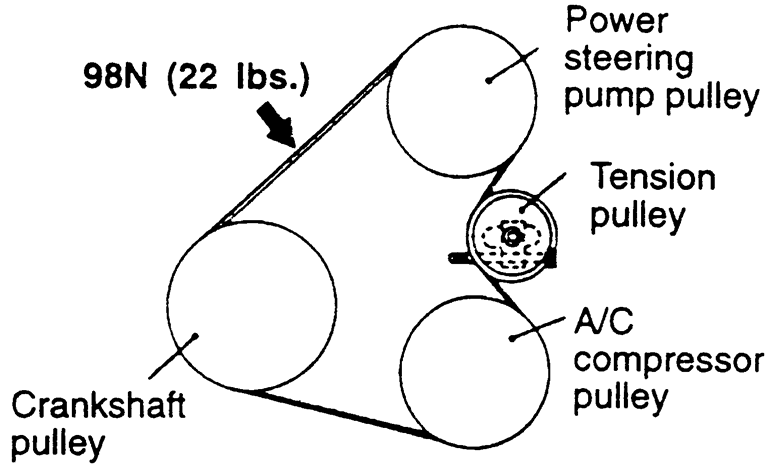
| Fig. 8: Use a force of about 22 lbs. to measure belt
deflection — 1995–98 2.0L non-turbo engines
|
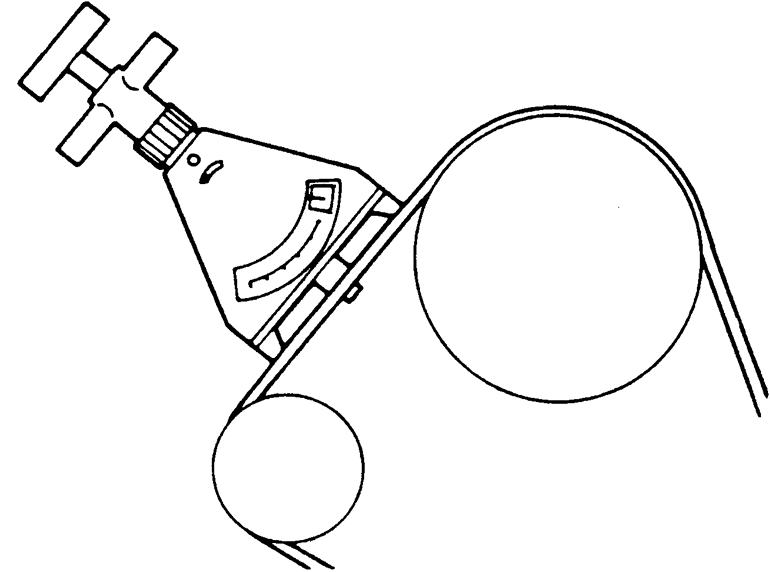
| Fig. 9: You can also measure belt tension with a
proper gauge
|
Alternator/Water Pump Drive Belt
Power Steering Pump Drive Belt
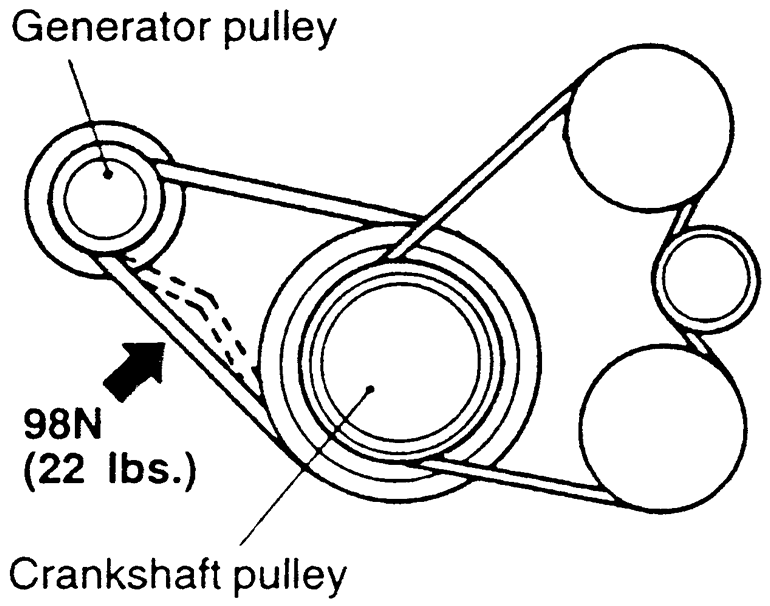
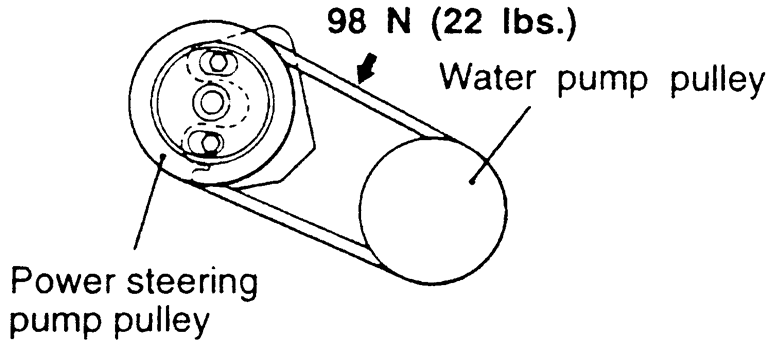
| Fig. 10: Checking deflection of the power steering
pump drive belt — 1995–98 2.0L non-turbo
engines
|
| Fig. 11: Checking deflection of the power steering
pump drive belt — 1995–98 2.0L turbo and
2.4L engines
|
Alternator/Water Pump Drive Belt
Power Steering Pump Drive Belt