NOTE: The idle speed is controlled electronically and adjustment
is usually not necessary.
For this procedure, a multi-tester (scan tool) is required.
- Warm the engine to operating temperature, leave lights, electric cooling
fan and accessories OFF. The transaxle should be in N for
manual transaxle or P for automatic transaxle. Place the
steering wheel in a neutral (straight ahead) position for vehicles equipped
with power steering.
- Check the ignition timing and adjust, if necessary.
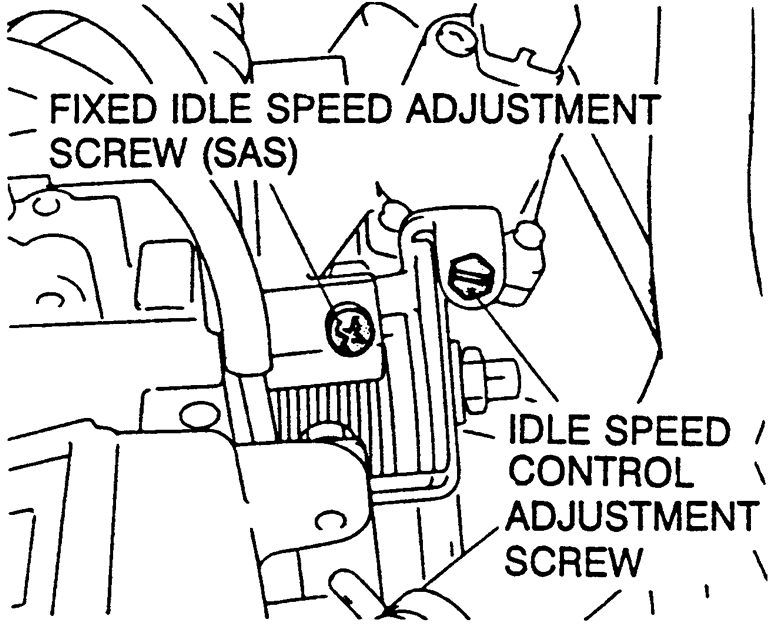
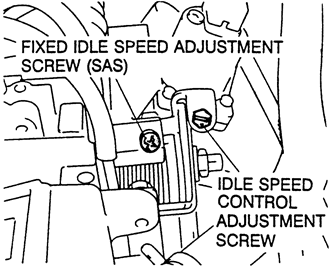
| Fig. 1: Idle speed adjustment screws — 1.8L
engine
|
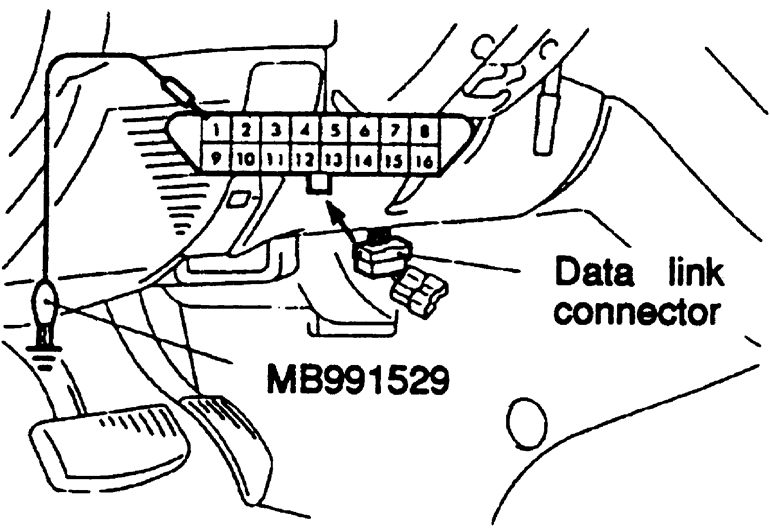
- Connect a multi-use tester to the diagnostic (data link) connector, located
beside the fuse block.
- Turn the ignition switch to the ON position, without starting
the engine, and hold it in that position for 15 seconds or more. With the
ignition in this position, the idle speed control motor will retract to the
idle position. Turn the ignition switch OFF.
- Uncouple the connector of the idle speed control servo to secure the idle
speed servo at this position.
- In order to prevent the throttle valve from sticking, open it more than
halfway 2 or 3 times and then release it to let it click shut. Loosen the
fixed idle speed adjusting screw to allow for adjustment.
- Start the engine and allow it to run at idle.
- Check that the engine speed is at the desired reading of 650–750 rpm.
The engine speed on a vehicle with 300 miles or less may be 20–100 rpm
lower than specifications listed above, but adjustments may not be necessary.
- If adjustment is required, turn the engine OFF and slacken
the accelerator cable. Adjust the idle speed using the idle speed adjustment
screw. When making the adjustment, use a hexagonal wrench in order to prevent
play caused by backlash.
- Once the engine rpm is set, screw in the fixed idle speed adjusting screw
until the engine speed starts to rise. At this point return the fixed idle
speed adjusting screw to find the point at which engine rpm does not change.
Once at this point, turn the fixed idle speed adjusting screw in a half turn.
Turn the engine OFF.
- Switch the ignition to the ON position but do not start
the engine.
- Press code No. 14 on the scan tool and measure the output voltage of the
throttle position sensor. Compare reading to the desired voltage of 0.48–0.52
volts. If the voltage is not correct, loosen the throttle position sensor
mounting screws and turn the throttle position sensor to make the adjustment.
Turn the ignition switch to the OFF position.
- Adjust the play of the accelerator cable. Connect the idle speed control
servo electrical connector. Start the engine and check that the engine idles
at the correct speed.
- Turn the engine off and disconnect the battery terminals for longer than
10 seconds, then reconnect. By doing this, the memory data will be erased.
- Start the engine once again and let idle for about 5 minutes. Check to be
sure the idling condition is normal and that the engine speed is correct.
- Warm the engine to operating temperature, leave lights, electric cooling
fan and accessories OFF. The transaxle should be in N for
manual transaxle or P for automatic transaxle. Place the
steering wheel in a neutral (straight ahead) position for vehicles equipped
with power steering.
- Connect a tachometer to the engine.
- Connect a digital voltmeter between terminals 19 (throttle position sensor
output voltage) and 24 (ground) of the engine control unit.
- Turn the ignition to the ON position but do not start the
engine. Keep in this position for at least 15 seconds. Turn the ignition to
the OFF position.
- Detach the idle speed control servo electrical connector. Back out the fixed
idle speed adjusting screw enough to allow for adjustment.
- Start the engine and run at idle.
- Check that the engine speed is at the desired reading of 650–750 rpm.
The engine speed on a vehicle with 300 miles or less may be 20–100 rpm
lower than specifications listed above, but adjustments may not be necessary.
- If adjustment is required, turn the engine OFF and slacken
the accelerator cable. Adjust the idle speed using the idle speed adjustment
screw. When making the adjustment, use a hexagonal wrench in order to prevent
play caused by backlash.
- Once the engine rpm is set, screw in the fixed idle speed adjusting screw
until the engine speed starts to rise. At this point return the fixed idle
speed adjusting screw to find the point at which engine rpm does not change.
Once at this point, turn the fixed idle speed adjusting screw in a half turn.
Turn the engine OFF.
- Switch the ignition to the ON position, but do not start
the engine.
- Measure the output voltage of the throttle position sensor. Compare reading
to the desired voltage of 0.48–0.52 volts. If the voltage is not correct,
loosen the throttle position sensor mounting screws and turn the throttle
position sensor to make the adjustment. Turn the ignition switch to the OFF
position.
- Adjust the play of the accelerator cable and remove the voltmeter. Connect
the idle speed control servo electrical connector. Start the engine and check
that the engine idles at the correct speed.
- Turn the engine OFF and disconnect the battery terminals for longer than
10 seconds, then reconnect. By doing this, the memory data will be erased.
- Start the engine once again and let idle for about 5 minutes. Check to be
sure the idling condition is normal and that the engine speed is correct.
For this procedure, a multi-tester (scan tool) is required.
- Warm the engine to operating temperature, leave lights, electric cooling
fan and accessories OFF. The transaxle should be in N for
manual transaxle or P for automatic transaxle. Place the
steering wheel in a neutral (straight ahead) position for vehicles equipped
with power steering.
- Slacken the accelerator cable to allow for adjustment. Connect the scan
tool to the data link connector.
- Switch the ignition to the ON position but do not start
the engine. Leave in this position for 15 seconds or more. With the ignition
in this position, the idle speed control motor will retract to the idle position.
Turn the ignition switch OFF.
- Uncouple the connector of the idle speed control servo to secure the idle
speed servo at this position. In order to prevent the throttle valve from
sticking, open it at least halfway 2 or more times and then release it so
it will click shut.
- Start the engine and let idle. Check the engine idle speed and compare to
the desired specifications of 650–750 rpm.
- If the idle speed is wrong, adjust with the idle speed control adjusting
screw, using a hexagon wrench.
- First loosen the fixed Speed Adjusting Screw (SAS). Then adjust the engine
speed using the idle speed control adjusting screw until the desired engine
speed is reached.
- Once the engine rpm is set, screw in the fixed idle speed adjusting screw
until the engine speed starts to rise. At this point return the fixed idle
speed adjusting screw to find the point at which engine rpm does not change.
Once at this point, turn the fixed idle speed adjusting screw in a half turn.
- Turn the ignition switch OFF. Adjust the accelerator cable and
the throttle position sensor.
- Start the engine once again and let idle for about 5 minutes. Check to be
sure the idling condition is normal and that the engine speed is correct.
For this procedure, a multi-tester (scan tool) is required.
- Warm the engine to operating temperature, leave lights, electric cooling
fan and accessories OFF. The transaxle should be in N for
manual transaxle or P for automatic transaxle. Place the
steering wheel in a neutral (straight ahead) position for vehicles equipped
with power steering.
- Slacken the accelerator cable to allow for adjustment. Connect the scan
tool to the data link connector.
- Switch the ignition to the ON position but do not start
the engine. Leave in this position for 15 seconds or more. With the ignition
in this position, the idle speed control motor will retract to the idle position.
Turn the ignition switch OFF.
- Uncouple the connector of the idle speed control servo to secure the idle
speed servo at this position. In order to prevent the throttle valve from
sticking, open it at least halfway 2 or more times and then release it so
it will click shut.
- Start the engine and let idle. Check the engine idle speed and compare to
the desired specifications of 650–750 rpm.
- If the idle speed is wrong, adjust with the idle speed control adjusting
screw, using a hexagon wrench.
- First loosen the fixed Speed Adjusting Screw (SAS). Then adjust the engine
speed using the idle speed control adjusting screw until the desired engine
speed is reached.
- Once the engine rpm is set, screw in the fixed idle speed adjusting screw
until the engine speed starts to rise. At this point return the fixed idle
speed adjusting screw to find the point at which engine rpm does not change.
Once at this point, turn the fixed idle speed adjusting screw in a half turn.
- Turn the ignition switch OFF. Adjust the accelerator cable and
the throttle position sensor.
- Start the engine once again and let idle for about 5 minutes. Check to be
sure the idling condition is normal and that the engine speed is correct.
NOTE: The idle speed on the 1995–98 2.0L non-turbo engines
is controlled by the ECU. No adjustment is necessary or possible.
- Warm the engine to operating temperature, leave lights, electric cooling
fan and accessories OFF. The transaxle should be in N.
Place the steering wheel in a neutral position for vehicles with power steering.
- Check the ignition timing and adjust, if necessary.
- Attach a tachometer to the 1-pin connector under the hood.
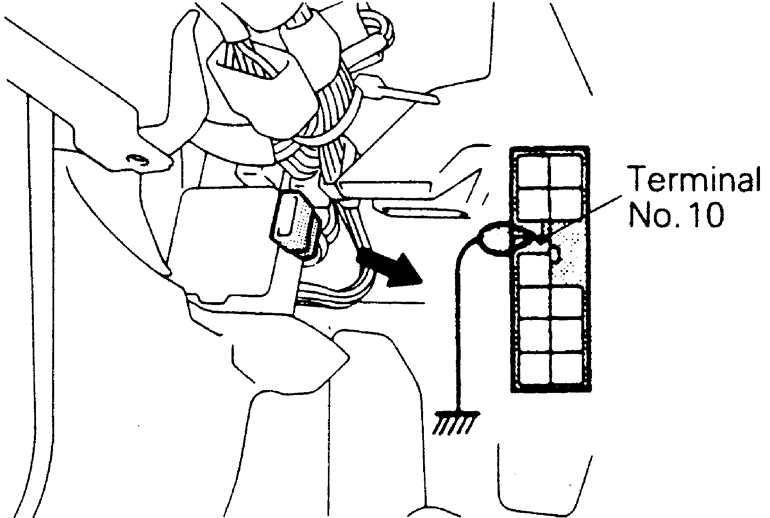
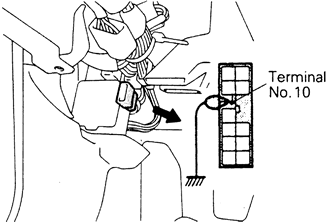
- Locate the self-diagnosis terminal under the dashboard and connect terminal
No. 10 to ground with a jumper wire.
| Fig. 2: Connect the self-diagnosis terminal No. 10
to ground with a jumper wire
|
- Disconnect the waterproof female connector used for ignition timing adjustment.
Connect this terminal to ground using a jumper wire.
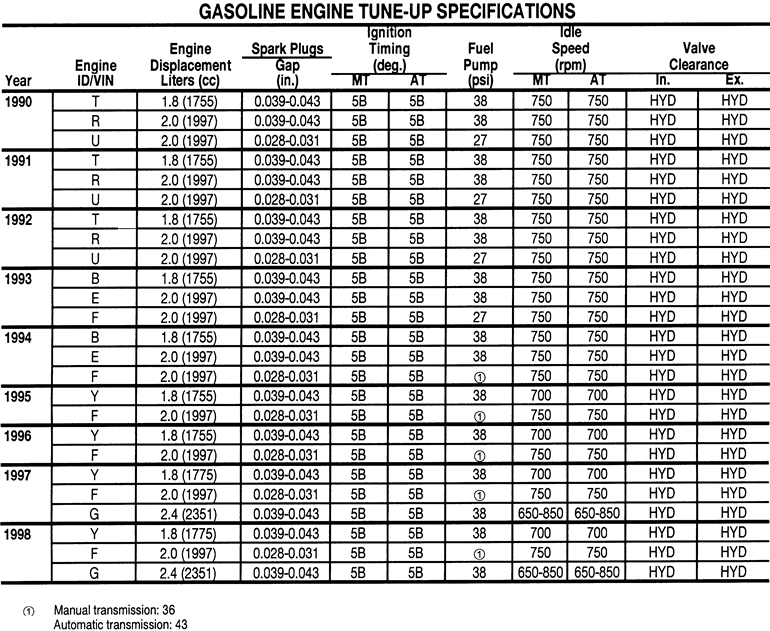
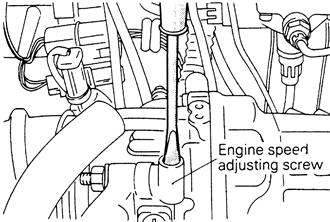
- Start the engine and allow to idle. Check that the basic idle speed is 700–800
rpm. Be aware that on some vehicles, the rpm reading may be half of the actual
engine rpm. Adjust the engine rpm using the speed adjusting screw. If the
idle speed still is difficult to adjust or deviates from the specification,
note the following:
- A new engine will idle more slowly. Break-in should take approximately
300 miles.
- If the vehicle stalls or has a very low idle speed, suspect a deposit
buildup on the throttle valve which must be cleaned.
- If the idle speed is high even though the speed adjusting screw is fully
closed, check that the idle position switch (fixed speed adjusting screw)
position has changed. If so, adjust the idle position switch.
- If after all these checks the idle is still out of specification, it
may be that there is leakage resulting from deterioration of the Fast-Idle
Air Valve (FIAV).
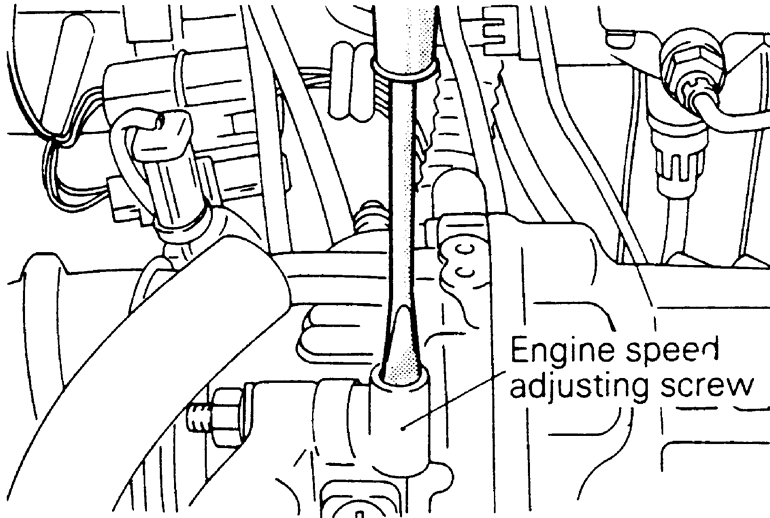
| Fig. 3: Location of the engine idle speed adjusting
screw
|
- Turn the ignition switch OFF. Disconnect the jumper wire from
the diagnosis connector, disconnect the jumper wire from the ignition timing
connector and reconnect the waterproof connector. Disconnect the tachometer.
- Restart the engine, allow to run for 5 minutes and check for good idle quality
and correct idle speed.
- Warm the engine to operating temperature, leave lights, electric cooling
fan and accessories OFF. The transaxle should be in N.
Place the steering wheel in a neutral position for vehicles with power steering.
- Check the ignition timing and adjust, if necessary.
- If available, connect a scan tool to the data link connector (16-pin connector).
When the scan tool is connected, the diagnostic test mode control terminal
should be grounded.
- If you are not using a scan tool, proceed as follows:
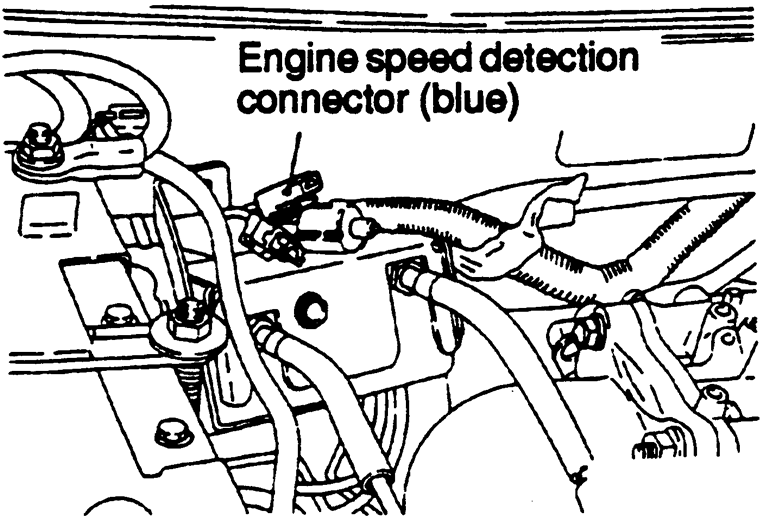
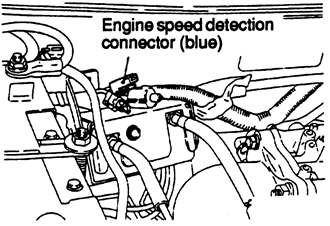
- Insert a paper clip into the 1-pin (blue) engine speed detection connector.
| Fig. 4: Location of the engine speed detection
connector
|
- Attach a tachometer to the paper clip.
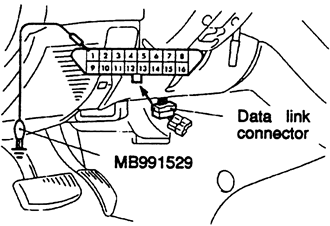
- Use a diagnostic trouble code check harness to ground the diagnostic
test mode control terminal (terminal 1) of the data link connector (16-pin
connector).
| Fig. 5: Ground the diagnostic test mode control
terminal of the data link connector
|
- Remove the waterproof female connector from the ignition timing adjustment
connector.
- Use a jumper wire to ground the ignition timing adjustment terminal.
- Start the engine and allow it to run at idle. Check to see if the idle speed
is within 700–800 rpm. For vehicles with less than 300 miles on the
odometer, the engine speed may be 20–100 rpm lower than specifications,
however no adjustment is necessary. If the engine stalls or the rpm is low
even though the vehicle has been driven 300 or more miles, the throttle valve
probably has accumulated deposits that need to be cleaned off.
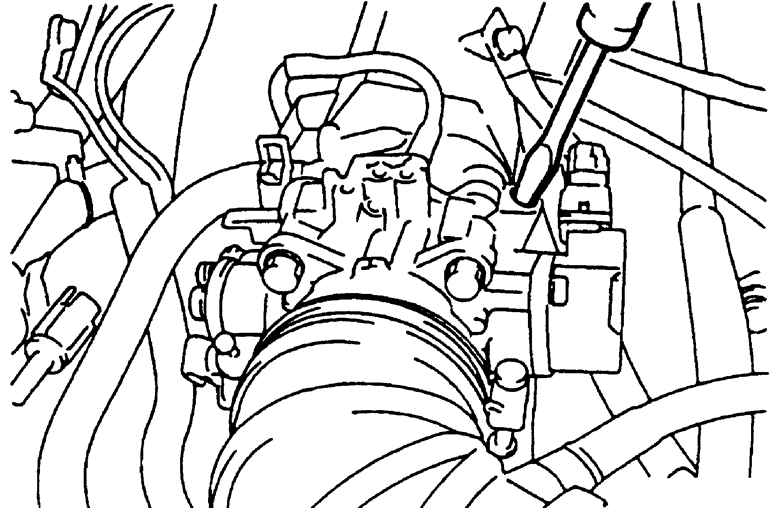
- If the idle is not within specifications, turn the engine speed adjusting
screw to make the necessary adjustment.
| Fig. 6: If the idle speed is out of range, use a
screwdriver to turn the engine speed adjusting screw to achieve the
proper rpm
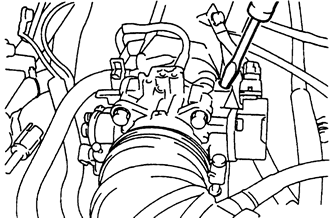
|
- Turn the ignition switch to the OFF position.
- Disconnect the jumper wire from the ignition timing adjustment terminal
and return the connector to its original condition.
- Start the engine again and let it run at idle for about 10 minutes. Check
to make sure the idling is normal.
- Warm the engine to operating temperature, leave lights, electric cooling
fan and accessories OFF. The transaxle should be in N.
Place the steering wheel in a neutral position for vehicles with power steering.
- Check the ignition timing and adjust, if necessary.
- Connect a suitable scan tool to the data link connector (16-pin connector).
When the scan tool is connected, the diagnostic test mode control terminal
should be grounded.
- Start the engine and allow it to run at idle.
- Select item No. 30 of the SCAN TOOL (MUT-II) Actuator test.
NOTE: This holds the IAC motor at the basic step to adjust
the basic idle speed.
- Check the idle speed. The proper specification is 700–800 rpm. For
vehicles with less than 300 miles on the odometer, the engine speed may be
20–100 rpm lower than specifications, however no adjustment is necessary.
If the engine stalls or the rpm is low even though the vehicle has been driven
300 or more miles, the throttle valve probably has accumulated deposits that
need to be cleaned off.
- If the idle is not within specifications, turn the engine speed adjusting
screw to make the necessary adjustment.
- Press the scan tool clear key, and release the IAC motor from the actuator
test mode. Unless the IAC motor is released, the Actuator test mode will continue
27 minutes.
- Turn the ignition to the OFF position.
- Disconnect the scan tool.
- Start the engine again and let it run at idle for about 10 minutes. Check
to make sure the idling is normal.