- Apply the parking brake and block the wheels. Run the engine until the coolant
reaches normal operating temperature.
- Make certain all lights, cooling fan and accessories are OFF.
- Position the steering wheel in straight ahead position and the gear selector
lever in P or N.
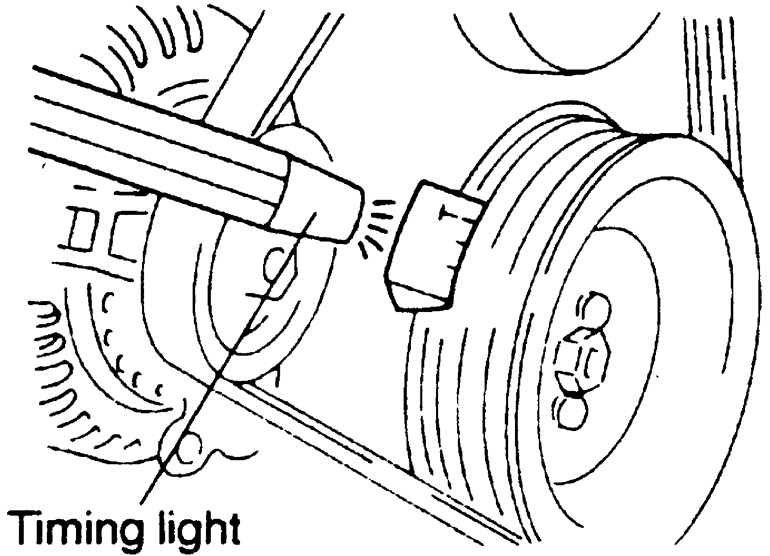
- Connect a timing light to the engine.
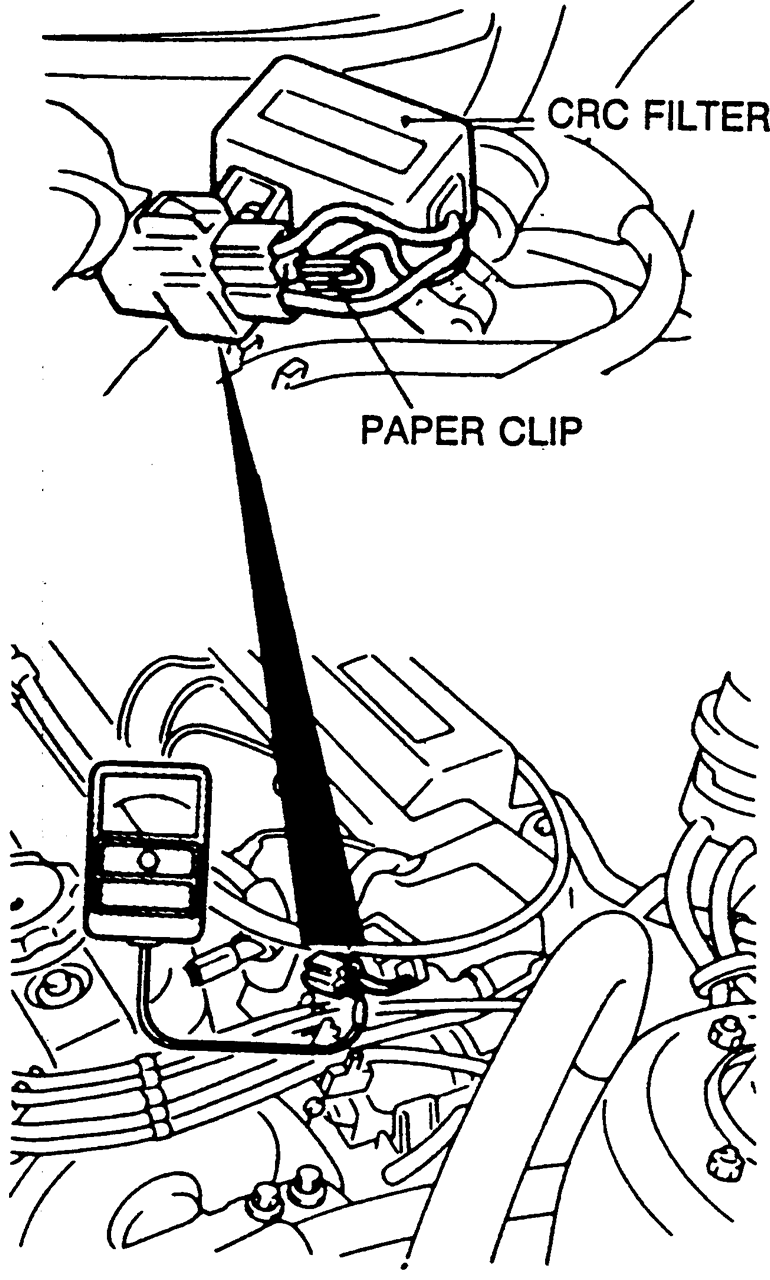
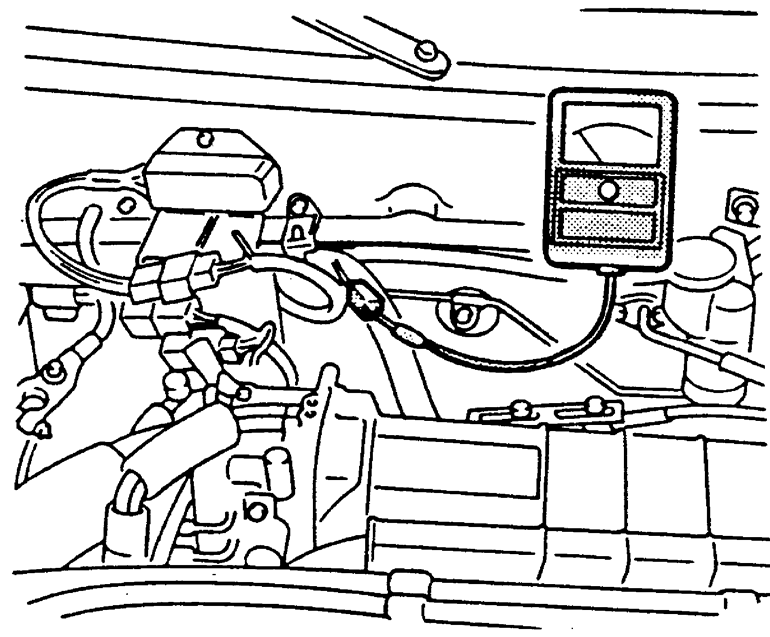
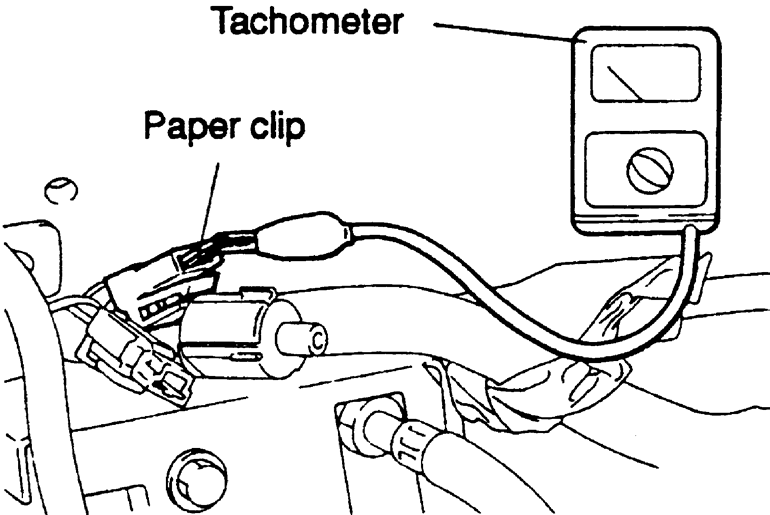
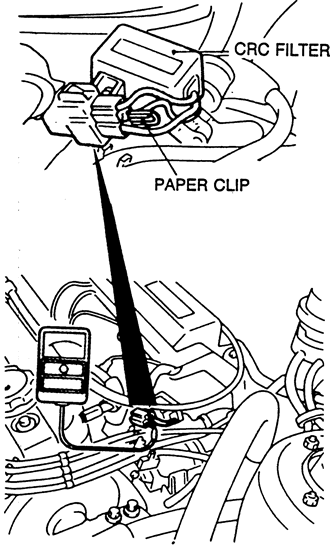
- Insert a paper clip into the CRC filter connector (3-pole connector), located
in the engine compartment of the vehicle.
- Connect a tachometer to the inserted clip.
| Fig. 1: Insert a paper clip into the CRC filter connector — 1.8L
engine
|
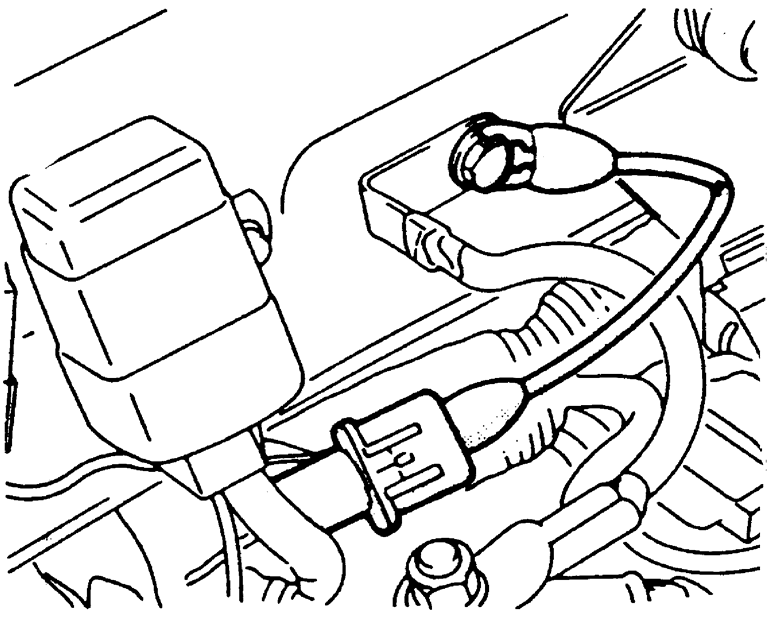
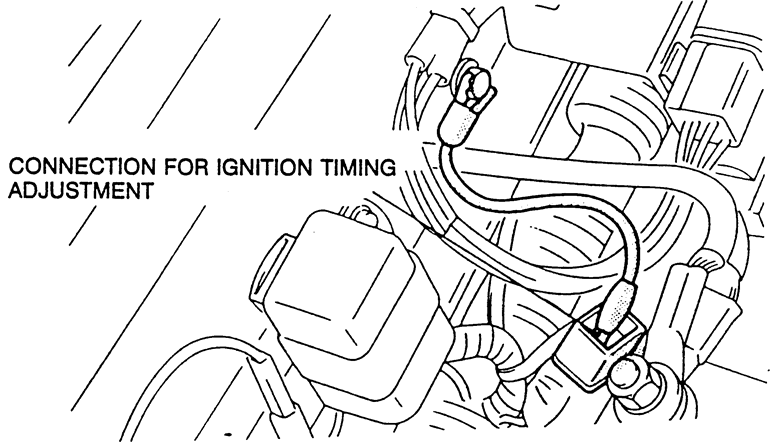
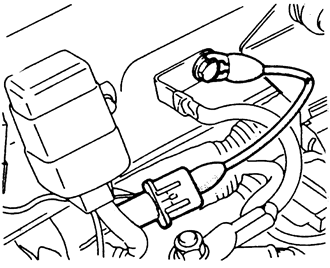
| Fig. 2: Connect a jumper wire to the terminal for
ignition timing adjustment — 1.8L engine
|
NOTE: During installation of the paper clip, do not separate
the connector.
- Check the curb idle speed. It should be 600–800 rpm.
- Turn the engine OFF. Connect a jumper wire to the terminal for
ignition-timing adjustment (located in the engine compartment), and ground
it.
- Start and run the engine at curb idle speed.
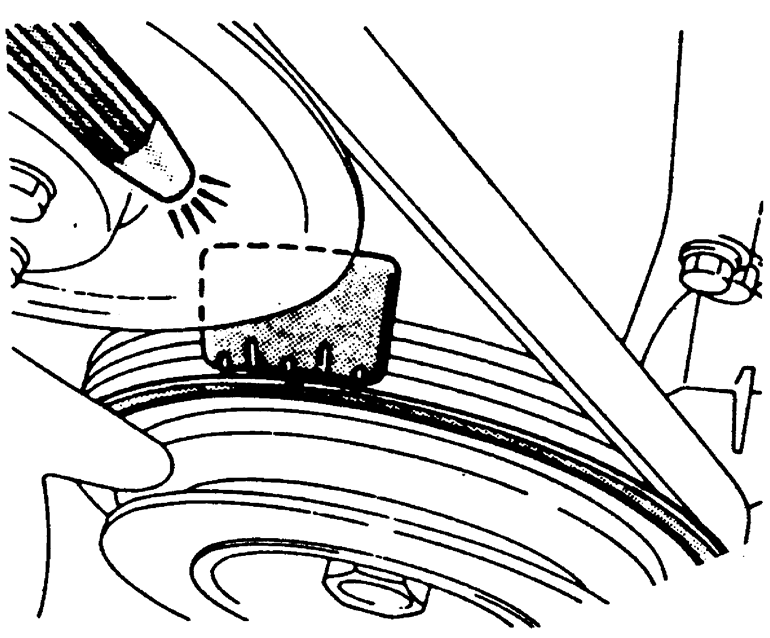
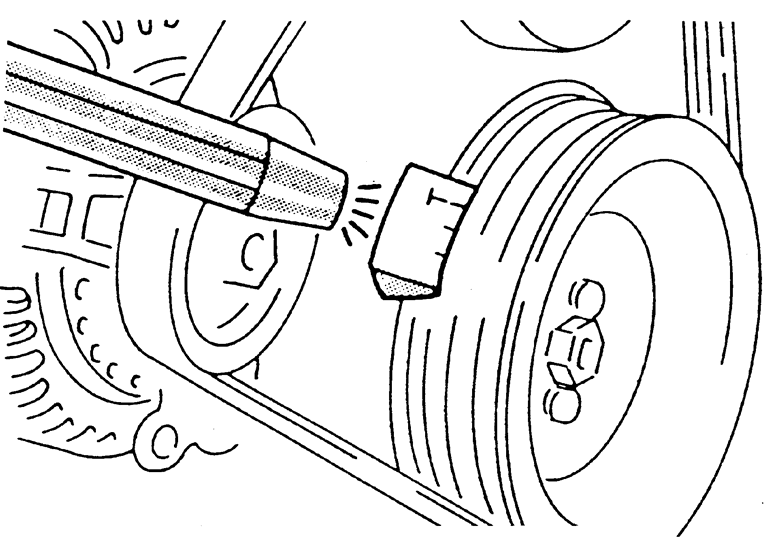
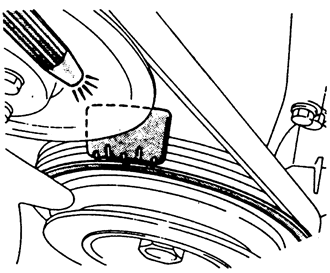
| Fig. 3: Check the basic ignition timing — 1.8L
engine
|
- Check the basic ignition timing and adjust, if necessary. Basic ignition
timing should be 5 degrees BTDC.
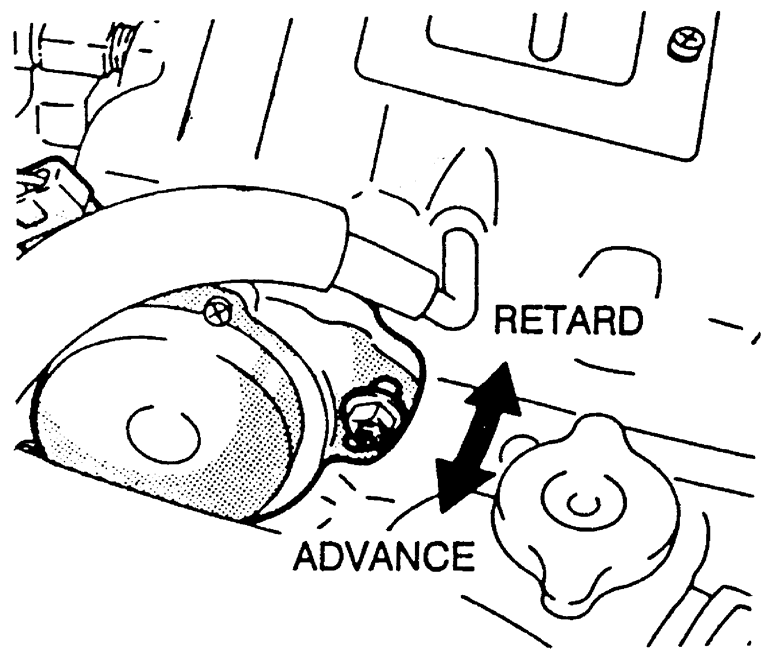
- If the timing is not within specifications, loosen the distributor hold-down
bolt and turn the distributor to bring the timing within specifications. Turning
the distributor to the right retards timing, while turning to the left will
advance timing.
- Tighten the hold-down bolt after adjustment. Recheck the timing and adjust
if necessary.
- Stop the engine and remove the ground for the ignition timing connector.
NOTE: Actual ignition timing may vary, depending on the
control mode of the engine control unit. In such case, recheck the basic
ignition timing. If there is no deviation, the ignition timing is functioning
normally.
- Start the engine and run at curb idle. Check the actual ignition timing.
Actual ignition timing should be 10 degrees BTDC.
NOTE: At altitudes more than approximately 2,300 ft. (701m)
above sea level, the actual ignition timing is further advanced to ensure
good combustion.
- Apply the parking brake and block the wheels. Run the engine until it reaches
normal operating temperature.
- Make certain all lights, cooling fan and accessories are OFF.
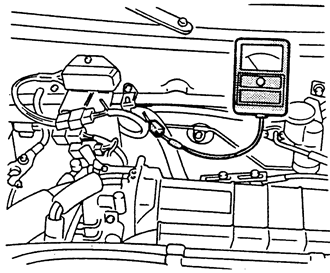
| Fig. 4: Insert a paper clip into the engine revolution
speed detection terminal and connect a tachometer to the inserted
clip — 1990–94 2.0L engines
|
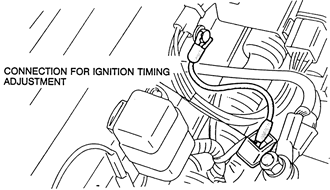
| Fig. 5: Connect a jumper wire to the terminal for
ignition-timing adjustment to ground — 1990–94
2.0L engines
|
- Position the steering wheel in straight ahead position and the gear selector
lever in P or N.
- Connect a timing light to the engine.
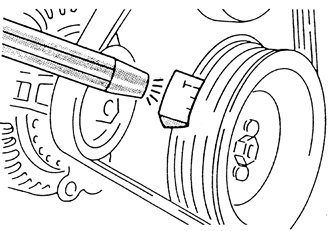
| Fig. 6: Checking the basic ignition timing — 1990–94
2.0L engines
|
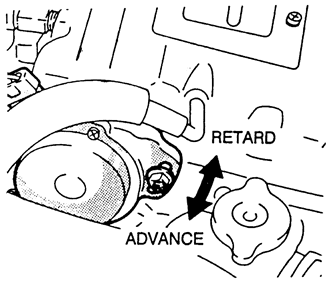
| Fig. 7: Loosen the crank angle sensor retaining nut
and turn the sensor to adjust the timing within specifications — 1990–94
2.0L engines
|
- Insert a paper clip into the engine revolution speed detection terminal
(in engine compartment) and connect a tachometer to the inserted clip.
- Check the curb idle speed. Should be 650–850 rpm.
- Stop the engine and connect a jumper wire to the terminal for ignition-timing
adjustment to ground.
- Start and run the engine at curb idle speed.
- Check the basic ignition timing and adjust, if necessary. Basic ignition
timing should be 5 degrees BTDC.
- If the timing is not within specification, loosen the crank angle sensor
retaining nut and turn the crank angel sensor to bring the timing within specs.
- Tighten the sensor retaining nut after adjustment. Recheck the timing and
adjust if necessary.
- Stop the engine and remove the ground for the ignition timing connector.
- Start the engine and run at curb idle. Check the actual ignition timing.
Actual ignition timing should be 8 degrees BTDC.
NOTE: Actual ignition timing may vary, depending on the
control mode of the engine control unit. In such cases, recheck the basic
ignition timing. If there is no deviation, the ignition timing is functioning
normally. At altitudes more than approximately 2,300 ft. (701m) above sea
level, the actual ignition timing is further advanced to ensure good combustion.
NOTE: This procedure is for 2.0L turbo engines only. For the
non-turbo engines, it is not necessary to check the ignition timing using a
timing light, as the crankshaft position is detected directly and the timing
is controlled electronically.
- Apply the parking brake and block the wheels.
- Make certain all lights, cooling fan and accessories are OFF.
- Position the steering wheel in straight ahead position and the gear selector
lever in P or N.
- Connect a timing light to the engine.
- Insert a paper clip from the harness side into the 1-pin connector (blue)
as shown in the accompanying figure. Attach a suitable tachometer to the paper
clip. Do NOT use a scan tool to check or adjust the timing on these vehicles.
| Fig. 8: Place a paper clip (from the harness side)
into the 1-pin connector — 1995 2.0L turbo engines
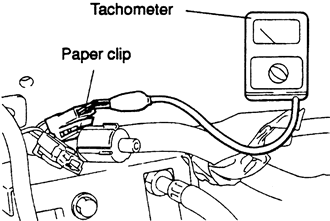
|
- Start the engine and let run until it reaches normal operating temperature.
- Check that the idle speed is within specifications. The idle should be 650–850
rpm. For rpm, one-half of the actual engine rpm is indicated, so the actual
engine rpm is 2 times the indicated valve shown by the tachometer.
- Turn the ignition switch OFF.
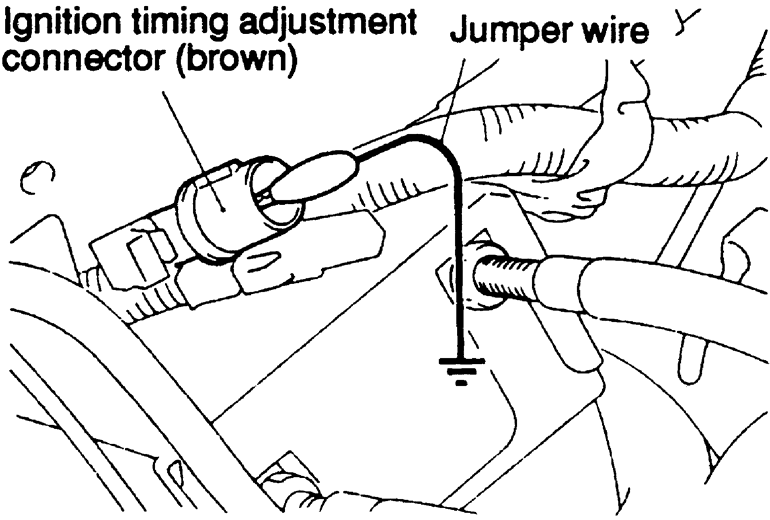
- Remove the waterproof connector from the ignition timing adjustment connector
(brown).
- Connect the jumper wire with the clip to the ignition timing adjustment
terminal, and ground this to the body as shown in the accompanying figure.
Grounding this terminal sets the engine to the basic ignition timing.
| Fig. 9: Attach the jumper with the clip to the timing
adjustment terminal and ground to the body
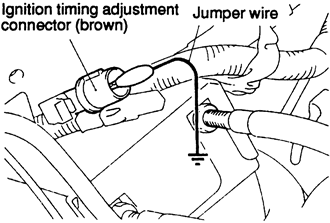
|
- Start the engine and let it run at idle.
- Check that the basic ignition timing is 2–8 degrees BTDC.
| Fig. 10: Use a suitable timing light to check that
the ignition timing is within specifications
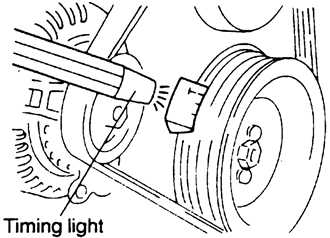
|
- Turn the engine OFF, remove the jumper wire from the ignition
timing adjustment connector, then return the connector to its original position.
- Start the engine, then check to be sure the ignition timing is at the standard
value.
- The actual ignition timing is about 8 degrees BTDC; however ignition timing
varies within about 7 degrees, even under normal operating conditions. Also,
the timing is further advanced by around 5–8 degrees BTDC at higher
altitudes.
NOTE: This procedure is for 2.0L turbo and 2.4L engines only.
For the 2.0L non-turbo engines, it is not necessary to check the ignition timing
using a timing light, as the crankshaft position is detected directly and the
timing is controlled electronically.
- Apply the parking brake and block the wheels. Run the engine until the coolant
reaches normal operating temperature.
- Make certain all lights, cooling fan and accessories are OFF.
- Position the steering wheel in straight ahead position and the gear selector
lever in P or N.
- Turn the ignition switch to the OFF position, then connect
a suitable scan tool to the data link connector.
- Attach a timing light to the engine.
- Start the engine and let it run at idle.
- Select No. 22 of the SCAN TOOL DATA TEST.
- Check that the engine idle speed is within 650–850 rpm.
- Select No. 17 of the SCAN TOOL ACTUATOR TEST.
- Check that the basic ignition timing is within 2–8 degrees BTDC. If
the timing does not fall within the specified range, inspect the fuel injection
system components.
- Press the scan tool clear key (select a forced driving cancel mode) to release
the actuator test. If the test is not canceled, a forced driving will continue
for 27 minutes. Driving under this condition may damage the engine.
- Check that the actual ignition timing is at the standard value, which is
about 8 degrees BTDC. Keep in mind that ignition timing varies within about
7 degrees, even under normal operating conditions. Also, the timing is further
advanced by around 5–8 degrees BTDC at higher altitudes.