NOTE: Whenever the oil pump is disassembled or the cover removed,
the gear cavity must be filled with petroleum jelly for priming purposes. Do
not use grease. Also, these procedures require the use of several special tools.
Do not attempt without the proper tools.
- Disconnect the negative battery cable.
- Remove the front engine mount bracket and accessory drive belts. Make sure
to support the engine using the proper equipment prior to removing the front
engine mount.
- Remove timing belt upper and lower covers.
- Remove the timing belt and crankshaft sprocket.
- Drain the engine oil. Once the oil is completely drained, install the drain
plug and tighten to specifications.
- Remove the oil pan, as outlined earlier in this section.
- Remove the oil screen and gasket.
- Remove the retainer bolts from the oil pump cover. Remove the oil pump cover
from the front engine case cover.
- Remove the flange bolt and the oil pump drive and oil pump driven gears.
- Clean all mating surfaces of gasket material.
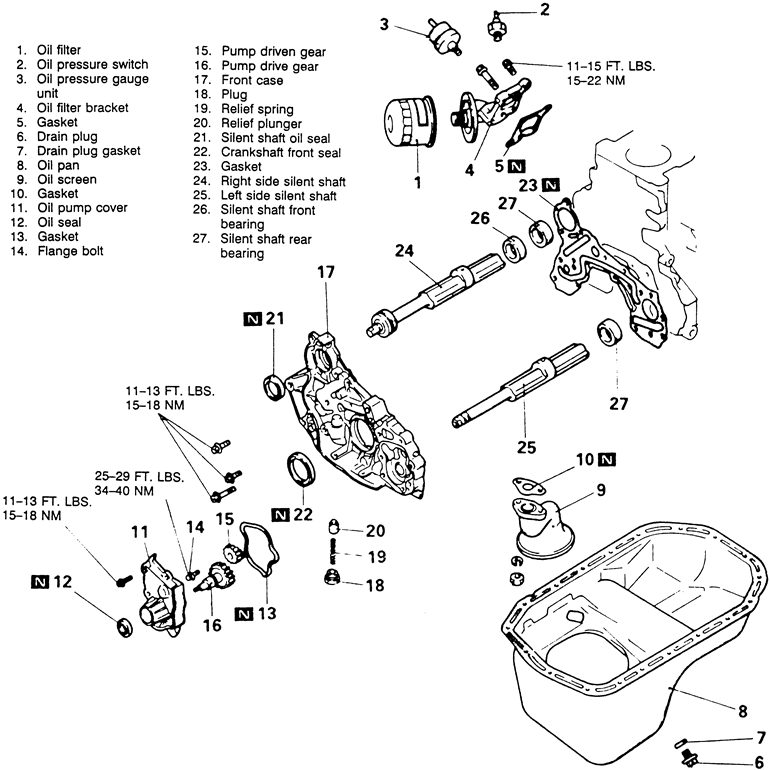
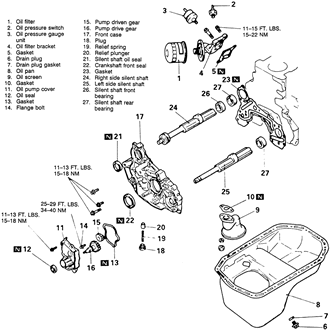
| Fig. 1: Exploded view of the front case, oil pump
and silent shafts — 1.8L engine
|
- After disassembling the oil pump, clean all components.
- Assemble the oil pump gears into the front case and rotate them to ensure
smooth rotation and no looseness. Make sure there is no ridge wear on the
contact surface between the front case and the gear surface of the oil pump
front cover. Replace if any components are worn.
- Measure the oil pump gears clearances as follows:
- With the drive and driven gears installed in the front case, measure
the tip clearance of the gears. The distance between the tips of the drive
gear's teeth and the case should be 0.0039–0.0079 in. with a limit
of 0.071 in. The distance between the tips of the driven gear's teeth
and the case should also be 0.0039–0.0079 in. with a limit of 0.071
in.
- Next measure the oil pump gear end-play. The end-play is checked by
placing a straight-edge across the machined cover surface and measuring
with a feeler gauge. The end-play for each gear should be 0.0024–0.0047
in. with a limit of 0.008 in.
- If any measurement is beyond specification, replace the entire pump assembly.
To install:
- Align the timing mark on the oil pump drive gear with that on the driven
gear and install them into the engine front cover. Apply engine oil to the
gears.
- Insert a Phillips screwdriver with a shank diameter of 0.032 in. (8mm) into
the plug hole on the left side of the cylinder to block the silent shaft.
Tighten the flange bolt to 29 ft. lbs. (40 Nm).
- Install a new oil pump gasket into the groove in the front case. When installing
the gasket, face the round side to the oil pump cover.
- Install a new oil seal into the oil pump cover, making sure the lip of the
seal is in the correct direction.
- Install the oil pump cover onto the engine front case and tighten the bolts
to 13 ft. lbs. (18 Nm).
- Install the oil screen in position with new gasket in place.
- Clean both mating surfaces of the oil pan and the cylinder block. Apply
sealant in the groove in the oil pan flange, keeping towards the inside of
the bolt holes. The width of the sealant bead applied is to be about 0.016
in. (4mm) wide.
NOTE: After applying sealant to the oil pan, do not exceed
15 minutes before installing the oil pan.
- Install the oil pan to the engine and secure with the retainers. Tighten
bolts to 6 ft. lbs. (8 Nm).
- Install the oil filter bracket to the engine with new gasket in place. Tighten
the retainer bolts to 15 ft. lbs. (22 Nm).
- Install the oil pressure sending unit as follows:
- Apply a thin bead of sealant to the threaded portion of the oil pressure
sensor. Do not allow sealer to contact the end of the threaded portion
of the sensor.
- Install the sensor and tighten to 8 ft. lbs. (12 Nm). Do not overtigthen
the sensor.
- Connect the electrical harness connector to the sensor.
- Lubricate the sealing ring on the oil filter with a small amount of clean
engine oil. Install new oil filter, filled with clean oil, onto the filter
bracket.
- Fill the engine to the correct level with clean engine oil.
- Connect the negative battery cable and start the engine. Check the oil pressure,
making sure it is at the correct reading. Inspect for leaks.
- Disconnect the negative battery cable. Rotate the engine so No. 1 plug is
on Top Dead Center (TDC) of it's compression stroke. The timing marks should
be aligned at this point.
- Raise and safely support the vehicle.
- Drain the engine oil. Once the oil is completely drained, install the drain
plug and tighten to specifications.
- Carefully lower the vehicle.
- Using the proper equipment, support the weight of the engine. Remove the
front engine mount bracket and accessory drive belts.
- Remove timing belt upper and lower covers.
- Remove the timing belt and crankshaft sprocket.
- Disconnect the electrical connector from the oil pressure sending unit.
Remove the oil pressure sensor using special removal tool MD998054. Remove
the oil filter and the oil filter bracket.
- Remove the oil pan, oil screen and gasket.
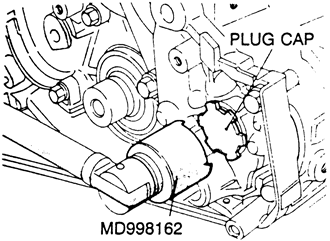
- Using special tool MD998162, remove the plug cap in the engine front cover.
If the plug is too tight, hit the plug head with a hammer a few times and
the plug should be easier to loosen.
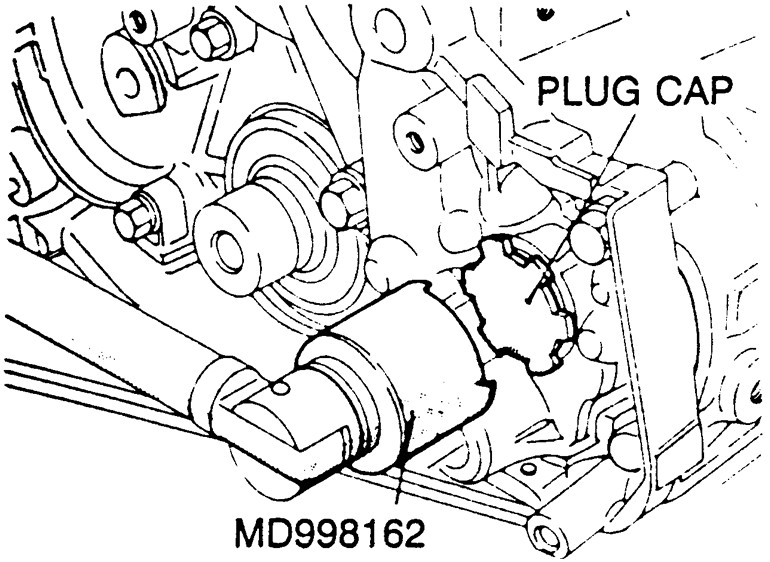
| Fig. 2: Using special tool MD998162, remove the plug
cap in the engine front cover — 1990–94 2.0L
engine
|
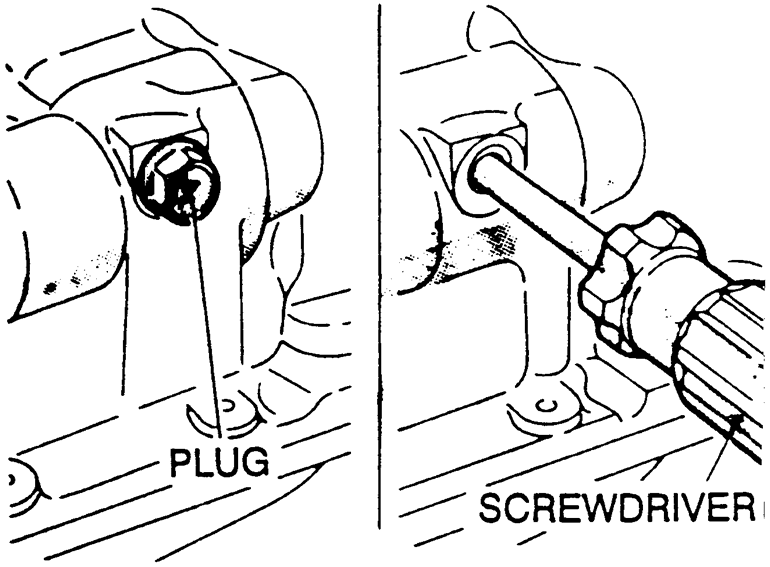
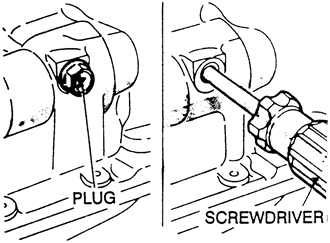
| Fig. 3: Insert a Phillips screwdriver with a shank
diameter of 0.32 in. (8mm) into the plug hole on the side of the engine
block — 1990–94 2.0L engine
|
- Remove the plug on the side of the engine block. Insert a Phillips screwdriver
with a shank diameter of 0.32 in. (8mm) into the plug hole. This will hold
the silent shaft.
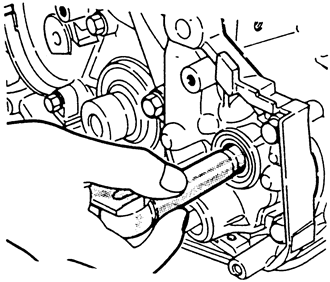
- Remove the driven gear bolt that secures the oil pump driven gear to the
silent shaft.
- Remove and tag the front cover mounting bolts. Note the lengths of the mounting
bolts as they are removed for proper installation.
- Remove the front case cover and oil pump assembly. If necessary, the silent
shaft can come out with the cover assembly.
- Remove the oil pump cover, located on the back of the engine front cover.
Remove the oil pump drive and driven gears.
- After disassembling the oil pump, clean all components.
- Assemble the oil pump gears into the front case and rotate it to ensure
smooth rotation and no looseness. Make sure there is no ridge wear on the
contact surface between the front case and the gear surface of the oil pump
front cover.
- The gear side clearance should be checked using the following procedure:
- With the drive and driven gears installed in the front case, measure
the tip clearance of the gears. The distance between the tips of the drive
gear's teeth and the case should be 0.0063–0.0083 in. with a limit
of 0.0098 in. The distance between the tips of the driven gear's teeth
and the case should be 0.0051–0.0071 in. with a limit of 0.0098
in.
- Measure each oil pump gears end-play. The end-play is checked by placing
a straight-edge across the machined cover surface and measuring with a
feeler gauge. The end-play for the drive gear should be 0.0031–0.0055
in. with a limit of 0.0098 in. The end-play for the driven gear is 0.0024–0.0047
in. with a limit of 0.0098 in.
- If any measurement is beyond specification, replace the entire pump assembly.
To install:
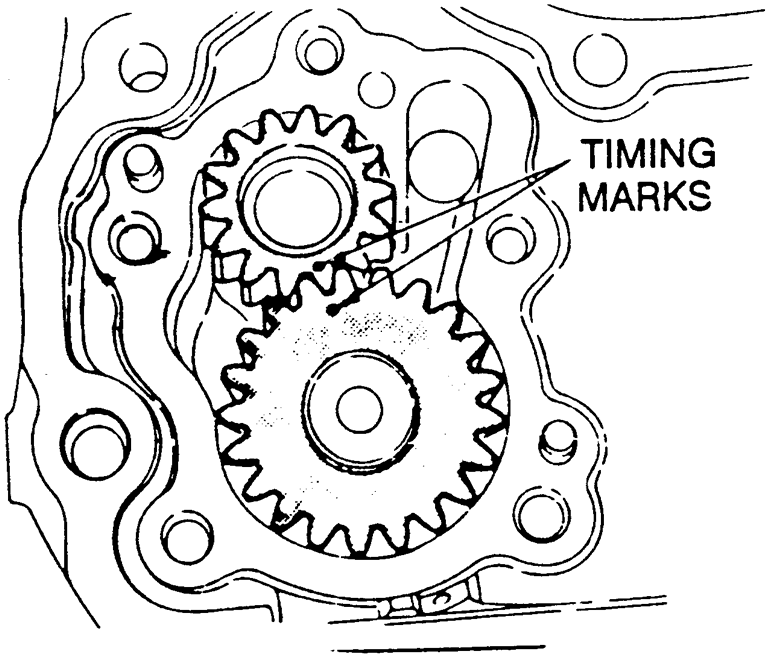
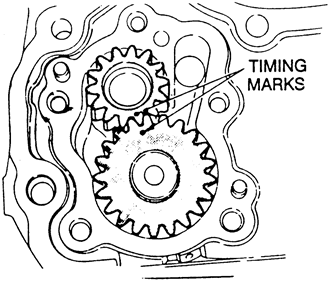
- Align the timing mark on the oil pump drive gear with that on the driven
gear and install them into the engine front case. Apply engine oil to the
gears.
- Install the oil pump cover and tighten the retainer bolts to 13 ft. lbs.
(18 Nm).
- Using the appropriate driver, install a new crankshaft seal into the front
case.
- Position new front case gasket in place. Set seal guide tool MD998285 on
the front end of the crankshaft to protect the seal from damage. Apply a thin
coat of oil to the outer circumference of the seal pilot tool.
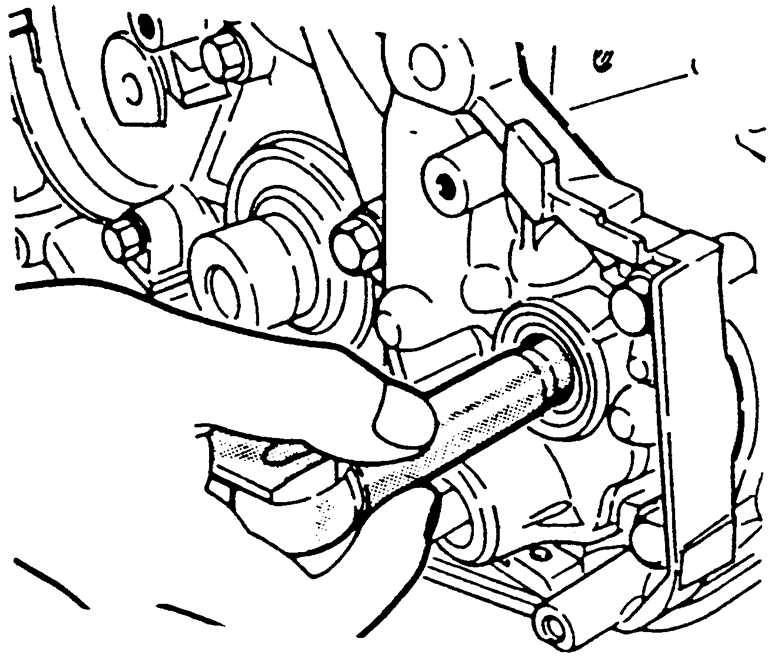
| Fig. 4: Remove the driven gear bolt that secures
the oil pump driven gear to the silent shaft — 1990–94
2.0L engine
|
| Fig. 5: Install the 2 oil pump gears into the case;
make sure to align the timing marks — 1990–94
2.0L engine
|
- Install the front case assembly through a new front case gasket and temporarily
tighten the flange bolts.
- Mount the oil filter on the bracket with new oil filter bracket gasket in
place. Install the 4 bolts with washers and tighten to 25 ft. lbs. (34 Nm).
- Insert a Phillips screwdriver into a hole in the left side of the engine
block to lock the silent shaft in place.
- Secure the oil pump drive gear onto the left silent shaft by installing
and tightening the driven gear bolt to 29 ft. lbs. (40 Nm).
- Install new O-ring to the groove in the front case and install the plug
cap. Using the special tool MD998162, tighten the cap to 20 ft. lbs. (27 Nm).
- Install the oil screen in position with new gasket in place.
- Clean both mating surfaces of the oil pan and the cylinder block. Apply
sealant in the groove in the oil pan flange, keeping towards the inside of
the bolt holes. The width of the sealant bead applied is to be about 0.016
in. (4mm) wide.
NOTE: After applying sealant to the oil pan, do not exceed
15 minutes before installing the oil pan.
- Install the oil pan to the engine and secure with the retainers. Tighten
bolts to 9 ft. lbs. (12 Nm).
- Install the oil pressure gauge unit and the oil pressure switch. Connect
the electrical harness connector.
- Install the oil cooler secure with oil cooler bolt tigthened to 33 ft. lbs.
(45 Nm).
- Install new oil filled with clean engine oil.
- Connect the negative battery cable and start the engine. Check the oil pressure,
making sure it is at the correct reading. Inspect for leaks.
- Disconnect the negative battery cable.
- Raise the safely support the vehicle.
- Drain the engine oil into a suitable container. When the oil is completely
drained, install the drain plug.
- Remove the rear plate.
- Remove the oil filter and adapter.
- Remove the oil pan.
- Remove the oil pick-up tube.
- Remove the timing belt.
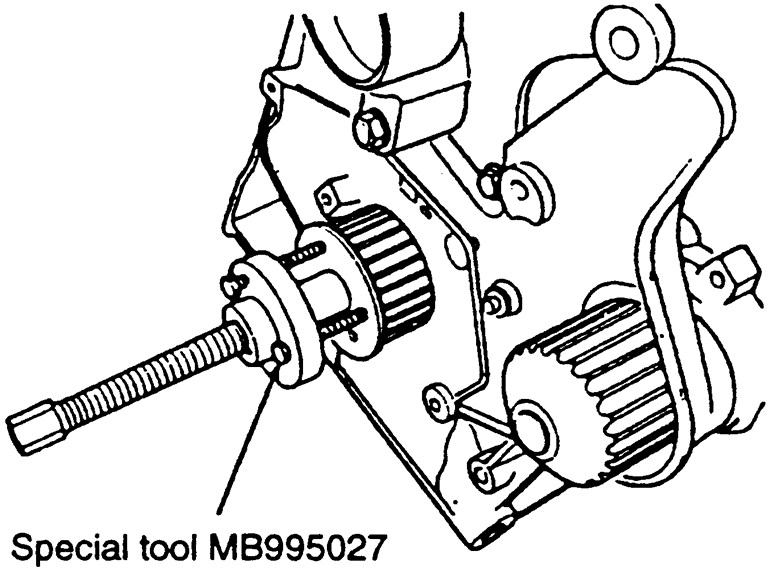
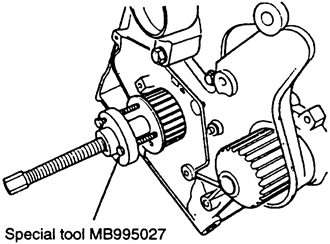
- Using tool MB995027 or equivalent, remove the crankshaft sprocket.
| Fig. 6: Use the proper tool to remove the crankshaft
sprocket — 1995–98 2.0L non-turbo engine
|
WARNING
Do not nick the crankshaft sealing surface or the seal bore.
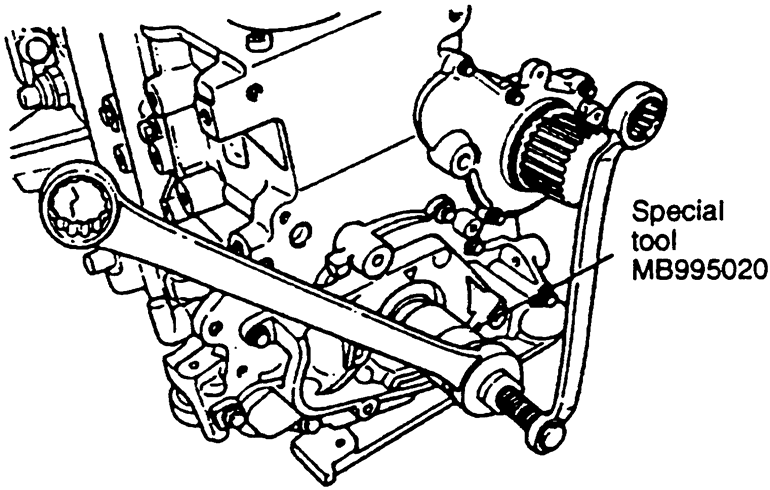
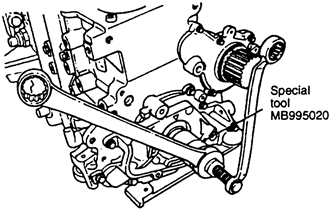
- Using tool MB995020 or equivalent, remove the crankshaft oil seal.
| Fig. 7: Removing the front crankshaft oil seal — 1995–98
2.0L non-turbo engine
|
- Unfasten the oil pump mounting bolts, then remove the oil pump from the
vehicle.
To install:
- Apply a bead of the specified sealant to the sealing surface of the oil
pump and install a new O-ring into the counter bore on the oil pump discharge
passage.
- Carefully install the oil pump on the crankshaft until seated to the engine
block. Tighten the bolts to 17 ft. lbs. (23 Nm).
- Install a new crankshaft oil seal in the oil pump.
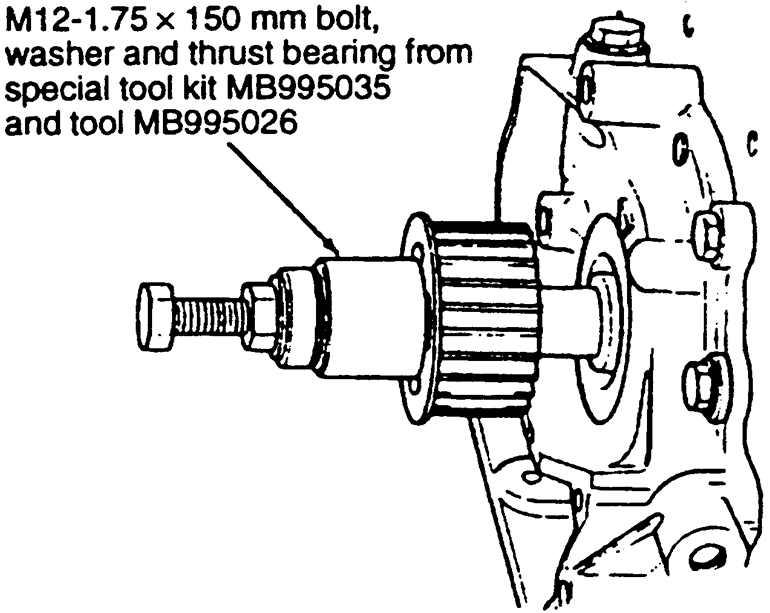
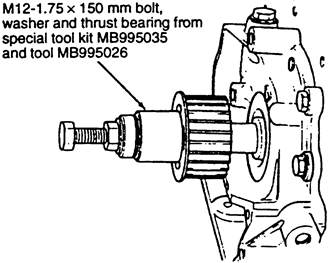
- Install the crankshaft sprocket using the proper installation tools.
| Fig. 8: Install the crankshaft sprocket using the
proper installation — 1995–98 2.0L non-turbo
engine
|
- Install the timing belt and related components.
- Install the oil pick-up tube.
- Apply Loctite® 18718 or equivalent at the point where the oil
pump meets the engine block.
- Install the oil pan using a new gasket. Tighten the mounting bolts to 9
ft. lbs. (12 Nm).
- Use a new O-ring and install the oil filter adapter to the engine. Made
sure the roll pin aligns with the hole. Tighten the assembly to 40 ft. lbs.
(55 Nm).
- Install a new oil filter.
- Install the rear plate.
- Safely lower the vehicle to the floor.
- Refill the engine with the proper amount of oil.
- Start the engine and check for leaks.
- Disconnect the negative battery cable. Rotate the engine so No. 1 cylinder
is on Top Dead Center (TDC) of its compression stroke. The timing marks should
be aligned at this point.
- Raise and safely support the vehicle.
- Drain the engine oil. Lower the vehicle.
- Using the proper equipment, support the weight of the engine. Remove the
front engine mount bracket and accessory drive belts.
- Remove timing belt upper and lower covers.
- Remove the timing belt and crankshaft sprocket.
- Disconnect the electrical connector from the oil pressure sending unit and
remove the oil pressure sensor. Remove the oil filter and the oil filter bracket.
- Remove the oil pan, oil screen and gasket.
- Using special tool MD998162, remove the plug cap in the engine front cover.
- Remove the plug on the side of the engine block. Insert a Phillips screwdriver
with a shank diameter of 0.32 in. (8mm) into the plug hole. This will hold
the silent shaft.
- Remove the driven gear bolt that secures the oil pump driven gear to the
silent shaft.
- Remove and tag the front cover mounting bolts. Note the lengths of the mounting
bolts as they are removed for proper installation.
- Remove the front case cover and oil pump assembly. If necessary, the silent
shaft can come out with the cover assembly.
- Remove the oil pump cover, located on the back of the engine front cover.
Remove the oil pump drive and driven gears.
- After disassembling the oil pump, clean all components and remove gasket
material from mating surfaces.
- Assemble the oil pump gears into the front case and rotate it to ensure
smooth rotation and no looseness. Make sure there is no ridge wear on the
contact surface between the front case and the gear surface of the oil pump
front cover.
To install
- Align the timing mark on the oil pump drive gear with that on the driven
gear and install them into the engine front case. Apply engine oil to the
gears.
- Install the oil pump cover and tighten the retainer bolts to 13 ft. lbs.
(18 Nm).
- Using the appropriate driver, install a new crankshaft seal into the front
case.
- Position new front case gasket in place. Set seal guide tool MD998285 on
the front end of the crankshaft to protect the seal from damage. Apply a thin
coat of oil to the outer circumference of the seal pilot tool.
- Install the front case assembly through a new front case gasket and temporarily
tighten the flange bolts.
- Mount the oil filter on the bracket with new oil filter bracket gasket in
place. Install the bolts with washers and tighten to 4 ft. lbs. (19 Nm).
- Insert a Phillips screwdriver into a hole in the left side of the engine
block to lock the silent shaft in place.
- Secure the oil pump drive gear onto the left silent shaft by installing
and tightening the driven gear bolt to 27 ft. lbs. (37 Nm).
- Install a new O-ring to the groove in the front case and install the plug
cap. Using the special tool MD998162, tighten the cap to 17 ft. lbs. (24 Nm).
- Install the oil screen in position with new gasket in place.
- Clean both mating surfaces of the oil pan and the cylinder block. Apply
sealant in the groove in the oil pan flange, keeping towards the inside of
the bolt holes. The width of the sealant bead applied is to be about 0.016
in. (4mm) wide.
NOTE: After applying sealant to the oil pan, do not exceed
15 minutes before installing the oil pan.
- Install the oil pan to the engine and secure with the retainers.
- Install the oil pressure gauge unit and the oil pressure switch. Connect
the electrical harness connector.
- Install the oil cooler. Secure with oil cooler bolt tigthened to 31 ft.
lbs. (43 Nm).
- Install a new oil filter. Refill the crankcase.
- Connect the negative battery cable and start the engine. Verify oil pressure.
Inspect for leaks.