Previous Next

TESTING

1990–94 2.0L Engine
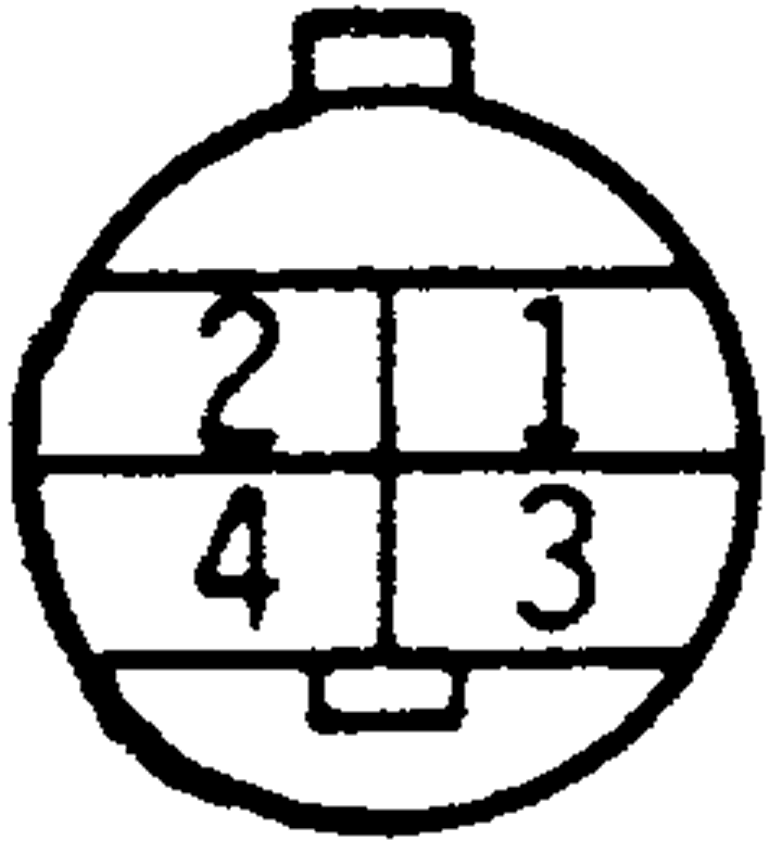
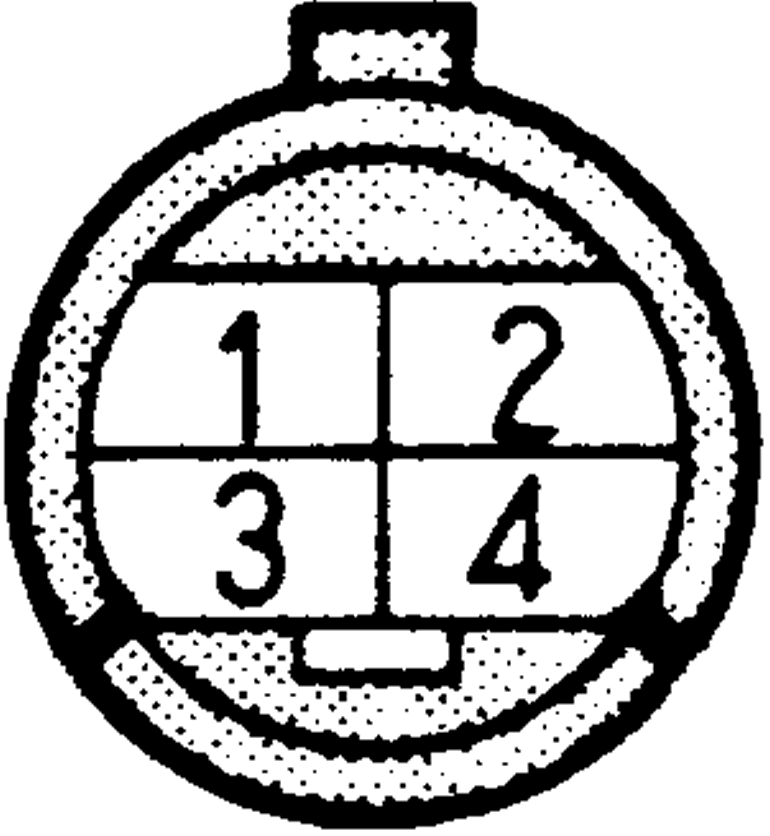
  1. Disconnect the oxygen sensor connector. Connect test harness MD998464 or equivalent, to the sensor harness. If the test harness is not available, perform the test procedure using the sensor harness terminals listed below. The color codes may not be the same on the sensor harness as they are for the test harness.

    Fig. 1: Heated oxygen sensor harness side connector identification — 1990–94 2.0L engines

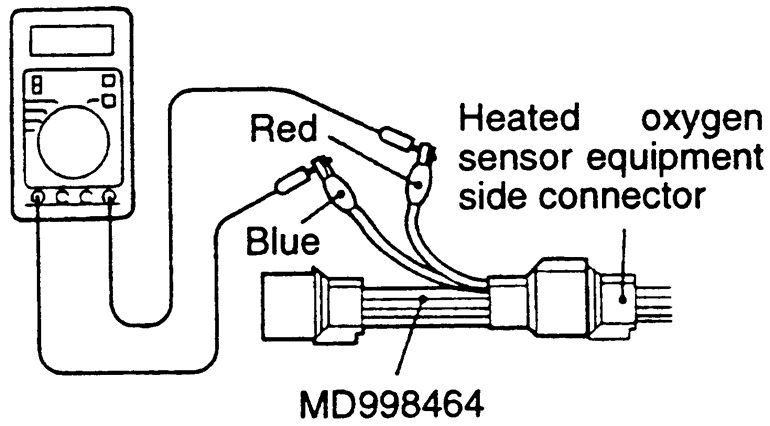
    Fig. 2: Heated oxygen sensor terminal identification — 1990–94 2.0L engines

  2. Measure the resistance across terminals 4 (blue connector of test harness) and 3 (red connector of test harness) of the oxygen sensor test connector or sensor harness. If no continuity, replace the sensor.
  3. Start and run the engine until normal operating temperature is reached.
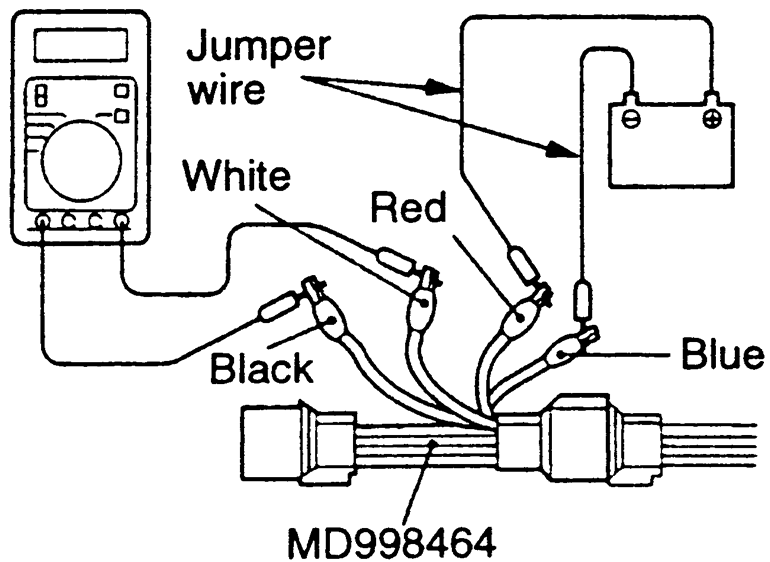
  4. Using jumper wires, connect terminals 3 (red connector of test harness) and 4 (blue connector of test harness) of the oxygen sensor harness connector to the battery positive and negative terminals respectively.

    NOTE: Be sure to connect the voltmeter to the terminals carefully. Any short circuits could damage the sensor.

  5. Connect a digital voltmeter across terminals 1 (yellow connector of test harness) and 2 (black connector of test harness).While repeatedly racing the engine, measure the output voltage of the sensor.
  6. The desired reading is 0.6–1.0 volts. If the reading differs from the desired voltage, replace the sensor.
1995–98 Vehicles
2.0L NON-TURBO ENGINE
  1. To test the front heated oxygen sensor, perform the following:
    1. Disconect the heated oxygen sensor connector.
    2. Using an digital voltmeter (DVOM), check for continuity (about 12 volts at 68°F) between terminals 3 and 4 on the connector. If there is no continuity, replace the sensor.
    3. Start the engine and let run until normal operating temperatures are reached.

      WARNING
      When connecting the jumper wires, be very careful, as the sensor can be damaged!

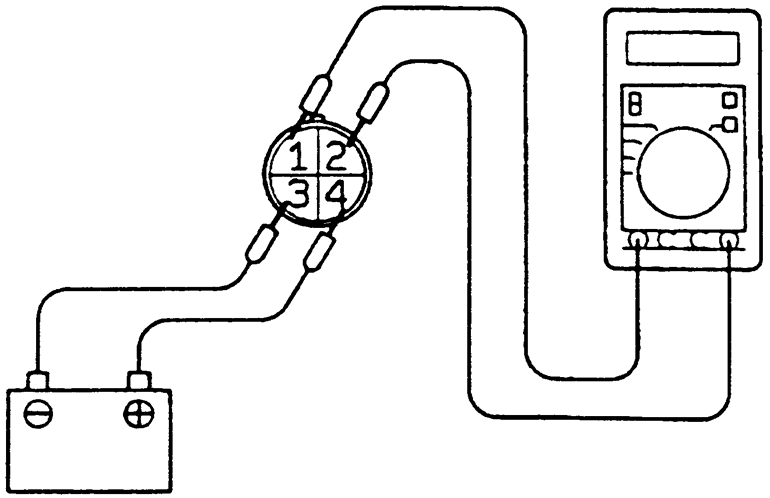
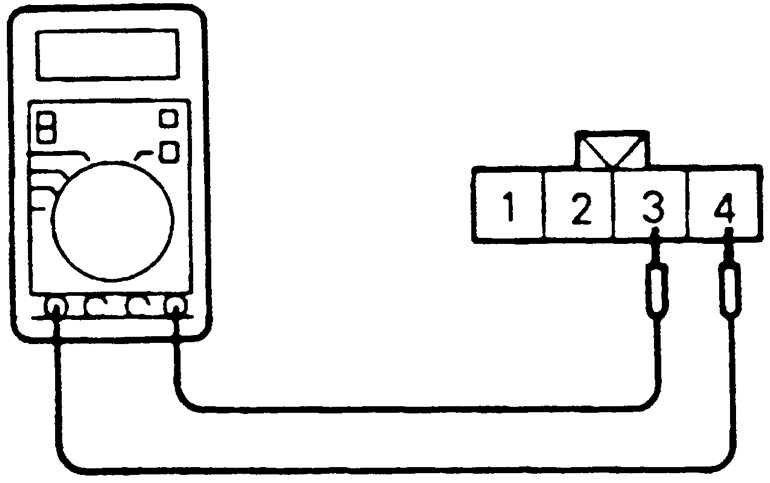
    4. Use jumper wires to connect terminal 3 of the sensor connector to the positive battery terminal and terminal 4 to the negative battery terminal.

      Fig. 3: Testing the front heated oxygen sensor for proper voltage — 1995–98 2.0L non-turbo engine

    5. Connect a digital voltmemter between terminals 1 and 2.
    6. While repeatedly racing the engine, measure the voltage. It should be 0.6–1.0 volts. If not, replace the sensor.
  2. To test the rear heated oxygen sensor, perform the following:
    1. Disconect the heated oxygen sensor connector.

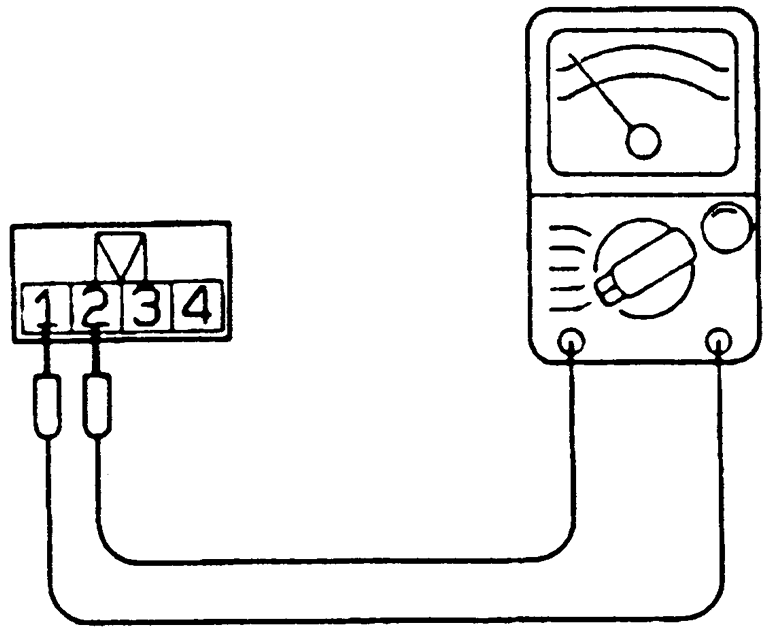
      Fig. 4: Check for continuity between terminals 1 and 2 on the rear oxygen sensor — 1995–98 2.0L non-turbo engine

    2. Using an digital voltmeter (DVOM), check for continuity (about 12 volts at 68°F) between terminals 1 and 2 on the connector. If there is no continuity, replace the sensor.
2.0L TURBO AND 2.4L ENGINES
  1. To test the front heated oxygen sensor, perform the following:
    1. Disconect the heated oxygen sensor connector and attach the special test harness (MD998464 or equivalent) to the connector on the heated oxygen sensor side.
    2. Make sure there is continuity (about 12 volts at 68°F) between terminal 1 (red clip) and terminal 3 (blue clip) on the heated oxygen sensor connector. If there is no continuity, replace the sensor.
    3. Start the engine and let run until normal operating temperatures are reached.

      WARNING
      When connecting the jumper wires, be very careful, as the sensor can be damaged!

    4. Use jumper wires to connect terminal 1 (red clip) on the sensor connector to the positive battery cable and terminal 3 (blue clip) to the negative battery terminal.

      Fig. 5: Testing front heated oxygen sensor connector — 1995–98 2.0L turbo and 2.4L engines

    5. Connect a DVOM between terminal 2 (black clip) and 4 (white clip).
    6. While repeatedly racing the engine, measure the voltage. It should be 0.6–1.0 volts. If not, replace the sensor.

      Fig. 6: Checking for proper sensor voltage — 1995–98 2.0L turbo and 2.4L engines

  2. To test the rear heated oxygen sensor, perform the following:
    1. Disconect the heated oxygen sensor connector.

      Fig. 7: Testing the rear oxygen sensor continuity — 1995–98 2.0L turbo and 2.4L engines

    2. Using an digital voltmeter (DVOM), check for continuity (about 12 volts at 68°F) between terminals 3 and 4 on the connector. If there is no continuity, replace the sensor.

Previous Next