NOTE: If the oxygen sensor has failed, the driveability of
the vehicle may not be influenced. Since the air fuel mixture ratio shifts toward
the rich side, the driveability of the vehicle may become better. However, levels
of hazardous components such as HC, CO, and NOx emitted out the tailpipe will
be elevated. This is because the ECU is not controlling the air fuel mixture.
- Before testing, make certain the engine is fully warm. Coolant temperature
must be around 176–194°F (80–90°C).
- Detach the oxygen sensor electrical connector.
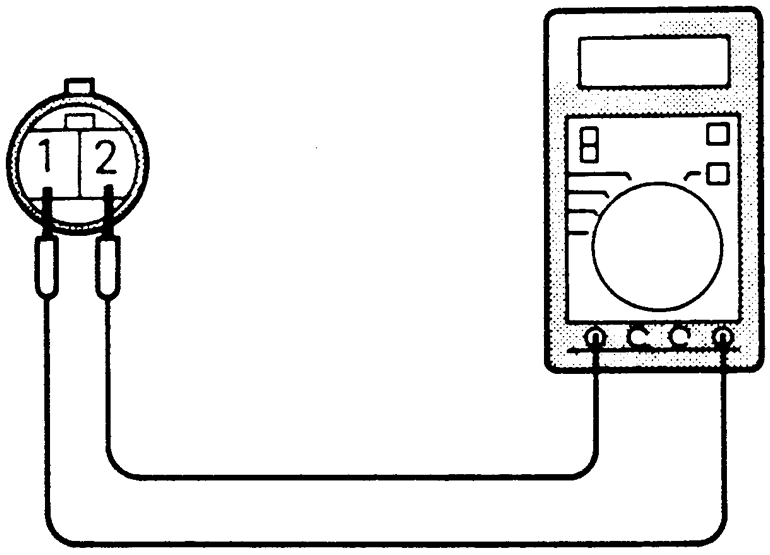
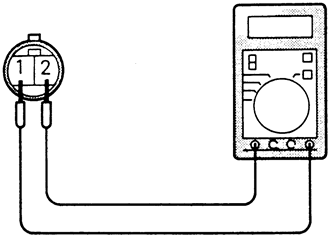
- Connect the positive probe of a digital ohmmeter to terminal 1 of the sensor
connector. Attach the other meter probe to chassis ground.
| Fig. 1: Use a DVOM to test the oxygen sensor — 1.8L
engine
|
- Repeatedly race the engine; measure the voltage output of the sensor. As
the mixture becomes richer from repeated racing of the engine, the sensor
output voltage should register 0.6–1.0 volts.
- If the voltage output is incorrect, the sensor will require replacement.
- Shut the ignition OFF, disconnect the test equipment and reconnect the sensor
to the wiring harness.
- Detach the oxygen sensor electrical connector.
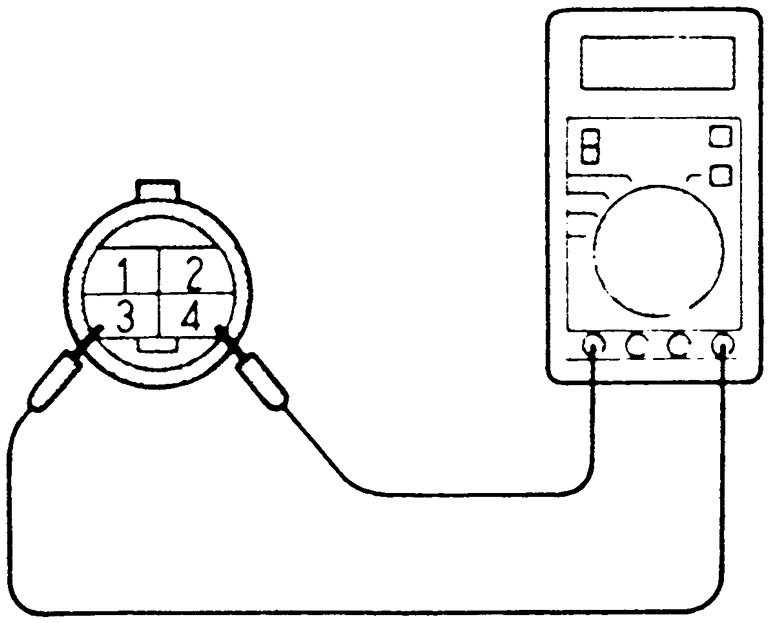
- Measure the resistance between terminal Nos. 3 and 4. Correct resistance
is approximately 12 ohms at 68°F.
- If there is no continuity or if the resistance is not approximately correct,
the sensor must be replaced.
- Operate the engine until fully warmed up. Coolant temperature must be at
least 176°F.
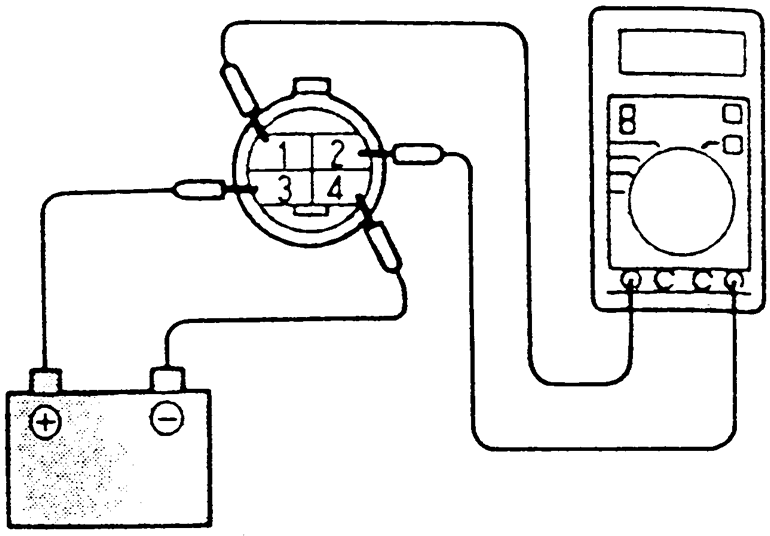
- Using jumper wires, carefully connect terminal 3 to battery positive voltage
and connect terminal No. 4 to a known good ground.
| Fig. 2: Testing continuity of oxygen sensor — early
model 2.0L engine
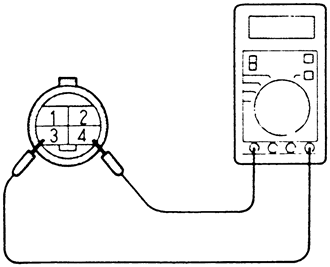
|
| Fig. 3: Measuring the oxygen sensor output voltage — early
model 2.0L engine
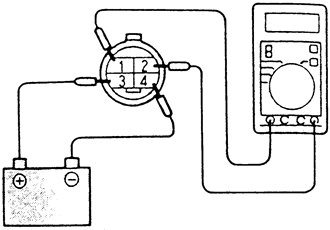
|
NOTE: Use extreme care when connecting the jumpers. Incorrect
circuiting will destroy the sensor.
- Connect the probes of a digital voltmeter across to terminal No. 1 and terminal
No. 2.
- Repeatedly race the engine; measure the voltage output of the sensor. As
the mixture becomes richer from repeated racing of the engine, the sensor
output voltage should become 0.6–1.0 volt.
- If the voltage output is incorrect, the sensor must be replaced.
- Shut the ignition OFF, disconnect the test equipment and reconnect the sensor
to the wiring harness.