- Raise the vehicle and support safely.
- Remove the tire and wheel assembly.
- Remove the bolt(s) holding the speed sensor bracket to the knuckle and remove
the assembly from the vehicle.
NOTE: The speed sensor has a pole piece projecting from
it. This exposed tip must be protected from impact or scratches. Do not
allow the pole piece to contact the toothed wheel during removal or installation.
- Remove the caliper from the brake disc and suspend with a wire. Do not disconnect
the brake hose from the caliper.
- Remove the brake disc.
- Remove the grease cap, self-locking nut and tongued washer.
- Remove the rear hub assembly.
- If equipped with ABS, remove the retainer bolts and the rear rotor assembly
from the back side of the bearing assembly. Replace the rear hub bearing assembly
as required.
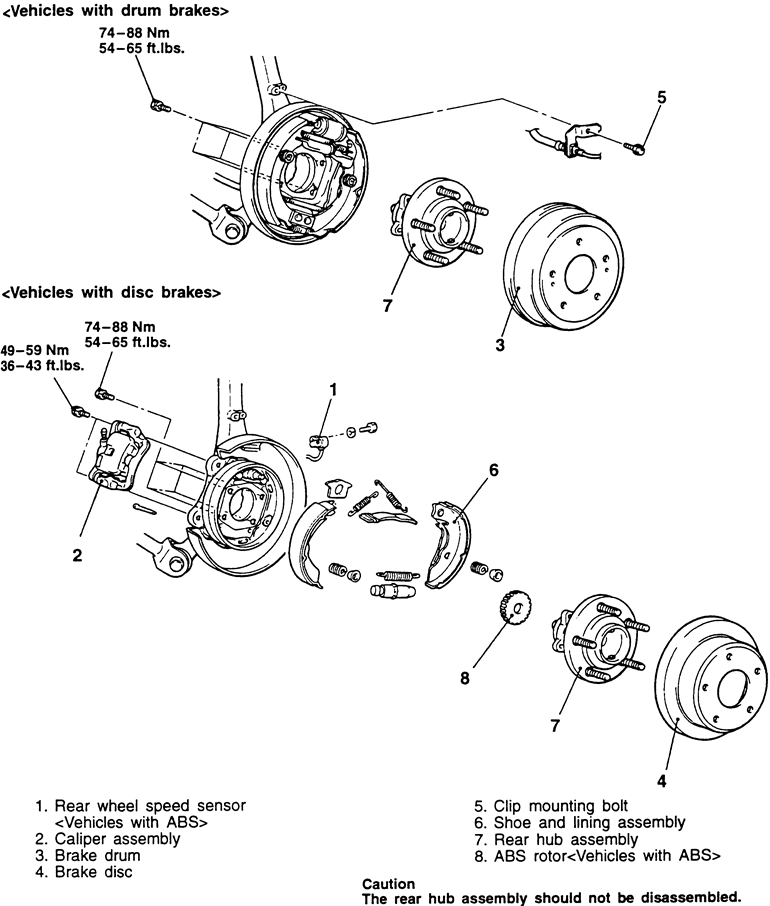
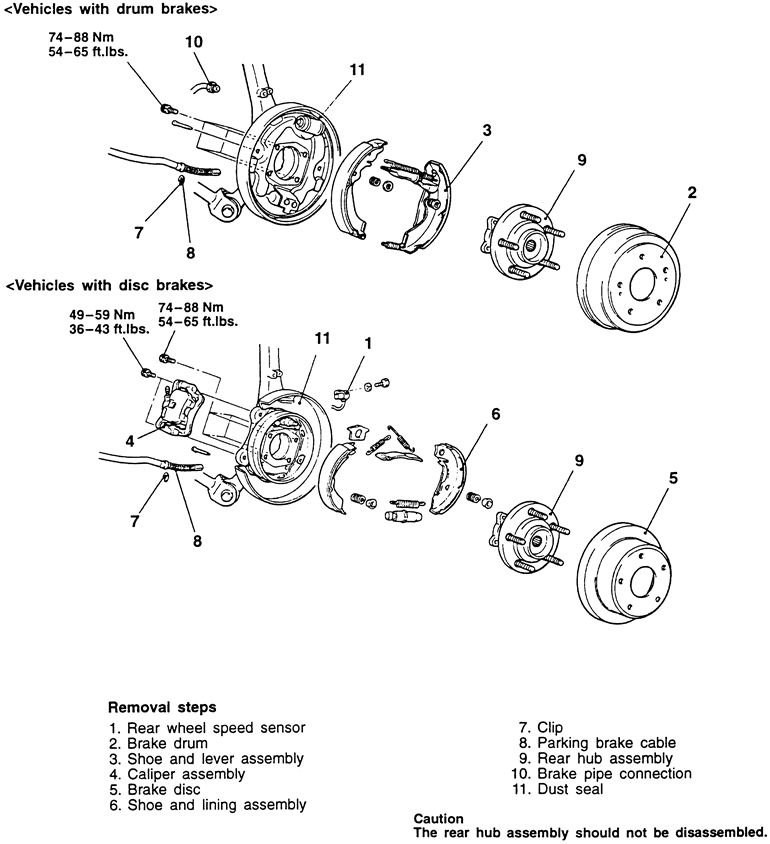
NOTE: The rear hub assembly can not be disassembled. If
bearing replacement is required, replace the assembly as a unit.
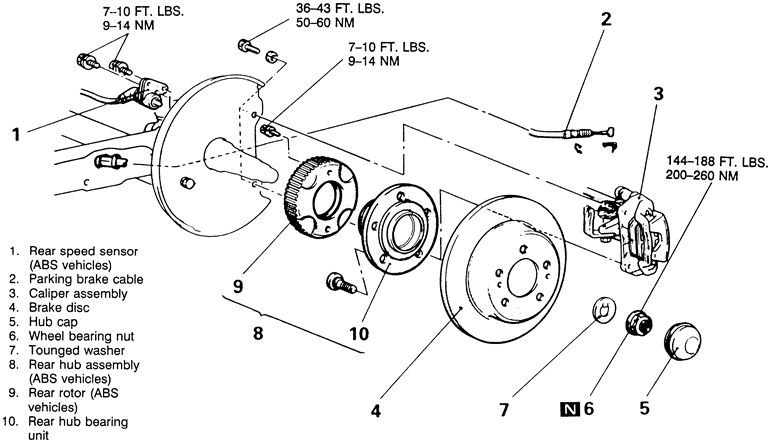
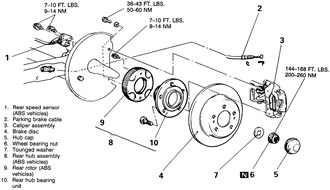
| Fig. 1: Rear hub and bearing assembly and related
components — 1990–94 vehicles
|
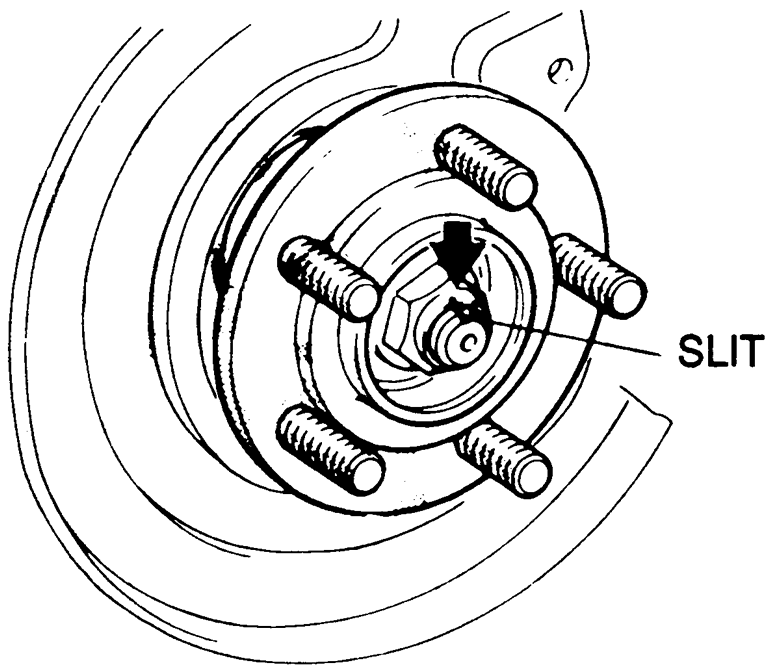
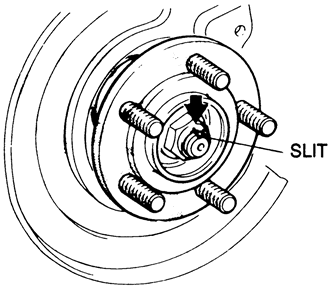
| Fig. 2: Crimp the wheel bearing nut at the spindle
indentation–1990–94 vehicles
|
To install:
- Install the rear rotor to the back side of the bearing assembly and secure
with the retainer bolts. Install the hub assembly.
- Install the tongued washer and a new self-locking nut. Tighten the nut to
144–188 ft. lbs. (200–260 Nm), align with the indentation in the
spindle, and crimp the wall of the nut. This will lock the nut in position.
- Set up a dial indicator and measure the end-play while moving the hub in
and out. If the end-play exceeds 0.004 in. (0.01mm), retighten the nut. If
still beyond the limit, replace the hub unit.
- Install the grease cap and brake components removed during this procedure.
- Temporarily install the speed sensor to the knuckle; tighten the bolts only
finger-tight.
- Route the cable correctly and loosely install the clips and retainers. All
clips must be in their original position and the sensor cable must not be
twisted. Improper installation may cause cable damage and possibly system
failure.
NOTE: The wiring in the harness is easily damaged by twisting
and flexing. Use the white stripe on the outer insulation to keep the sensor
harness properly placed.
- Use a brass or other non-magnetic feeler gauge to check the air gap between
the tip of the pole piece and the toothed wheel. Correct gap is 0.012–0.035
in. (0.3–0.9mm). Tighten the 2 sensor bracket bolts to 10 ft. lbs. (14
Nm) with the sensor located so the gap is the same at several points on the
toothed wheel. If the gap is incorrect, it is likely that the toothed wheel
is worn or improperly installed.
- Install the tire and wheel assembly.
- Prior to moving the vehicle, pump the brakes unit a firm pedal is obtained.