Previous Next

REMOVAL & INSTALLATION

  1. Disconnect the negative battery cable.
  2. Remove some of the brake fluid from the master cylinder reservoir. The reservoir should be no more than 12 full. When the pistons are depressed into the calipers, excess fluid will flow up into the reservoir.
  3. Raise the vehicle and support safely.
  4. Remove the appropriate tire and wheel assemblies. For rear disc brakes, loosen the parking brake cable adjustment from inside the vehicle.
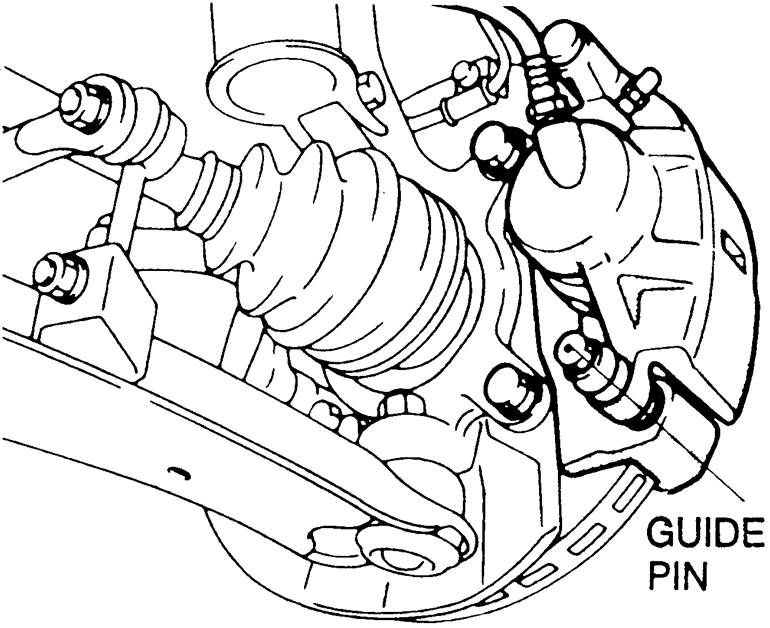
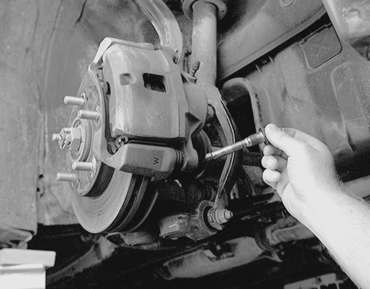
  5. Remove the caliper lock and guide pins and lift the caliper assembly from the caliper support. Tie the caliper out of the way using wire. Do not allow the caliper to hang by the brake line.

    Fig. 1: Location of the front caliper guide pin (bottom) and lock pin (top)

    Fig. 3: Withdraw the caliper guide pin from the assembly

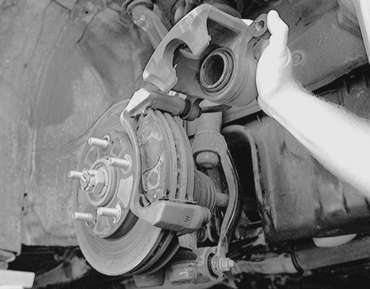
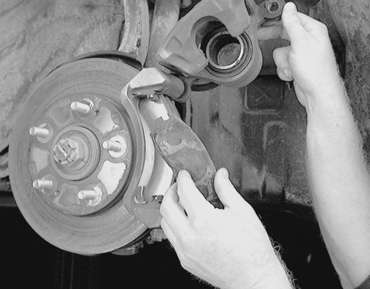
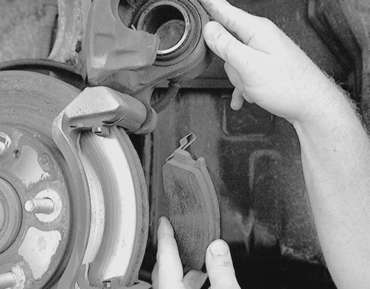
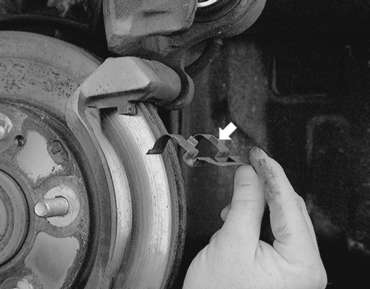
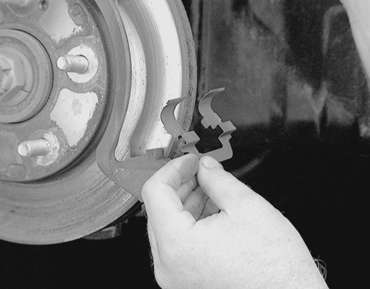
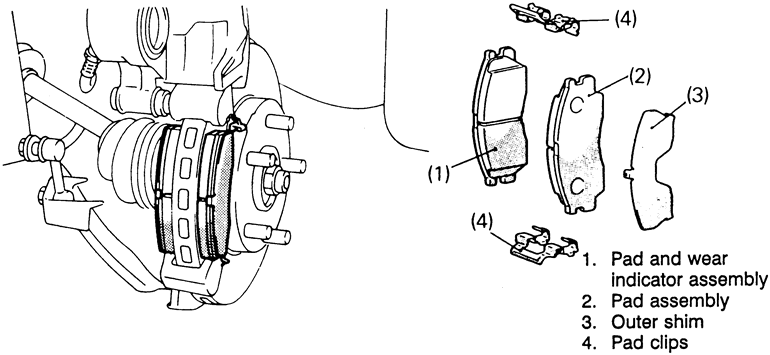
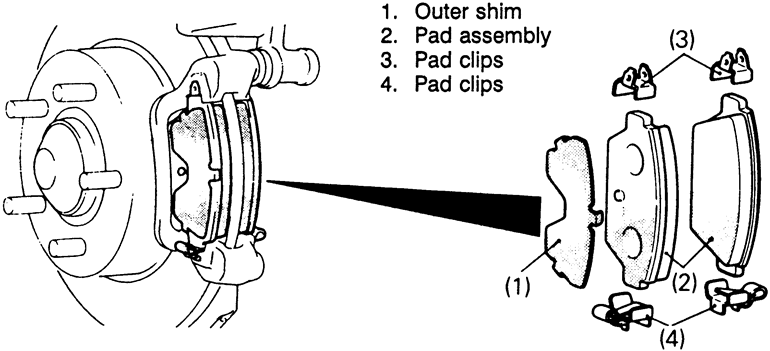
  6. Remove the outer shim, brake pads and spring clips from the caliper support. Take note of positioning of each to aid in installation.

    Fig. 4: View of the brake pad assemblies with the caliper lifted from the support

    Fig. 5: With the caliper lifted up away from the support and remove the outer pad . . .

    Fig. 6: . . . then remove the inner pad from the assembly

    Fig. 7: Remove the upper clip (see arrow) and inspect it for damage . . .

    Fig. 8: . . . there is also a bottom clip which should be removed, inspected and replaced if necessary

    Fig. 9: Exploded view of the front disc brake pads and related components — 1990–94 vehicles

    Fig. 10: Removing rear disc brake pads, shims and spring clips from the caliper assembly

  7. Install the wheel lug nuts onto the studs and tighten. This is done to hold the disc on the hub.
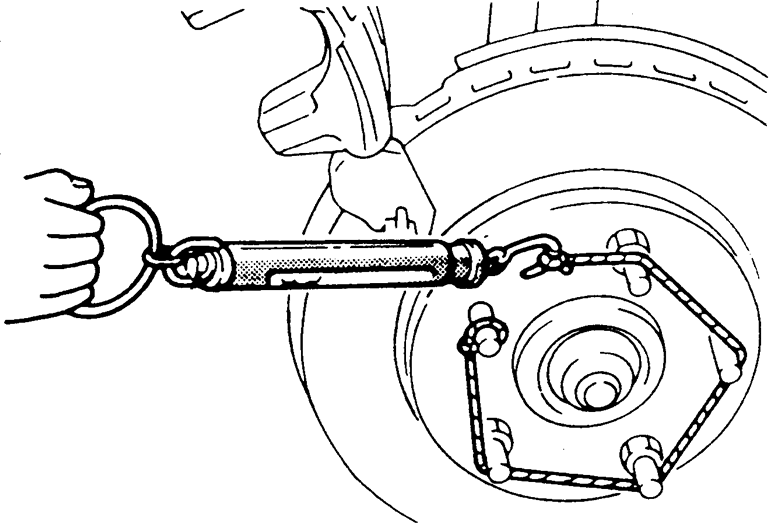
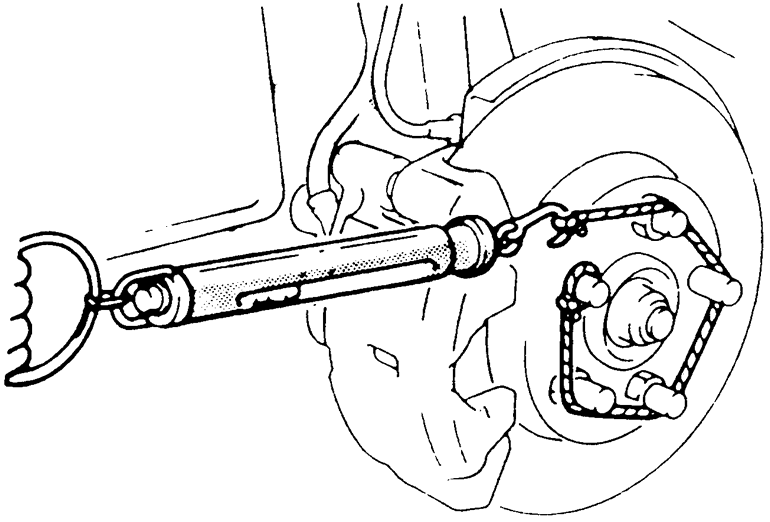
  8. Using a spring scale, turn the disc in a forward direction and measure the rotation sliding resistance of the hub.

    Fig. 11: Use a spring scale to measure the hub turning torque — front shown, rear similar

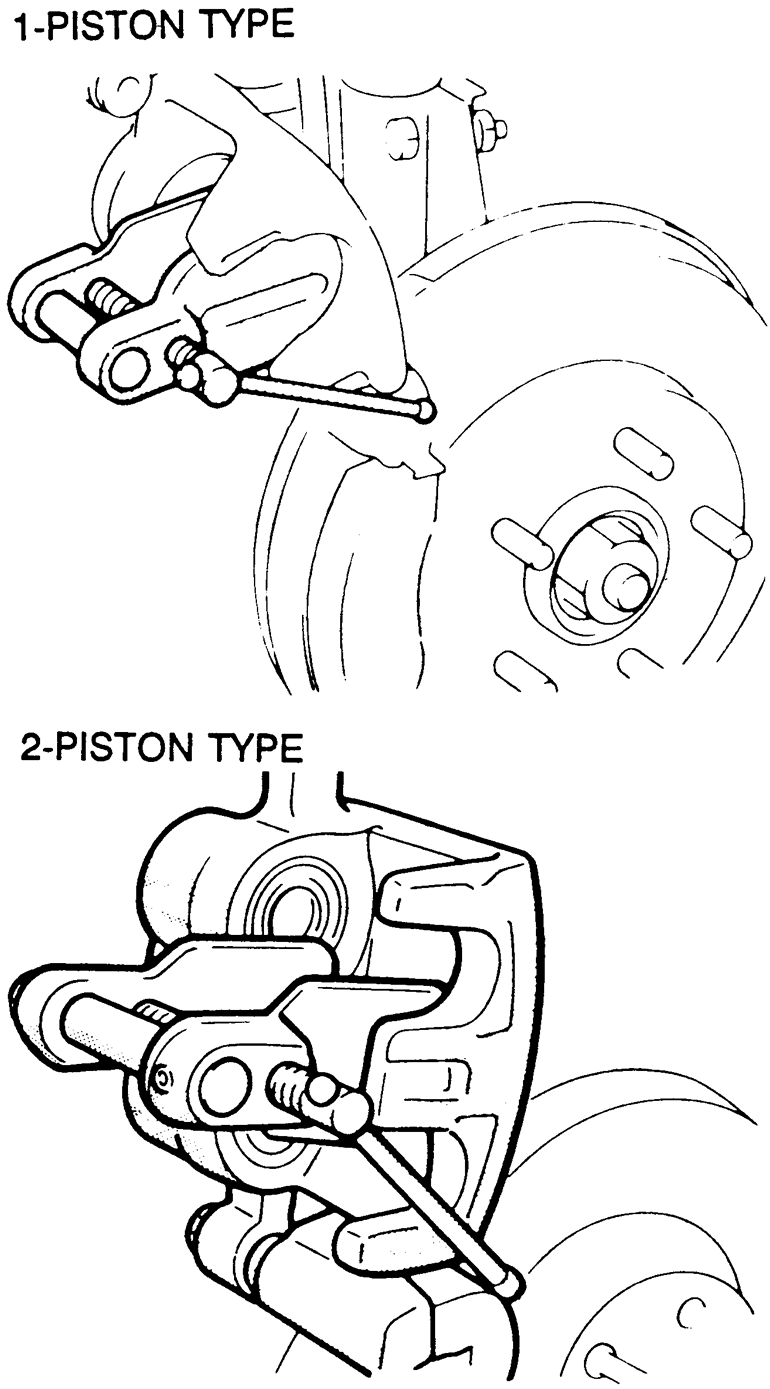
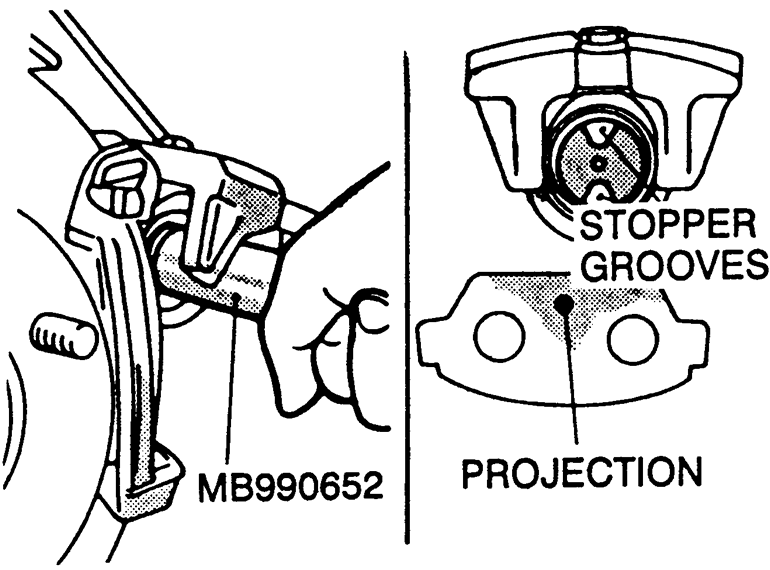
  9. Clean the caliper piston. For front disc brakes, use a C-clamp or equivalent tool to press the piston back into the caliper bore. For rear disc brakes, use driver tool MB990652 or equivalent, to thread the piston into the caliper bore. Be sure at this point, that the stopper groove of the piston correctly fits into the projection on the replacement brake pads rear surface.

    Fig. 12: On front disc brakes you can use a suitable clamp to press the piston into the caliper

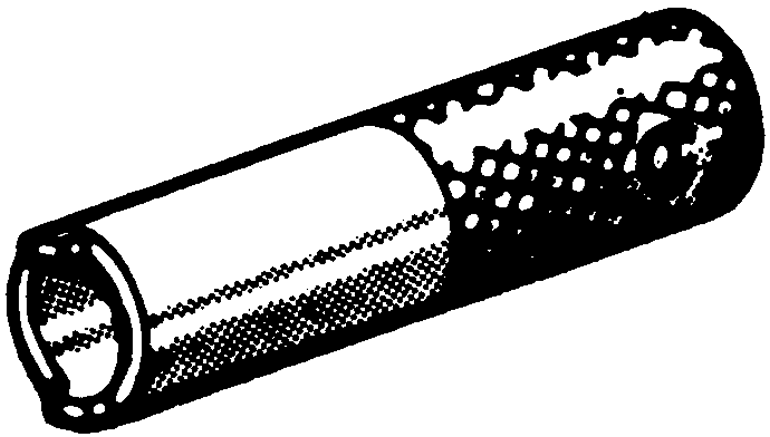
    Fig. 13: For rear disc brakes, a driver tool to install the piston into the caliper

    Fig. 14: Use the driver tool to thread the piston into the rear caliper bore

    To install:

  10. Install the brake pads, shims and spring clip to the caliper support. Install the caliper over the brake pads.

    NOTE: Be careful that the piston boot does not become caught when lowering the caliper onto the support. Do not twist the brake hose during caliper installation.

  11. Lubricate and install the caliper guide and lock pins in their original positions. For front disc brakes, tighten guide and locking pins to 23 ft. lbs. (32 Nm) on vehicles built up to May, 1989. On vehicles built during and after May, 1989 to 1990 vehicles, tighten caliper guide and locking pins to 58–72 ft. lbs. (80–80 Nm). For 1995–98 vehicles tighten the front caliper guide and locking pines to 65 ft. lbs. (88 Nm). For rear disc brakes, tighten the caliper guide and lock pins to 36–43 ft. lbs. (50–60 Nm).
  12. For rear disc brakes, start the engine and forcefully depress the brake pedal 5–6 times. Apply the parking brake, then make sure the adjustment is within specifications. Adjust the parking brake cable, as required.
  13. Check the disc brake drag force as follows:
    1. Start the engine and press the brake pedal firmly a few times to seat the pads.
    2. Once the pads are seated, shut the engine OFF.
    3. Turn the brake disc forward 10 times.
    4. Using a spring scale, measure the rotation sliding resistance of the hub in the forward direction.
    5. Calculate the drag torque of the disc brake by subtracting the value obtained in Step 8 (force required to turn hub alone) from the value obtained in Step D (force required to turn hub with caliper and pads installed). Compare calculated force with desired force of 15 lbs. (70 N) or less.

      Fig. 15: Measuring brake drag force

  14. If the calculated disc brake drag force is greater than specifications, disassemble and clean the piston. Check for corrosion or worn piston seal and check the sliding condition of the lock pin and guide pin.
  15. Install the tire and wheel assemblies. Connect the negative battery cable.
  16. Lower the vehicle. Test the brakes for proper operation.

Previous Next