Previous Next

DRAIN & REFILL

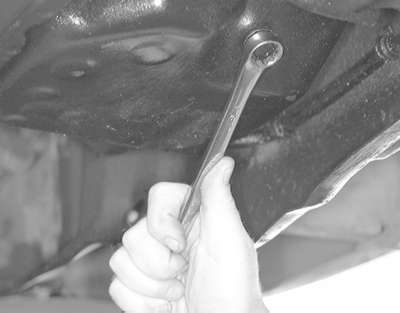
Fig. 1: The transaxle drain plug is located on the bottom of the fluid pan. Typically the drain plug requires a 17mm wrench

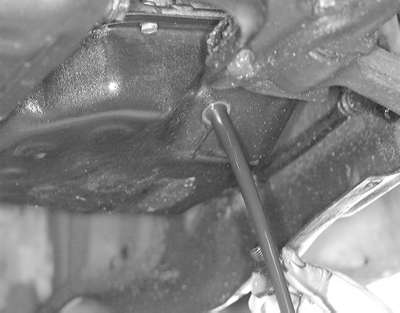
Fig. 2: Carefully pull the transaxle drain plug out and to the side, out of the way of flowing transaxle oil

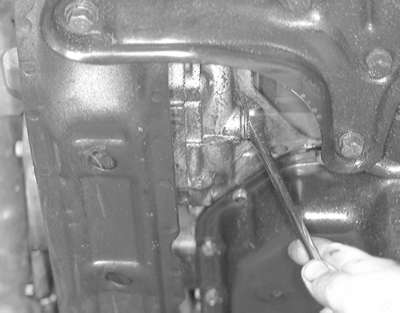
Fig. 3: The differential drain plug is located at the bottom of the transaxle, to the left of the fluid pan. Typically the drain plug requires a 17mm wrench

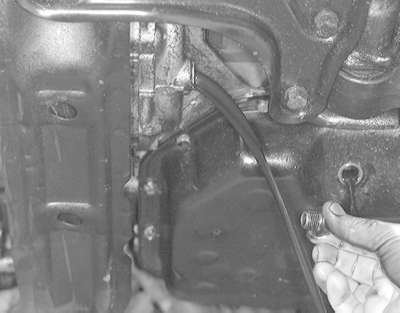
Fig. 4: Carefully pull the differential drain plug out and to the side, out of the way of flowing transaxle oil

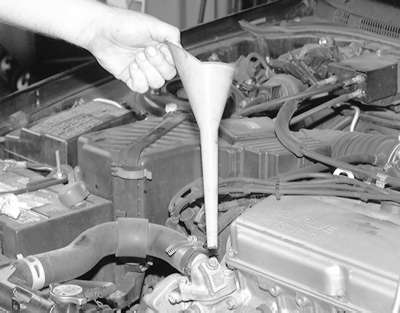
Fig. 5: A long, thin funnel is necessary to access the transaxle dipstick tube

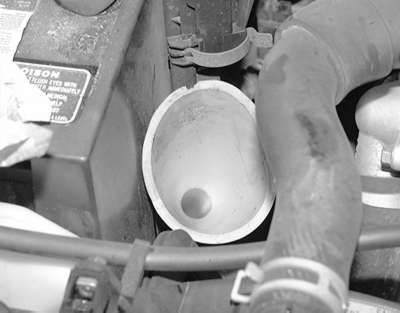
Fig. 6: Place the funnel into the opening on the dipstick tube

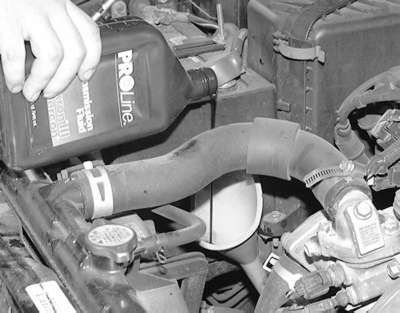
Fig. 7: Pour the fluid directly into the funnel, periodically checking the fluid level to make sure you do not overfill the transaxle

  1. Raise and support the vehicle safely.
  2. Place a suitable drain pan under the transaxle drain plug.
  3. Remove the transaxle pan drain plug. Let the fluid completely drain out of the transaxle.
  4. Install the drain plug and tighten it to 22–25 ft. lbs. (30–35 Nm).
  5. If equipped, remove the drain plug on the differential of the transaxle.
  6. Install the differential drain plug and tighten it to 22–25 ft. lbs. (30–35 Nm).
  7. Remove the drain pan.
  8. Lower the vehicle.
  9. Fill the transaxle through the dipstick to the proper level.
  10. Place the gear selector lever in P and start the engine. Run the engine at idle, engage the emergency brake and hold the brake pedal down. Move the gear selector lever through all transaxle ranges for approximately 5 minutes.
  11. Return the selector lever to P and leave the engine running at idle.
  12. Check the transaxle fluid level. The fluid level at normal operating temperature should read within the crosshatched area of the fluid level dipstick.
  13. If the fluid level reads below the crosshatched area, adjust the level by adding fluid in small increments until the correct fluid level is obtained.

Previous Next