Previous Next

Engine

OIL LEVEL CHECK

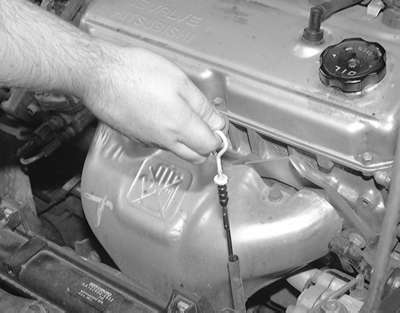
Fig. 1: Grasp the oil level dipstick and pull upward to remove it from the dipstick tube

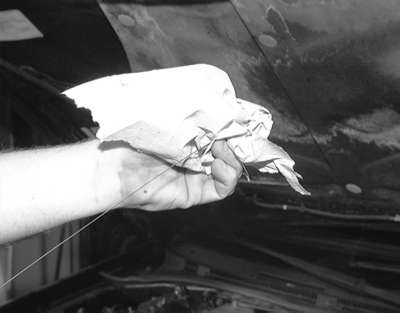
Fig. 2: Wipe the dipstick clean and reinsert it into the dipstick tube to get the correct oil level

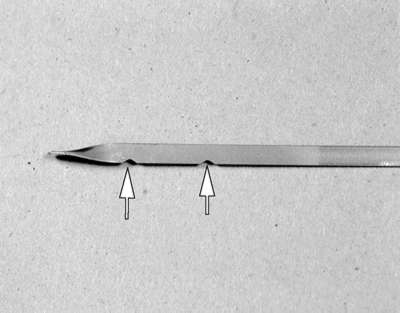
Fig. 3: The oil level should be between the marks/notches on the dipstick

CAUTION
The EPA warns that prolonged contact with used engine oil may cause a number of skin disorders, including cancer! You should make every effort to minimize your exposure to used engine oil. Protective gloves should be worn when changing the oil. Wash your hands and any other exposed skin areas as soon as possible after exposure to used engine oil. Soap and water, or waterless hand cleaner should be used.

The engine oil dipstick is typically located in the front of the engine near the exhaust manifold.

Engine oil level should be checked every time you put fuel in the vehicle or are under the hood performing other maintenance.
  1. Park the vehicle on a level surface.
  2. The engine may be either hot or cold when checking oil level. However, if it is hot, wait a few minutes after the engine has been turned OFF to allow the oil to drain back into the crankcase. If the engine is cold, do not start it before checking the oil level.
  3. Open the hood and locate the engine oil dipstick. Pull the dipstick from its tube, wipe it clean, and reinsert it. Make sure the dipstick is fully inserted.
  4. Pull the dipstick from its tube again. Holding it horizontally, read the oil level. The oil should be between the MIN and MAX marks or the notches on the dipstick. If the oil is below the MIN mark or lower notch, add oil of the proper viscosity through the capped opening of the valve cover.
  5. Replace the dipstick, and check the level again after adding any oil. Be careful not to overfill the crankcase. Approximately one quart of oil will raise the level from the low mark to the high mark. Excess oil will generally be consumed at an accelerated rate even if no damage to the engine seals occurs.

Previous Next