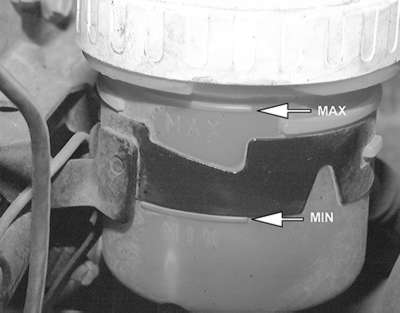
| Fig. 1: The fluid level should be between the MAXand MINlines;
if the fluid level is low, be sure to check the brakes
|
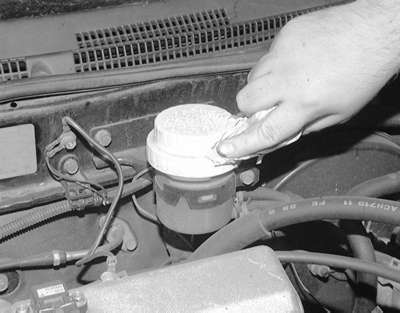
| Fig. 2: Wipe the master cylinder reservoir clean before
opening the cap to ensure that no contamination enters the brake fluid
|
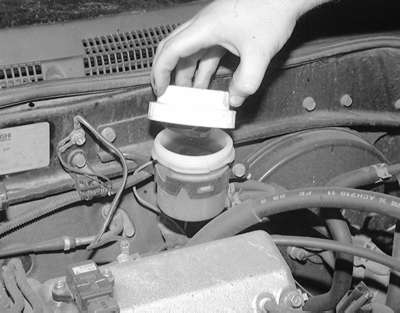
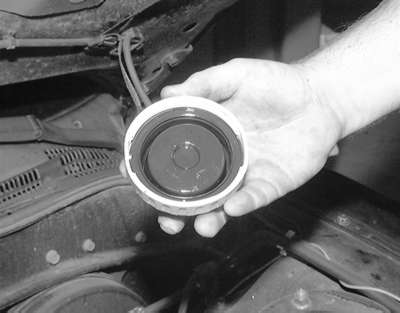
| Fig. 3: Unscrew the master cylinder cap and remove
it from the reservoir
|
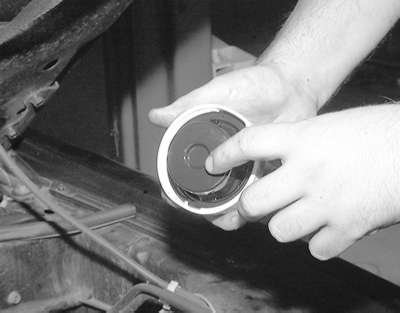
| Fig. 4: If the master cylinder cap gasket is swelled
like such, it can be a sign of contamination. If the gasket is swelled
. . .
|
| Fig. 5: . . . make sure to push the gasket back to
the normal position
|
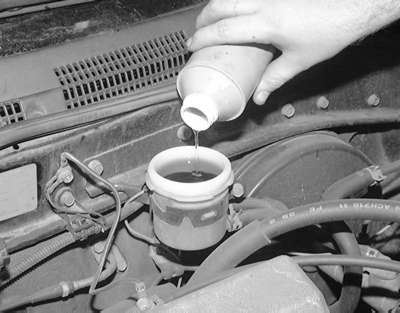
| Fig. 6: Carefully pour approved brake fluid from a
fresh, sealed container directly into the reservoir
|
CAUTION
Brake fluid contains polyglycol ethers and polyglycols. Avoid contact with
the eyes and wash your hands thoroughly after handling brake fluid. If you
do get brake fluid in your eyes, flush your eyes with clean, running water
for 15 minutes. If eye irritation persists, or if you have taken brake fluid
internally, IMMEDIATELY seek medical assistance.
WARNING
Be careful to avoid spilling any brake fluid on painted surfaces, because
the paint coat will become discolored or damaged.
Observe the fluid level indicators on the master cylinder; the fluid level should be between the MIN and MAX lines.
Before removing the master cylinder reservoir cap, make sure the vehicle is resting on level ground and clean all dirt away from the top of the master cylinder. Unscrew the cap and fill the master cylinder until the level is between the MIN and MAX lines.
If the level of the brake fluid is less than half the volume of the reservoir, it is advised that you check the brake system for leaks. Leaks in a hydraulic brake system most commonly occur at the wheel cylinder and brake line junction points.