The coolant temperature sending unit is used to operate the temperature gauge.
Do not confuse this sending unit with the other switches or sensors used to
signal the engine control unit or air conditioning regarding temperature of
the coolant. Usually, these other units are mounted near the coolant temperature
sensor used for engine control.
- Detach the engine coolant gauge sending unit electrical connector.
- Connect a suitable test light (12V–3.4W) between the harness side
connector and the ground.
- Turn the ignition switch to the ON position.
- Check the condition of the test light and gauge as follows:
- If all components are operating properly, the test light should illuminate
and the gauge needle should move.
- If the test light is illuminated and the gauge needle does not move,
replace the coolant temperature gauge.
- If the test light is illuminated and the gauge needle does not move,
check the fuse for a broken wire, or resistance between the gauge terminals
- If the test light is not illuminated and the gauge is not moving, check,
then replace the wiring harness, if necessary.
- Drain the engine coolant to a level below the coolant temperature sending
unit.
- Disconnect the sending unit wiring harness and remove the coolant temperature
sending unit.
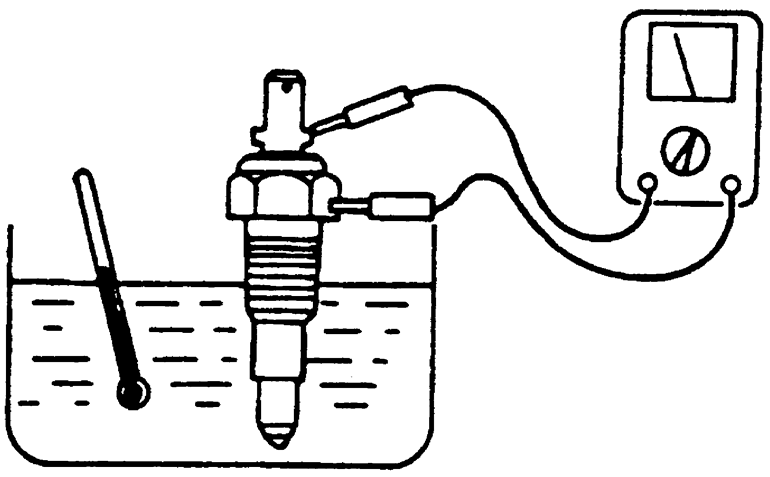
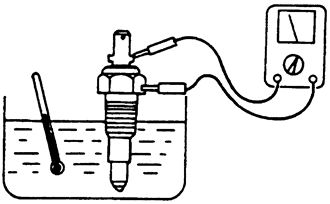
- Place the sending unit tip in a pan of warm water. Use a thermometer to
measure the water temperature.
- Measure the resistance across the sending unit terminals while the sending
unit is in the water.
| Fig. 1: Place the sending unit in water and measure
the resistance
|
- Note the ohm reading and compare to the following specifications:
- Water temperature of 68°F (20°C) — 2.21–2.69
kilo-ohms resistance
- Water temperature of 158°F (70°C) — 90.5–117.5
ohms resistance
- Water temperature of 176°F (80°C) — 264–328
ohms resistance.
If the resistance is not approximately accurate for the temperature, the
sending unit must be replaced.