- Remove the EGR valve from the vehicle. Check for sticking of plunger caused
by excess carbon deposits. If such a condition exists, clean with appropriate
solvent so the valve seats correctly.
- Connect a vacuum pump to the valve and apply 20 in. Hg (67 kPa) of vacuum.
- Check for air tightness. If the valve has 2 vacuum ports; pick one and plug
the other. The vacuum must be retained.
- For 1990–93 vehicles, blow air from 1 passage of the EGR to check
condition as follows:
- With 1.8 in. Hg (6 kPa) of vacuum or less applied to the valve, air
should not pass through the valve.
- With 8.5 in. Hg (28.7 kPa) of vacuum or more applied to the valve, air
should pass through the valve.
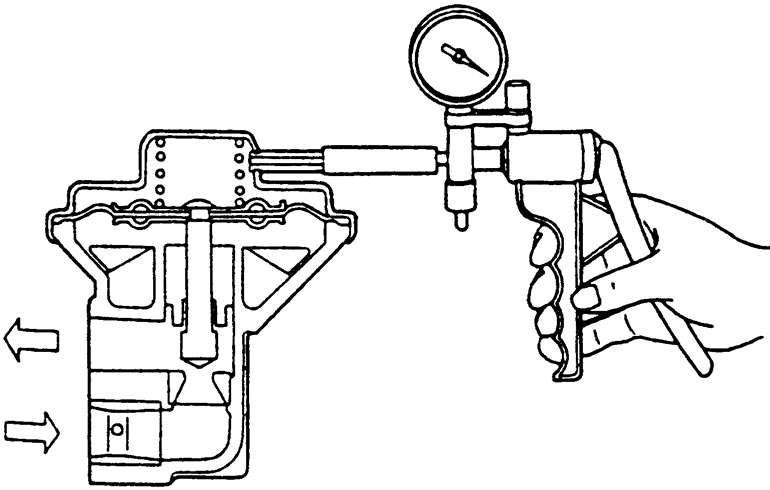
| Fig. 1: Use a vacuum pump to test the EGR
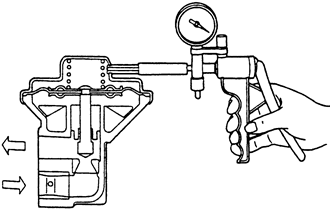
|
- For 1994–00 vehicles, apply vacuum (specified below) and check the
passage of air by blowing through either side of the EGR passages, as follows:
- With 1.6 in. Hg or less of vacuum applied to the valve, air should blow
out of the opposite passage.
- With 8.7 in. Hg or more of vacuum applies to the valve, air should not
blow out of the opposite passage.
- If the results are not as described, replace the EGR valve.
The EGR temperature sensor is used on California vehicles only. The EGR temperature
sensor detects the temperature of the gas passing through the EGR control valve.
It converts the detected temperature into an electrical voltage signal which
is sent the vehicle's Powertrain Control Module (PCM). If the circuit of the
EGR temperature sensor is broken, the warning light will come on.
- Remove the EGR temperature sensor from the engine.
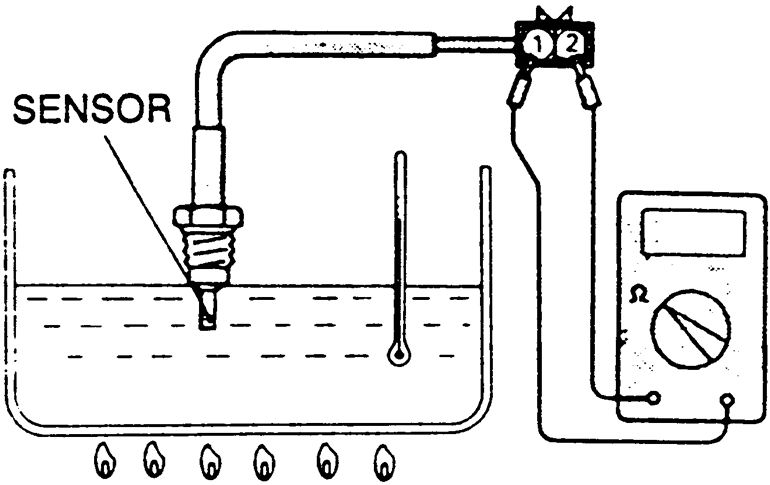
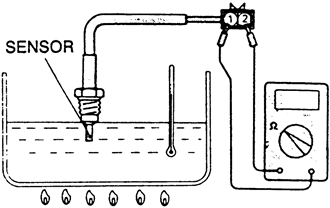
| Fig. 2: Put the EGR temperature sensor in a container
of water, then measure resistance as the water temperature is increased
|
- Place the EGR sensor into water. While increasing the temperature of the
water, measure the sensor resistance. Compare the values to following specifications:
- 122°F (50°C) — 60–83 kohms resistance
- 212°F (100°C) — 11–14 kohms resistance
- If the resistance obtained varies significantly from specifications, replace
the sensor.
- Label and disconnect the vacuum hose at the thermo valve.
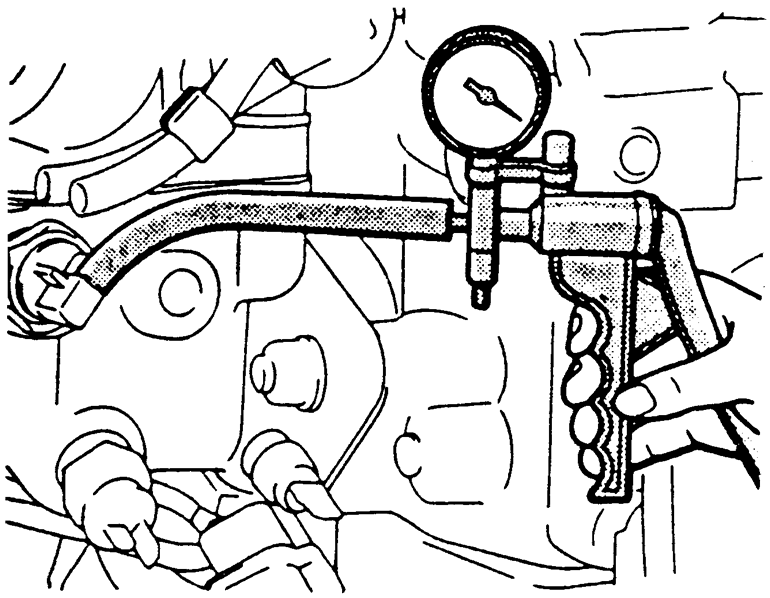
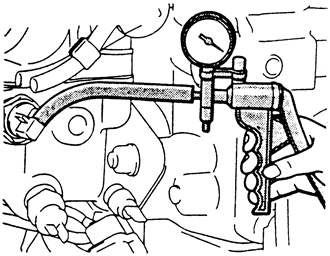
- Connect a hand held vacuum pump to the vacuum hose on the thermo valve.
| Fig. 3: Testing the thermal vacuum valve — 2.0L
engine (Federal) shown, others similar
|
- Apply vacuum and check the air passage through the thermo valve. Compare
results to the following specifications:
- Engine coolant temperature of 122°F (50°C) or less — vacuum
leaks
- Engine coolant temperature of 176°F (80°C) or more — vacuum
is maintained
- If the results differ from the desired specifications, replace the valve.
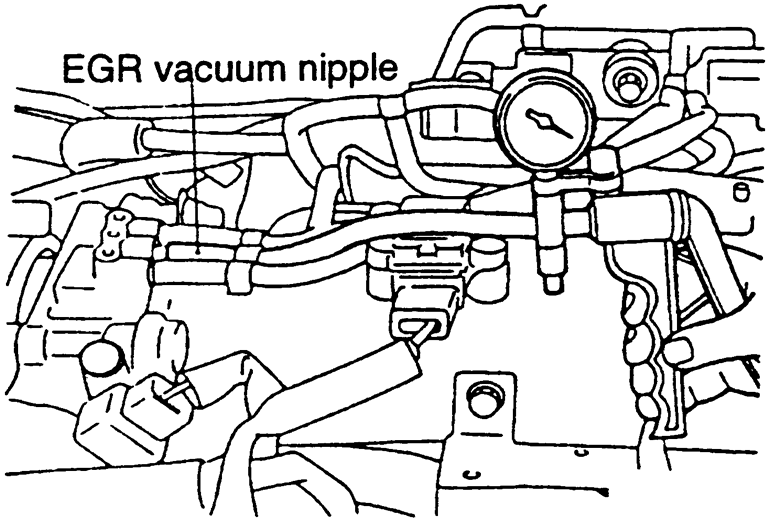
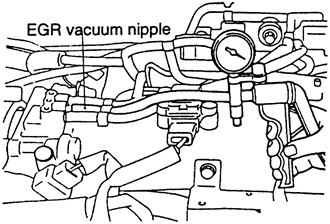
- Disconnect the vacuum hose from the throttle body EGR vacuum nipple. Connect
a hand-held vacuum pump to the nipple.
| Fig. 4: Location of the throttle body EGR valve vacuum
nipple — 2.4L engine shown
|
- Start the engine, then slowly raise the speed and compare with the following
specifications.
- For 1990–93 vehicles, check to be sure the vacuum raised proportionally
with the rise in engine speed.
- For 1994–00 vehicles, the vacuum reading on the pump should remain
constant.
- Label and disconnect the yellow and green striped vacuum hose from the EGR
solenoid.
- Detach the electrical harness connector.
- Connect a hand vacuum pump to the nipple to which the green-striped vacuum
hose was connected.
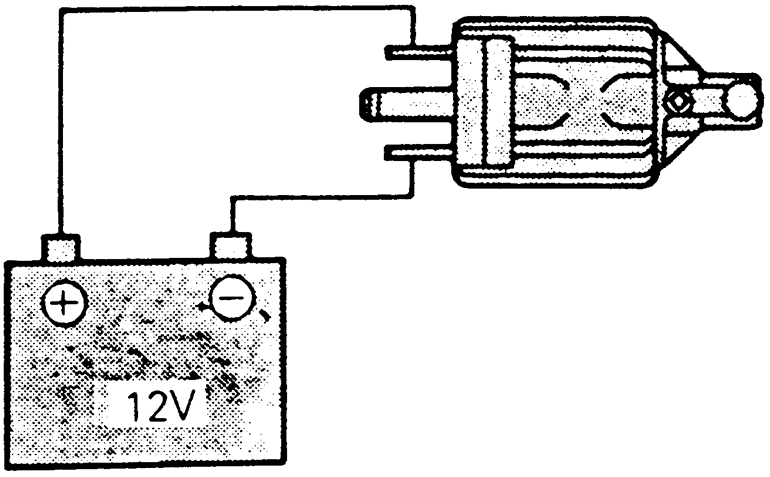
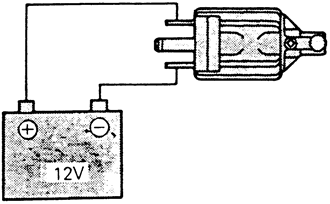
- Apply vacuum and check for air-tightness when voltage is applied and discontinued.
When voltage is applied, the vacuum should be maintained. When voltage is
discontinued, vacuum should leak.
| Fig. 5: Apply voltage to the EGR solenoid using jumper
wires and check for air-tightness using a vacuum pump
|
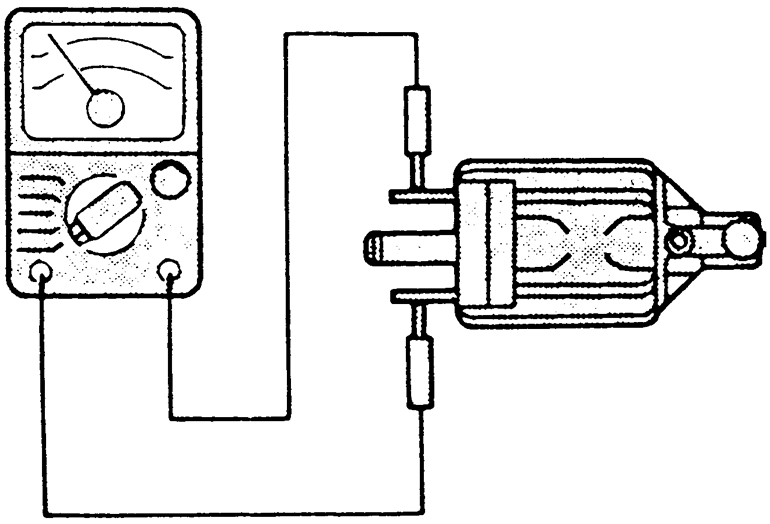
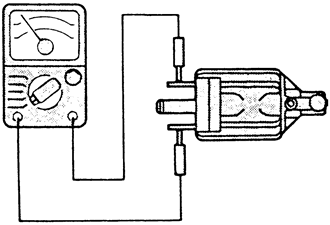
| Fig. 6: Measure the resistance between the terminals
of the EGR solenoid
|
- Measure the resistance between the terminals of the solenoid valve. The
resistance should be 36–44 ohms at 68°F (20°C).
- If the test results differ from the specifications, replace the EGR solenoid.
NOTE: Before disconnecting the vacuum hoses, tag them to assure
proper connection during installation
- Tag and disconnect the vacuum hose (2.0L turbo engine: yellow stripe, white
and green stripe, 2.4L engine: yellow stripe and white stripe) from the solenoid
valve.
- Detach the harness connector.
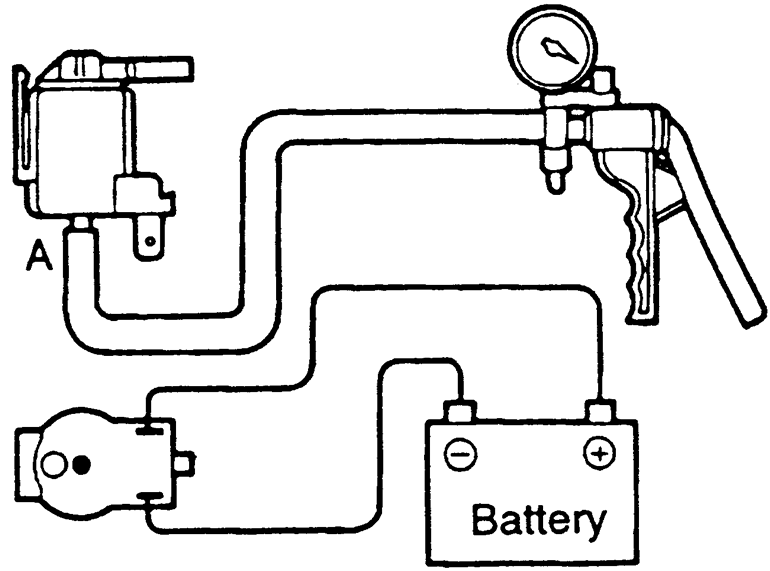
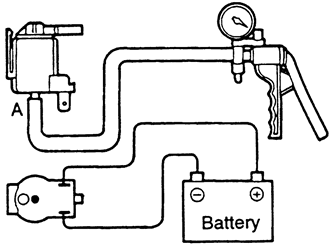
- Connect a hand-held vacuum pump to the A nipple.
- Check air tightness by applying vacuum with voltage applied directly from
the battery to the EGR control solenoid valve and without applying voltage.
| Fig. 7: EGR solenoid check connections — 2.4L
engine
|
- For the 2.4L engines, compare with the following:
- With battery voltage not applied, vacuum should be maintained.
- With battery voltage applied, vacuum should leak.
- Using an ohmmeter, measure the resistance between the solenoid valve terminals.
The resistance should fall between 36–44 ohms when the engine temperature
is 68°F (20°C).