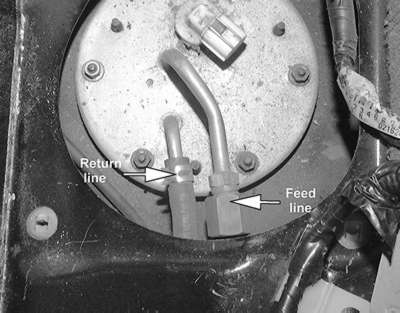
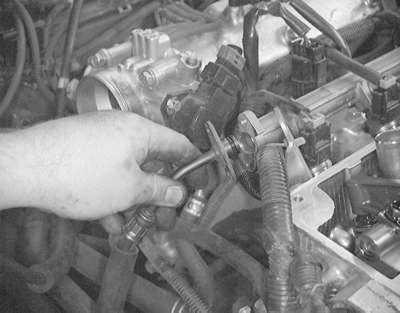
| Fig. 1: This photo of the fuel pump lines is an example
of the type of fittings found on most models. The return line utilizes
a rubber hose and a hose clamp, while the feed line utilizes a flare fitting
|
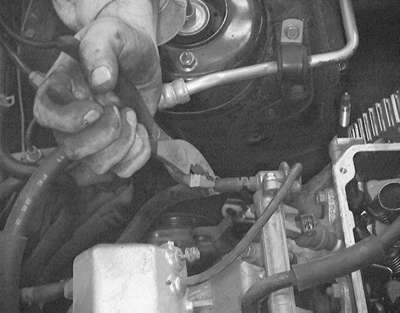
| Fig. 2: This fitting on the fuel pressure regulator utilizes
a rubber hose and a hose clamp. Remove the hose clamp . . .
|
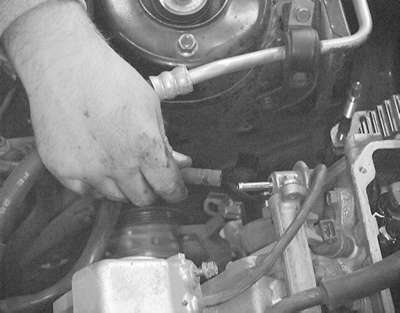
| Fig. 3: . . . then disconnect the hose from the pressure
regulator
|
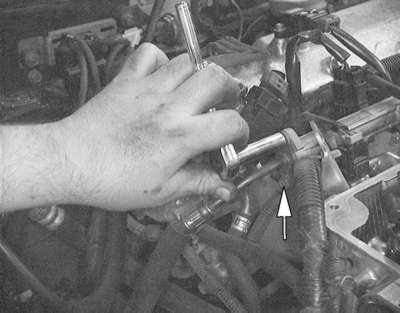
| Fig. 4: The fuel feed line-to-fuel rail fitting is held
by retaining bolts. Unfasten the bolts . . .
|
| Fig. 5: . . . then remove the fuel feed line from the
fuel injector rail
|
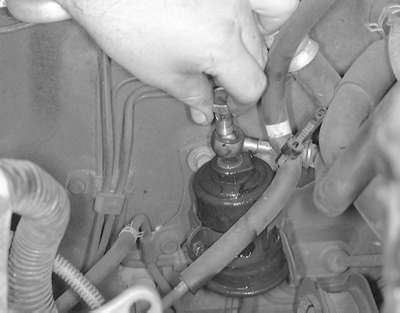
| Fig. 6: The fitting on the top of the fuel filter utilizes
a banjo-bolt type fitting. Remove the bolt from the filter feed line on
the top of the filter
|
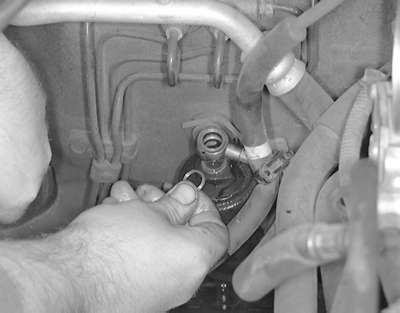
| Fig. 7: On the banjo-bolt type fitting, it is crucial
that the copper washers are replaced every time the fitting is removed
|
The fuel lines used on all models covered by this manual are quite straight forward. Typically the fittings are either rubber hoses connecting to steel lines with clamps, or steel lines connecting to steel lines using retaining bolts or flare fittings. Several fittings are unique such as the banjo-bolt fitting on the fuel feed line from the fuel filter.
CAUTION
Observe all applicable safety precautions when working around fuel. Whenever
servicing the fuel system, always work in a well ventilated area. Do not allow
fuel spray or vapors to come in contact with a spark or open flame. Keep a dry
chemical fire extinguisher near the work area. Always keep fuel in a container
specifically designed for fuel storage; also, always properly seal fuel containers
to avoid the possibility of fire or explosion.