Previous Next

INSPECTION

CAUTION
The compressed refrigerant used in the air conditioning system expands into the atmosphere at a temperature of −21.7°F (−29.8°C) or lower. This will freeze any surface, including your eyes, that it contacts. In addition, the refrigerant decomposes into a poisonous gas in the presence of a flame. Do not open or disconnect any part of the air conditioning system.

Sight Glass Check

You can safely make a few simple checks to determine if your air conditioning system needs service. The tests work best if the temperature is warm (about +70°F/21°C).

NOTE: If your vehicle is equipped with an aftermarket air conditioner, the following system check may not apply. You should contact the manufacturer of the unit for instructions on systems checks.

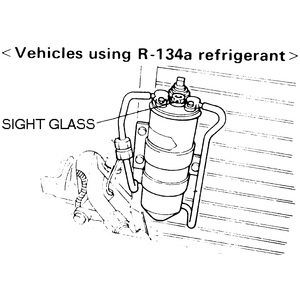
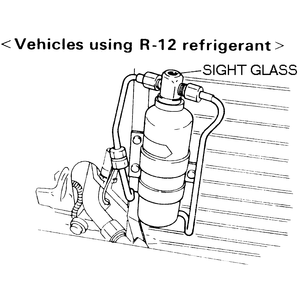
  1. Clean the sight glass, which is located on the top of the refrigerant receiver canister in the engine compartment.
  2. Start the vehicle's engine.
  3. Push the air conditioning button to operate the compressor, place the blower switch to HIGH, and move the temperature lever to the extreme left.
  4. After operating for a few minutes in this manner, check the sight glass
    1. If the sight glass is clear, the magnetic clutch is engaged, the compressor discharge line is warm, and the compressor inlet line is cool, the system has a full charge.
    2. If the sight glass is clear, the magnetic clutch is engaged, and there is no significant difference between the compressor inlet and the discharge lines, the system has most of its refrigerant charge.
    3. If the sight glass is clear and the magnetic clutch is disengaged, the clutch is faulty or the system is out of refrigerant. Take the vehicle to a certified mechanic for servicing.
    4. If the sight glass shows bubbles or foam, the system could be low on refrigerant or the receiver is restricted. Occasional foam or bubbles are normal when the ambient temperature is above 110°F (43°C) or below 70°F (21°C). Take the vehicle to a certified mechanic for servicing.

      Fig. 1: Sight glass location — R-12 system

      Fig. 2: Sight glass location — R-134a system

      WARNING
      If it is determined that the system has a leak, it should be corrected as soon as possible. Leaks may allow moisture or contaminants to enter and cause a very expensive problem.
Previous Next