Naturally, without the proper tools and equipment it is impossible to properly service your vehicle. It would be impossible to catalog each tool that you would need to perform each and every operation in this book. It would also be unwise for the amateur to rush out and buy an expensive set of tools on the theory that he may need one or more of them at sometime.
The best approach is to proceed slowly, gathering together a good quality set of those tools that are used most frequently. Don't be misled by the low cost of bargain tools. It is far better to spend a little more for better quality. Forged wrenches, 6 or 12-point sockets and fine tooth ratchets are by far preferable to their less expensive counterparts. As any good mechanic can tell you, there are few worse experiences than trying to work on a car or truck with bad tools. Your monetary savings will be far outweighed by frustration and mangled knuckles.
Begin accumulating those tools that are used most frequently; those associated with routine maintenance and tune-up. In addition to the normal assortment of screwdrivers and pliers, you should have the following tools for routine maintenance jobs (your Mitsubishi uses metric fasteners):
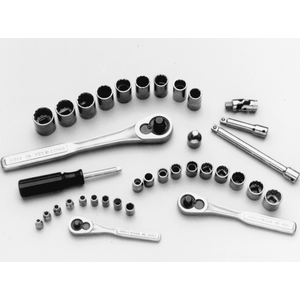
If possible, buy various length socket drive extensions. One break in this department is that the metric sockets available in the U.S. will all fit the ratchet handles and extensions you may already have ( 1⁄4 in., 3⁄8 in., and 1⁄2 in. drive).
| Fig. 1: Various metric wrenches and sockets
|
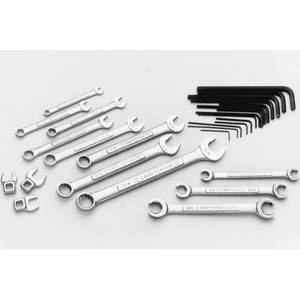
| Fig. 2: An assortment of combination wrenches will be
necessary
|
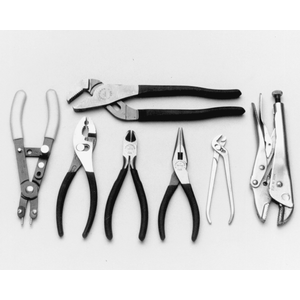
| Fig. 3: An assortment of pliers will be handy, especially
for old rusted parts and stripped bolt heads
|
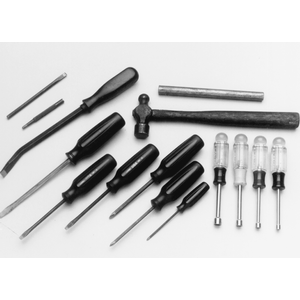
| Fig. 4: Various screwdrivers, a hammer, chisels and prybars
are necessary to have in your toolbox
|
In addition to the above items there are several others that are not absolutely necessary, but handy to have around. These include absorbent gravel or oil dry, a transmission fluid funnel and the usual supply of lubricants, antifreeze and fluids, although these can be purchased as needed. This is a basic list for routine maintenance, but only if your personal needs and desires can accurately determine your list of tools.
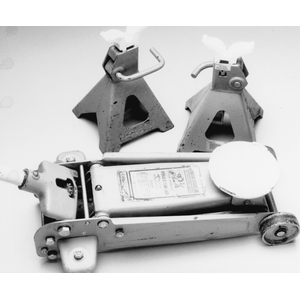
| Fig. 5: A hydraulic floor jack and a set of jackstands
are essential for lifting and supporting the vehicle
|
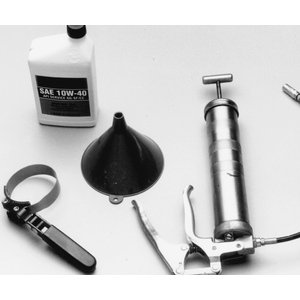
| Fig. 6: A few inexpensive lubrication tools will make
regular service easier
|
The second list of tools is for tune-ups. While the tools involved here are slightly more sophisticated, they need not be outrageously expensive. There are several inexpensive tachometer/dwell meters on the market that are every bit as good for the average mechanic as a professional model. Just be sure that the meter scale goes to at least 1,200–1,500 rpm on the tach scale and that it works on both 4-cylinder and 6-cylinder engines. A basic list of tune-up equipment could include:
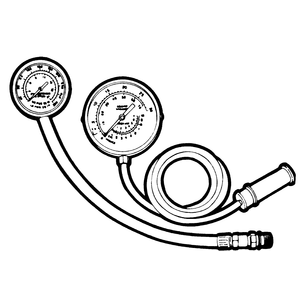
In addition to these basic tools, there are several other tools and gauges you may find useful. These include:
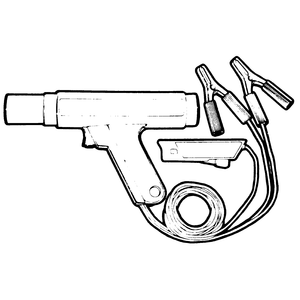
| Fig. 7: Inductive type timing light
|
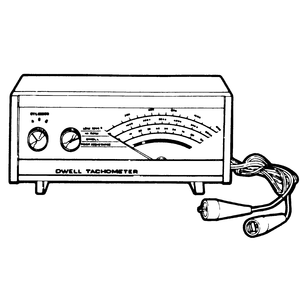
| Fig. 8: One type of dwell/tachometer
|
| Fig. 9: Compression gauge and a combination vacuum/fuel
pressure gauge
|
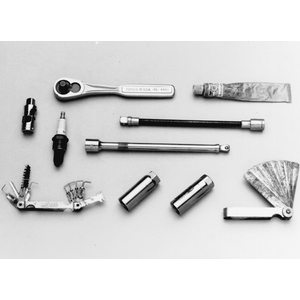
| Fig. 10: Useful tools for servicing spark plugs:
a set of feeler blades, a spark plug gap gauge/adjusting tool, spark
plug wrench and socket
|
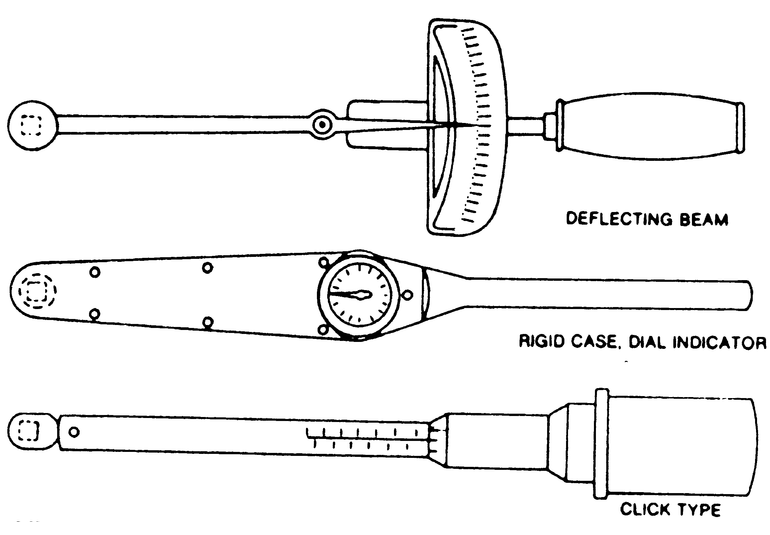
As a final note, you will probably find a torque wrench necessary for all but the most basic work. There are three types of torque wrenches available: deflecting beam type, dial indicator and click type. The beam and dial indicator models are perfectly adequate, although the click type models are more precise, and allow the user to reach the required torque without having to assume a sometimes awkward position to read the scale. No matter what type of torque wrench you purchase, have it calibrated periodically to ensure accuracy.
| Fig. 11: Views of the three types of torque wrenches
|
A torque specification for each fastener will be given in the procedure in any case that a specific torque value is required. If no torque specifications are given, use the following values as a guide, based upon fastener size:
Bolts marked 6T
Bolts marked 8T