Spark plugs ignite the air and fuel mixture in the cylinder as the piston reaches the top of the compression stroke. The controlled explosion that results forces the piston down, turning the crankshaft and the rest of the drivetrain.
The average life of a spark plug is about 30,000 miles (48,000 km). This is, however, dependent on a number of factors: the mechanical condition of the engine, the type of fuel used, the driving conditions and the driver.
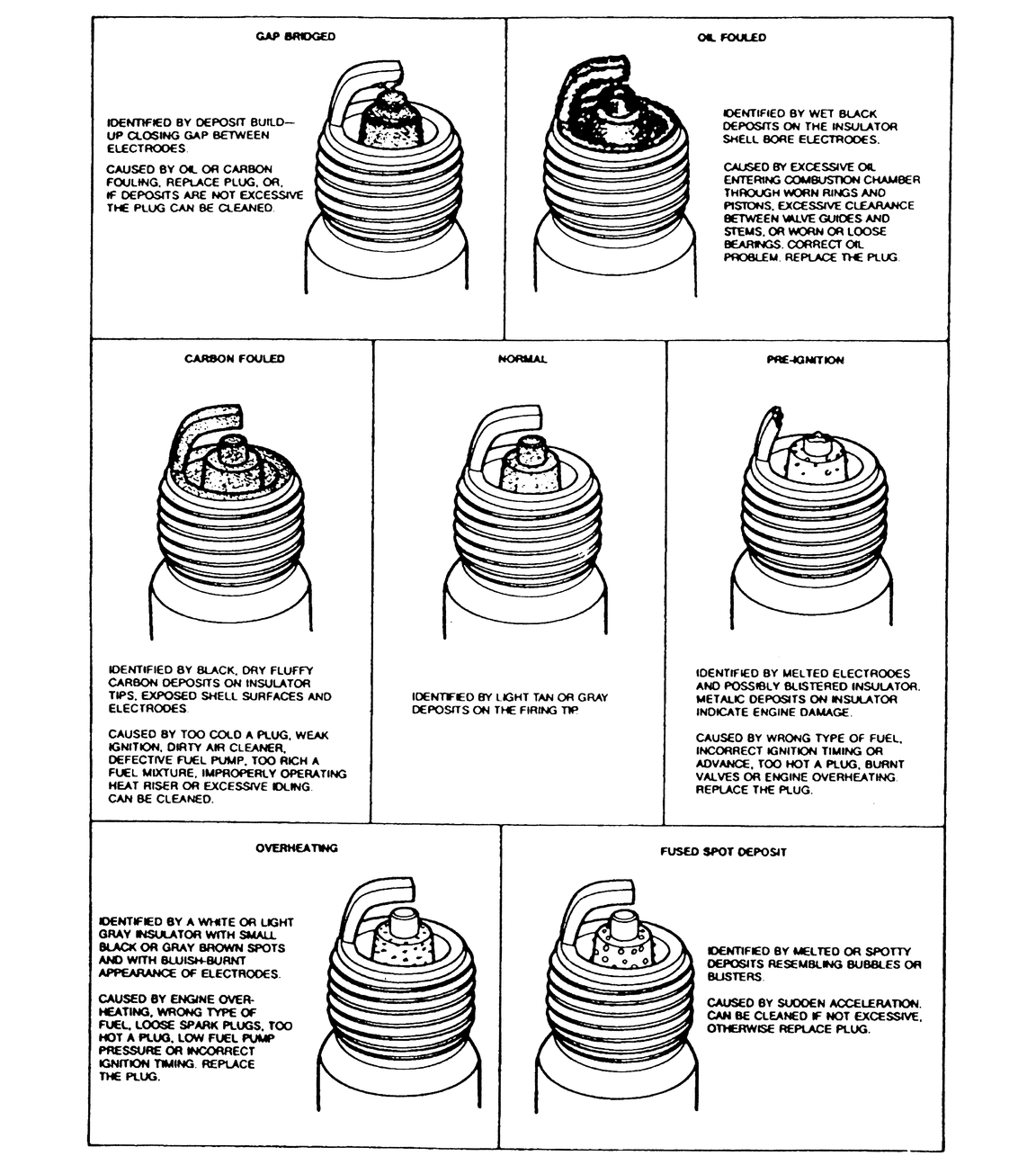
When you remove the spark plugs, check their condition. They are a good indicator of the condition of the engine. A small deposit of light tan or gray material on a spark plug that has been used for any period of time is to be considered normal. Any other color, or abnormal amounts of deposit, indicates that there may be something wrong in the engine.
When a spark plug is functioning normally or, more accurately, when the plug is installed in an engine that is functioning properly, the plugs can be taken out, cleaned, regapped, and reinstalled in the engine without doing the engine any harm.
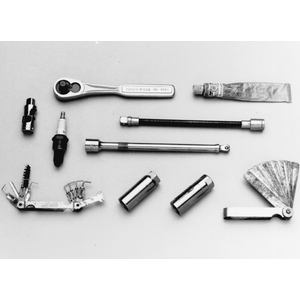
| Fig. 1:
A variety of tools and gauges are needed for spark plug service
|
NOTE: Some later model vehicles, may use a platinum type spark plug. If the vehicle has platinum type plug installed, these plugs are usually marked with circular blue lines and are not to be cleaned and regapped.
There are several reasons why a spark plug will foul and you can learn which is at fault by just looking at the plug.
| Fig. 2:
Inspect the spark plug to determine engine running conditions
|
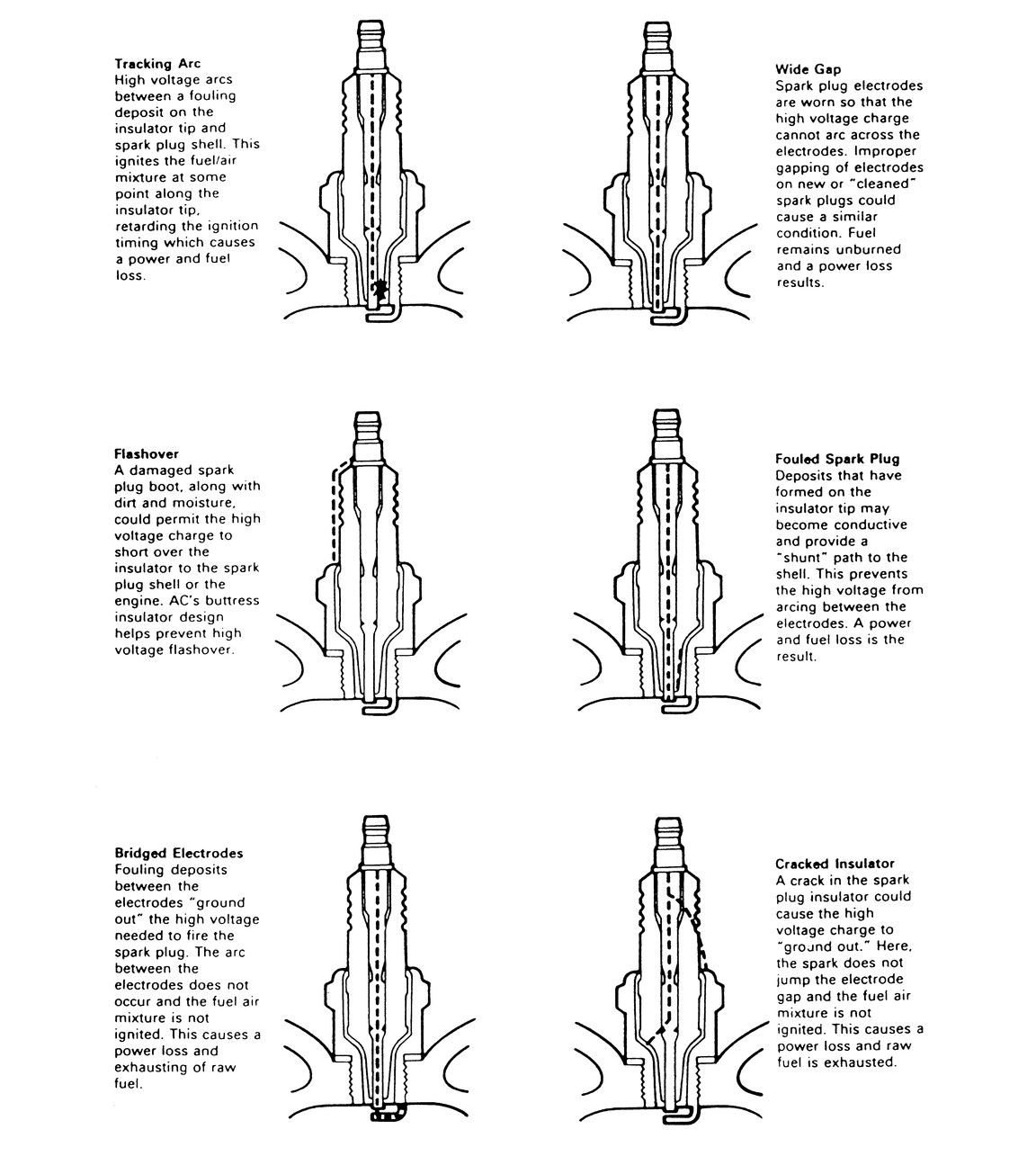
| Fig. 3:
Used spark plugs which show damage may indicate engine problems
|
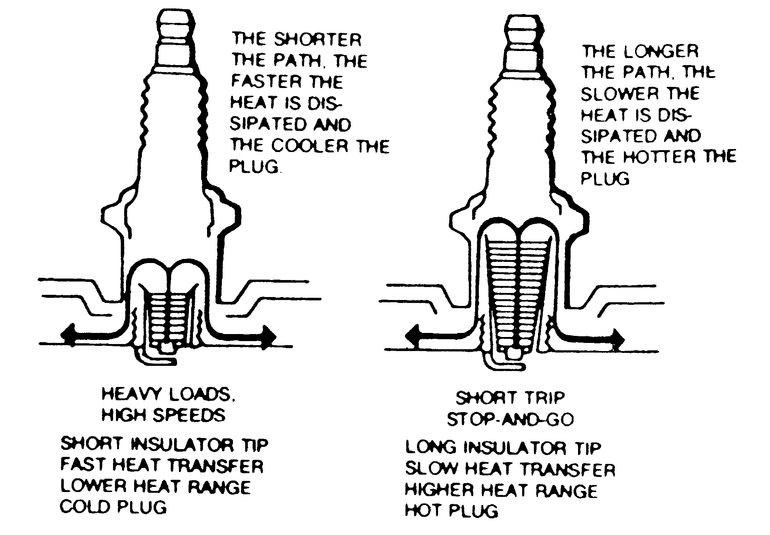
There are many spark plugs suitable for use in your engine and are offered in a number of different heat ranges. The amount of heat which the plug absorbs is determined by the length of the lower insulator. The longer the insulator the hotter the plug will operate; the shorter the insulator, the cooler it will operate. A spark plug that absorbs (or retains) little heat and remains too cool will accumulate deposits of lead, oil, and carbon, because it is not hot enough to burn them off. This leads to fouling and consequent misfiring. A spark plug that absorbs too much heat will have no deposits, but the electrodes will burn away quickly and, in some cases, pre-ignition may result. Pre-ignition occurs when the spark plug tips get so hot that they ignite the air/fuel mixture before the actual spark fires. This premature ignition will usually cause a pinging sound under conditions of low speed and heavy load. In severe cases, the heat may become high enough to start the air/fuel mixture burning throughout the combustion chamber rather than just to the front of the plug. In this case, the resultant explosion will be strong enough to damage pistons, rings, and valves.
| Fig. 4:
Spark plug heat range
|
In most cases the factory recommended heat range is correct; it is chosen to perform well under a wide range of operating conditions. However, if most of your driving is long distance, high speed travel, you may want to install a spark plug one step colder than standard. If most of your driving is of the short trip variety, when the engine may not always reach operating temperature, a hotter plug may help burn off the deposits normally accumulated under those conditions.