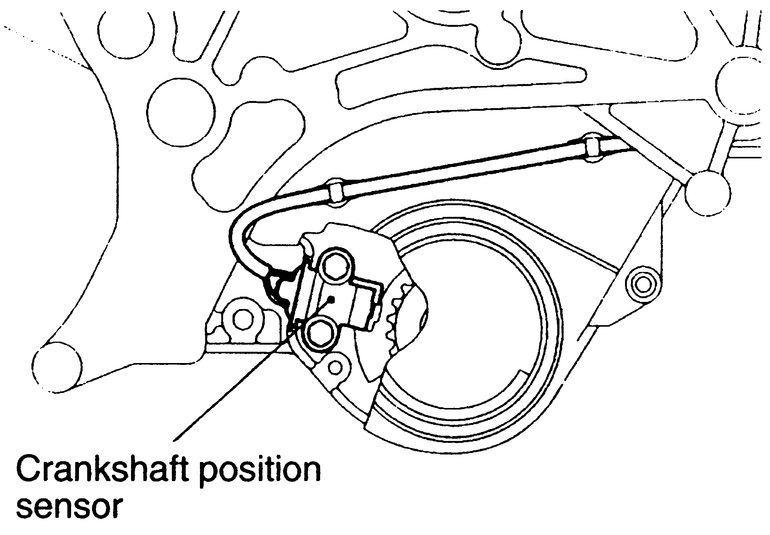
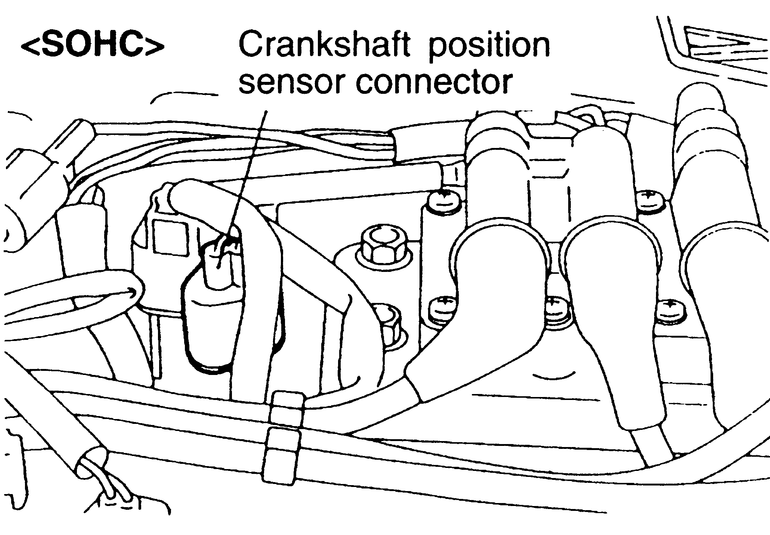
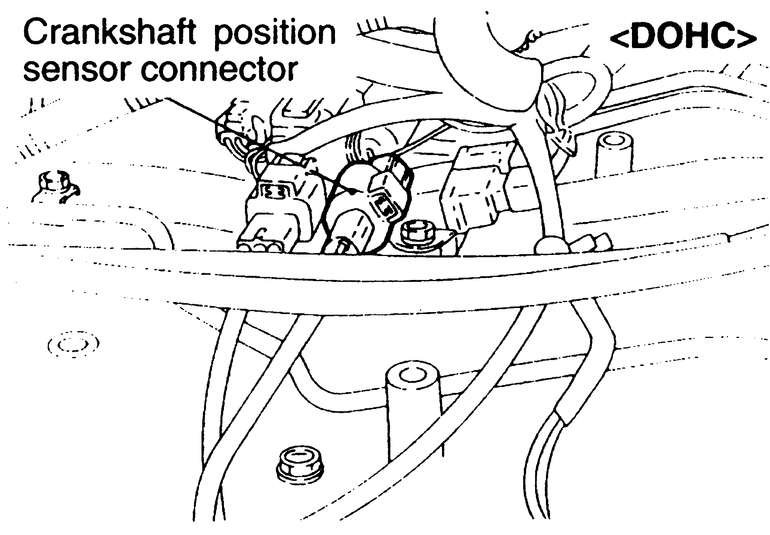
On the 2.4L and 3.0L (12 valve) engines, the Crankshaft Position Sensor (CSPS) is located inside of the distributor with the CPS. On the 3.0L (24 valve) and 3.5L engines, the CSPS is mounted directly to the left (looking straight at the engine) of the crankshaft, underneath the lower timing belt cover.
The CSPS detects the crankshaft angle, therefore the position, of each cylinder, and converts this data into electrical pulses. These pulses are created by the CSPS by intermitting the flow of current applied from the ECM. The ECM analyzes the pulses and can use this information to know when and how to control the fuel injection timing and ignition timing.
If an impact is suddenly felt during driving or the engine suddenly stalls during idling, try shaking the CSPS during idling. If the engine stalls, the cause may be presumed to be improper or incomplete contact of the CSPS's connector.
If the CSPS output rpm is 0 rpm during cranking (when the engine cannot be started), the cause may be a malfunction of the CSPS or a broken timing belt.
If the indicated value of the CSPS output is 0 rpm during cranking (the engine will not start), the ignition coil's primary current may be malfunctioning to intermittently pulse correctly, so a malfunction of the ignition system circuitry, the ignition coil and/or the ignition power transistor is probably the cause.
If idling is possible even though the CSPS indicated rpm is a deviation from the standard value, the cause is usually a malfunction of something other than the CSPS. It could be a malfunction of the ECT sensor, the ISCM, or an improper adjustment of the standard idling speed.
| Fig. 1: The CSPS location under the lower timing belt
cover — 3.0L (24 valve) and 3.5L engines
|
| Fig. 2: The location of the CSPS harness connector — 3.0L
(24 valve) engines
|
| Fig. 3: The location of the CSPS harness connector — 3.5L
engines
|