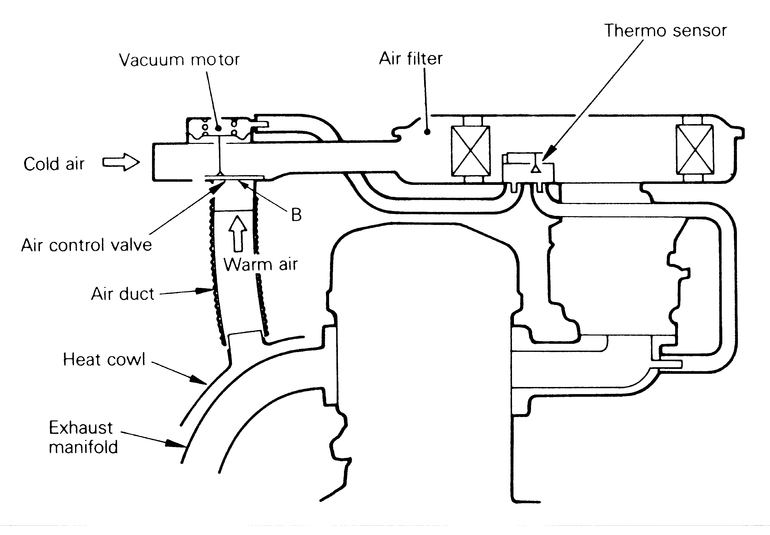
- Remove the air filter cover and air duct.
- Run the engine at idle and check the air control valve condition. At 86°F
(30°C) or less, the cold air side inlet should close. At 113°F (45°C)
or more, the cold air side inlet should open.
If necessary, apply compressed air to cool or apply hot air using a hair
dryer, etc. to heat.
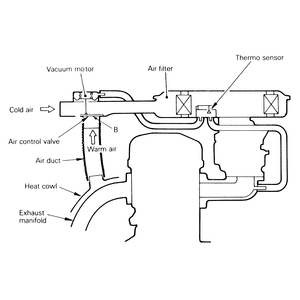
| Fig. 1: A diagram of a common intake air temperature
control system — 2.0L and 2.6L engines
|
NOTE: A vacuum pump capable of producing more than 10 in. Hg
(33.8 kPa) of vacuum will be needed to perform this test.
- Remove the air filter.
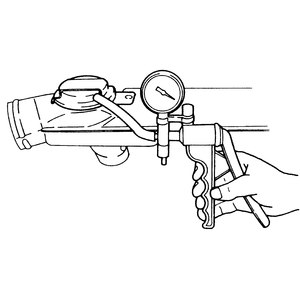
- Disconnect the vacuum hose from the air control valve and connect a hand
vacuum pump to the valve nipple.
- Apply a vacuum of 19.75 in. Hg (67 kPa) and check to make sure the vacuum
holds steady and does not leak down.
- Check the air control valve operation. With a vacuum of 2.85 in. Hg (9 kPa)
or less the cold air side inlet opens. With a vacuum of 7.53 in. Hg (25 kPa)
or more the cold air side inlet closes.
- Connect the vacuum hose back to their original position.
| Fig. 2: Use a hand vacuum pump to check the air control
valve
|
NOTE: A vacuum pump capable of producing more than 10 in. Hg
(33.8 kPa) of vacuum will be needed to perform this test.
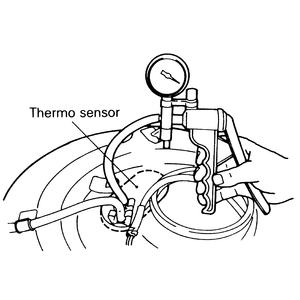
- Connect a hand vacuum pump to the thermo sensor nipple and check air tightness.
With the thermo sensor temperature at 86°F (30°C) or less the vacuum
should not leak. With the thermo sensor temperature at 113°F (45°C)
or more the vacuum should leak.
- If any fault is found in the above checks, replace the air filter body.
| Fig. 3: Using a vacuum pump, check to make sure the
thermo sensor holds vacuum at 86°F (30°C) or less.
|