NOTE: The carburetor is comprised of three main sections: the
top or float bowl cover, the main body and the throttle body or base. Separating
these sections requires the removal and installation of many small parts and
fittings. Do not disassemble anything unnecessarily. Some important components
are not removed or adjusted during an overhaul.
- Remove the carburetor from the car, following the instructions earlier in
this section. Drain any remaining fuel into a container with an airtight lid.
Place the carburetor on the workbench in a clean, dry area. Placing it on
a large, lint-free cloth will help prevent parts from getting lost or rolling
around.
- Remove the coolant hose from the throttle body and from the wax element.
- Using a small hand grinder or similar tool, remove the heads from the two
lock screws in the choke cover.
- Disconnect the fuel cut-off solenoid ground wire from the top of the carburetor.
- Remove the throttle return spring and the damper spring.
- Disconnect the vacuum hose running from the depression chamber to the throttle
body.
- Remove the accelerator pump rod from the throttle lever.
- Remove the dashpot rod (for manual transmission) or the throttle opener
rod (automatic transmission) from the free lever.
- Remove the depression chamber rod from the secondary throttle lever.
- Remove the six screws from the carburetor top. The four outer ones connect
to the main body of the carburetor; the two bolts within the air passage connect
to the throttle body.
NOTE: Many of the screws use Phillips-type heads. Use a
screwdriver which fits the head exactly. An improper tool can damage the
head of the screw and cause problems during reassembly.
- Remove the main body with the top attached (the top cannot come free yet)
by lifting straight up. Do not turn the carburetor upside down during the
removal; if it is inverted, the accelerator pump check weight, ball and steel
ball of the anti-overfill device will fall out.
- Remove the E-clip from the lower end of the choke unloader rod and disconnect
the rod from the lever.
- Separate the top from the main body.
- At this point, the carburetor is disassembled enough to perform common overhaul
replacements. Do not disassemble any further components without good diagnostic
reasons. In particular, do not disassemble the automatic choke system or attempt
to remove the throttle plates; both systems require very precise alignment
which is beyond the ability of the home mechanic.
- Remove the float from the float arm by removing the pivot pin.
- Inspect the float bowl for any sign of particulate dirt or solid matter.
Carefully wipe the bowl clean. Shake the float, listening for any sign of
liquid fuel inside. If the float has absorbed fuel, it must be replaced.
- Remove the retaining screw and bracket holding the needle valve. Carefully
remove the needle valve and inspect it for uneven wear or pitting. (A magnifying
glass is very helpful for checking the tip.) Check the seat for signs of pitting.
Don't remove the seat without planning to replace it; if it looks OK, leave
it alone. If the seat is to be removed, it must be carefully unscrewed with
pliers. It will be difficult to loosen and care must be take not to damage
or deform the seat. When the seat is removed, the spacing shim below it must
be recovered and reinstalled. This shim determines float level adjustment.
- Remove the accelerator pump and the fuel cut-off solenoid. Remove the check
weight and ball.
- Wearing eye protection and gloves, carefully clean the fuel and air passages
with a spray cleaner and, if available, compressed air. A majority of carburetor
problems are caused by very small bits of dirt lodging in the air or fuel
passages. Clean everything thoroughly.
- Inspect the motion of both the choke and throttle plates. They must move
smoothly with absolutely no sign of binding or notching. Clean the linkages
and plates as necessary, then apply a small amount of lubricant to the pivot
points.
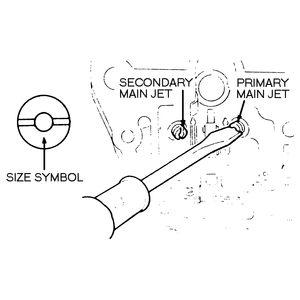
- If any of the fuel jets are to be replaced due to wear or etching, they
must be replaced with the identical item. Each jet has a number on the side
of it to aid in identification. (The jets are selected based on precise airflow
measurements during assembly. Installation of the wrong jet will send the
wrong fuel mixture to the engine under almost all conditions).
- Install the accelerator pump, the fuel cut-off solenoid and the check weight
and ball.
- Install the needle valve and its retainer.
- Hold the float in position and install the pivot pin.
- Carefully place the carburetor top onto the main body and install the four
retaining screws holding the top to the body.
- Install the choke unloader rod to the lever and install the E-ring to hold
the rod in place.
NOTE: Be careful that the E-ring does not spring out of
place during installation.
- Install the two screws through the air horn and tighten them.
- Install the depression chamber rod to the secondary throttle lever.
- Connect the dashpot or throttle opener rod to the free lever.
- Install the accelerator pump rod to the throttle lever.
- Install the vacuum hose between the depression chamber and the throttle
body.
- Install the throttle return spring and the damper spring.
- Connect the ground wire for the fuel cut-off solenoid.
- Install new screws to hold the choke cover in place.
- Install the coolant hose from the throttle body to the wax element.
- Move the carburetor linkage by hand, checking that motions are smooth and
there is no binding in any of the mechanisms.
- Reinstall the carburetor.
WARNING
Certain parts or assemblies must not be disassembled or altered during overhaul.
The choke plate and shaft, automatic choke linkage, inner venturi, throttle
plate and shaft, and fuel inlet nipple must be left alone. Damage and or reduced
performance may result from tampering with these components. Many of the screws
have Phillips-type heads. Use a screwdriver which fits the head exactly. An
improper tool can damage the head of the screw and cause problems during reassembly.
- Remove the carburetor from the vehicle, following the instructions earlier
in this section. Drain any remaining fuel into a container with an airtight
lid. Place the carburetor on the workbench in a clean, dry area. Placing it
on a large, lint-free cloth will help prevent parts from getting lost or rolling
around.
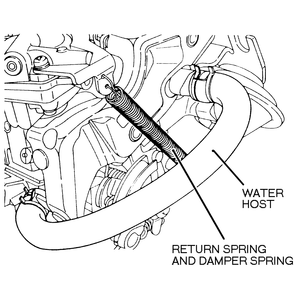
- Remove the throttle return spring and the damper spring.
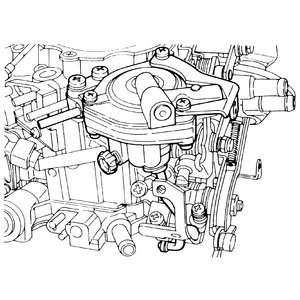
- Remove the throttle opener (automatic transmission) or the dashpot (manual
transmission) rod from the free lever and remove the opener or dashpot unit
from the top of the carburetor.
- If equipped with automatic transmission, remove the Idle Speed Control (ISC)
servo by removing the bracket screws. Put the ISC servo out of the way until
reassembly.
WARNING
Do not attempt to test the servo with battery voltage. It runs on a lower
voltage sent from the ECM. Applying battery voltage to this unit will destroy
it.
- Remove the connector bracket.
- Remove the vacuum hose running from the base to the choke breaker. This
vacuum line will have a delay valve in it.
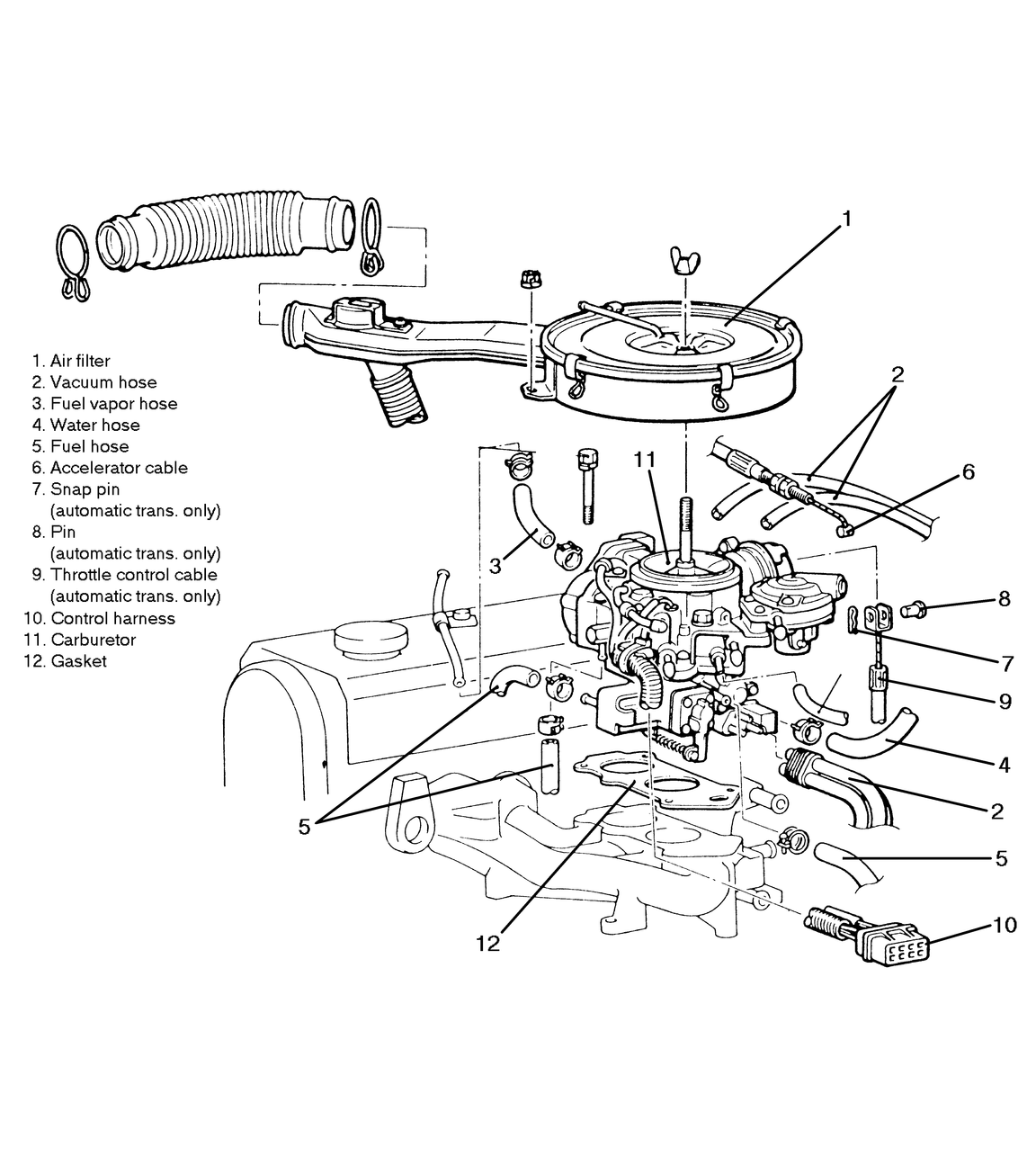
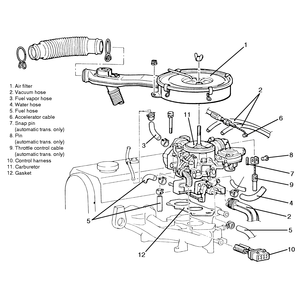
| Fig. 1: Air cleaner components, emission hoses and
feedback carburetor removal components — 2.6L engines
|
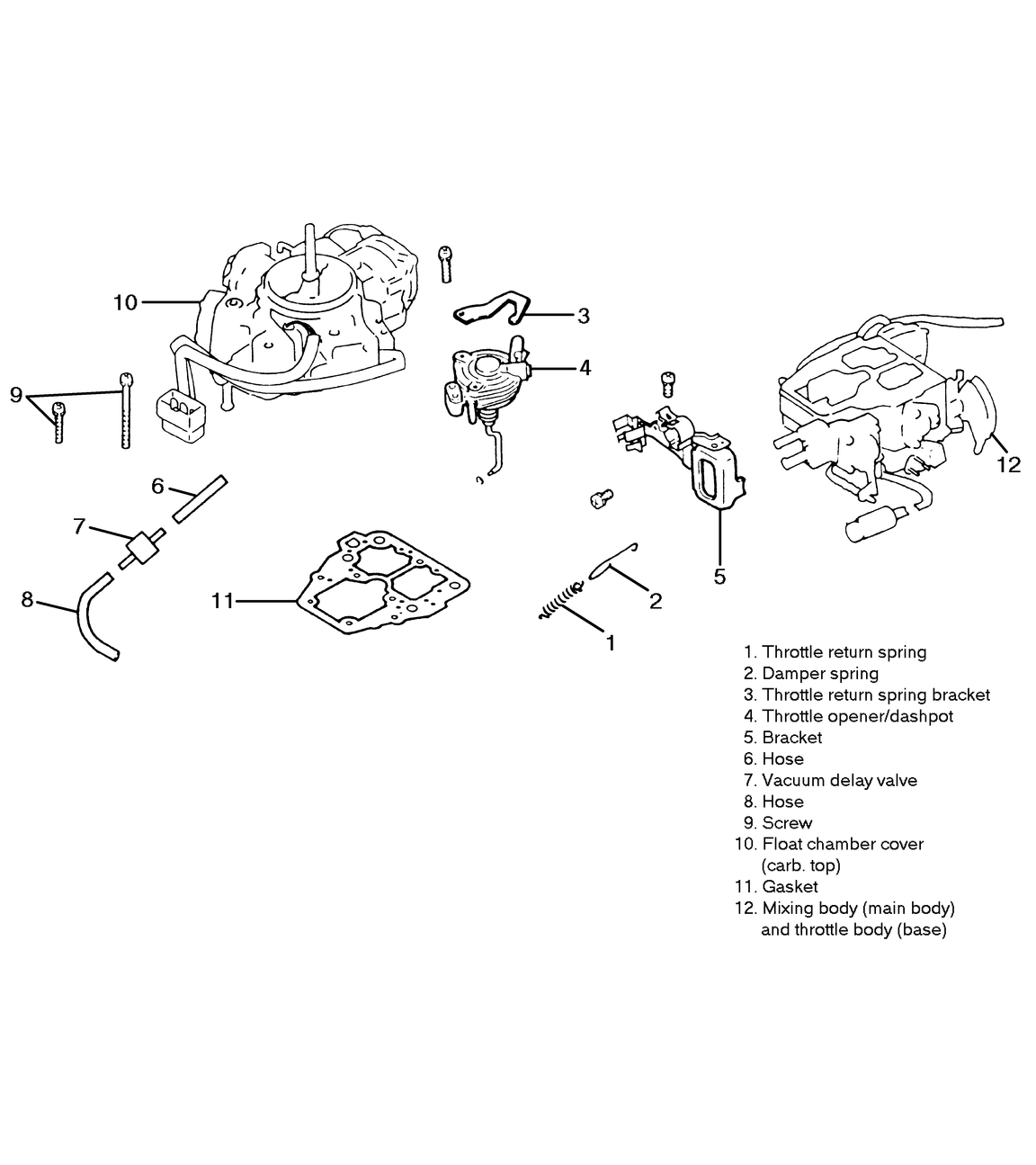
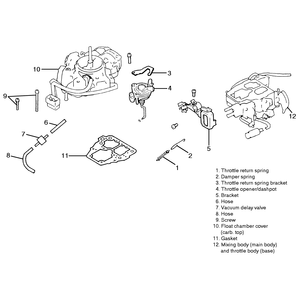
| Fig. 2: Components removed when separating the float
chamber from the mixing body of a feedback carburetor — 2.6L
engines
|
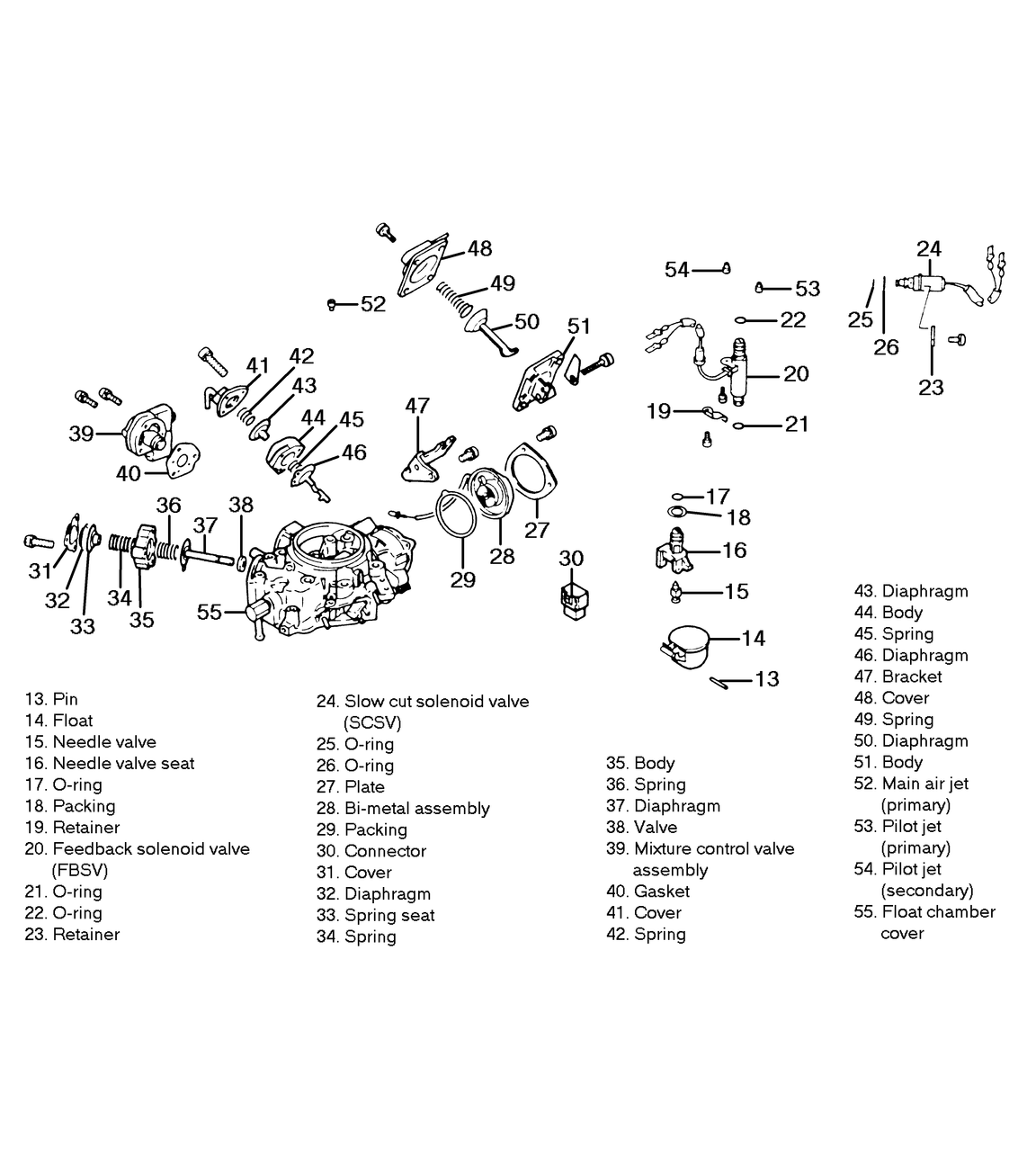
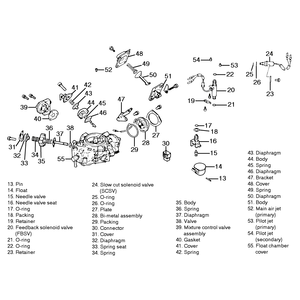
| Fig. 3: Feedback carburetor float chamber disassembly
components — 2.6L engines
|
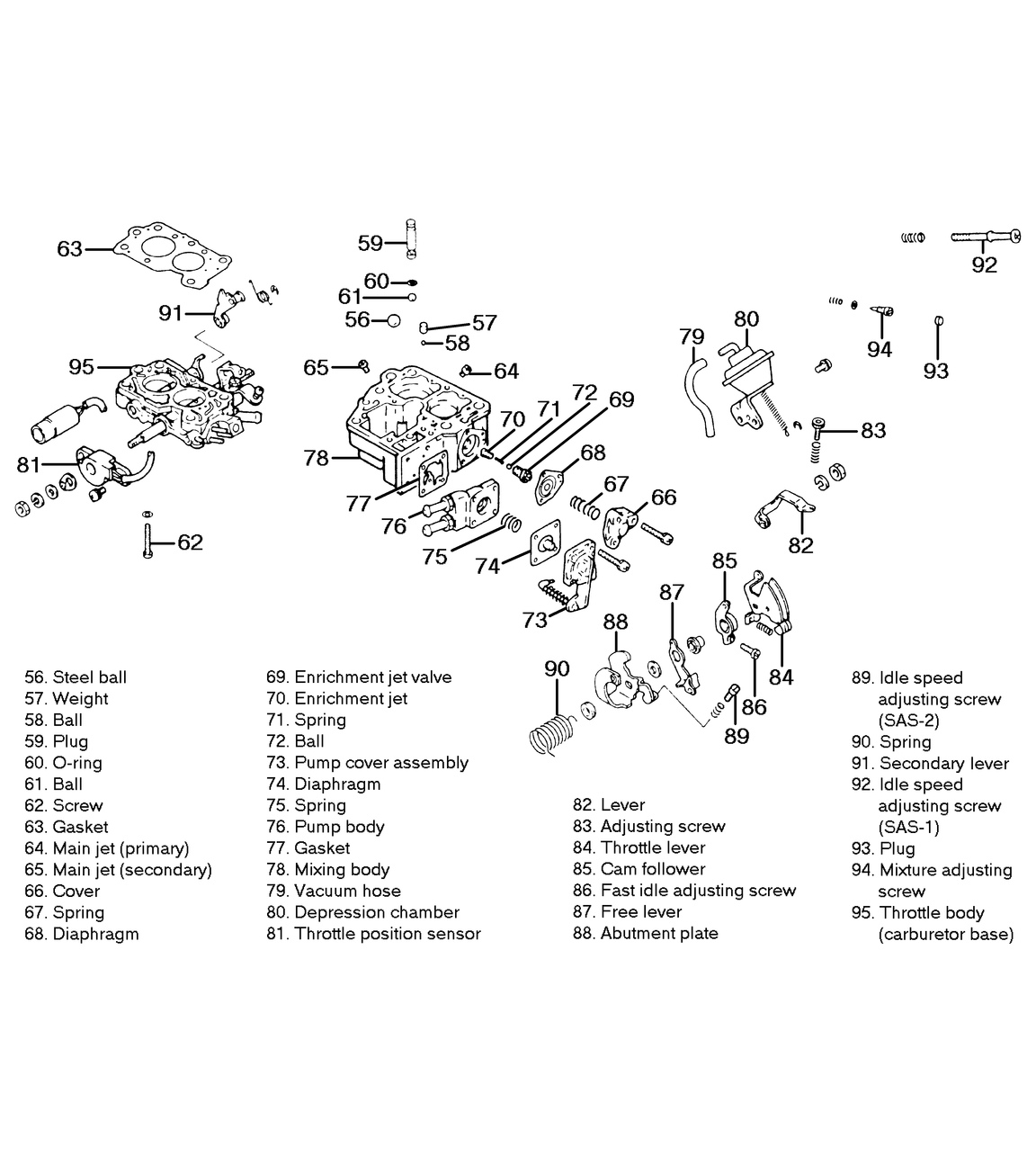
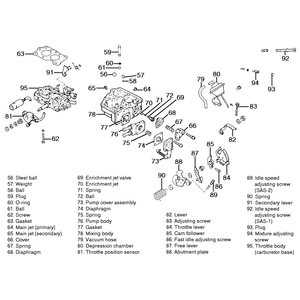
| Fig. 4: Feedback carburetor mixing body and throttle
body disassembly components — 2.6L engines
|
| Fig. 5: Remove the water hose and the return and
damper springs — feedback carburetor
|
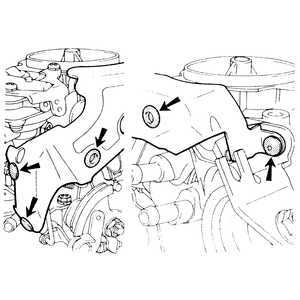
| Fig. 6: Remove the choke cover — feedback
carburetor
|
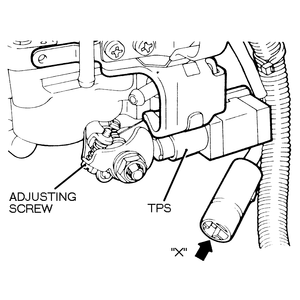
| Fig. 7: Remove the Throttle Position Sensor (TPS)
from the feedback carburetor
|
- Remove the five screws holding the top of the carburetor to the body and
base.
- The top of the carburetor will be firmly held to the mixing body by the
gasket. Do not attempt to lift the top by hand. Use a screwdriver blade or
similar thin, flat tool inserted between the top and the enrichment cover.
Lightly pry the top upwards and lift the top slowly. Do not apply excessive
force and don't try to rush the job.
- Remove the float pivot pin and remove the float. Carefully remove the needle
valve.
WARNING
Do not let the float drop and do not apply any force to the float. The needle
valve controlled by the float will be damaged.
- The valve seat may be removed by using two small, flat-bladed screwdrivers
to gently lever the seat upwards and out of position. Use care not to damage
the surrounding area or the seat mounts during this process.
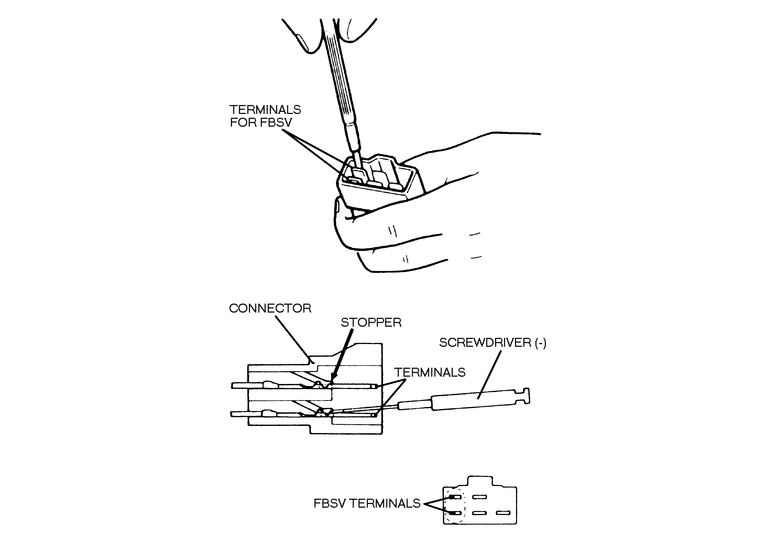
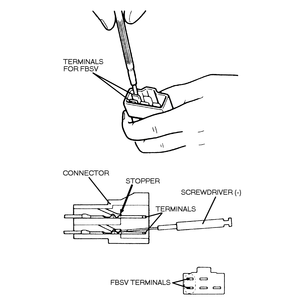
- Find the electrical connector for the Feedback Solenoid Valve (FBSV). The
terminals must be removed from the connector housing before the valve can
be removed. Use a very thin, flat tool (such as a jeweler's screwdriver) inserted
into the connector to loosen the stopper and remove each terminal.
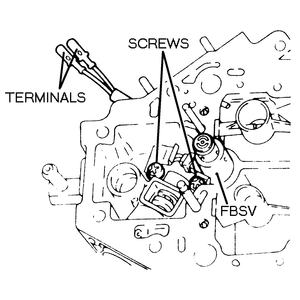
- Remove the grommet from the top of the carburetor. Remove the retainer and
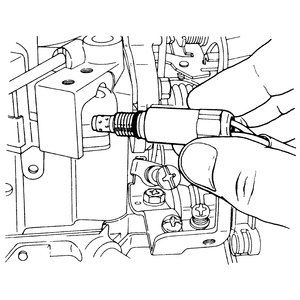
remove the FBSV attaching screw; remove the feedback solenoid valve.
| Fig. 8: Remove the throttle opener/dashpot, being
careful not to bend the actuating rods
|
| Fig. 9: Removing the terminals from the connector
body. Use a very small prytool to gently lift the stop tab within
the plastic shell
|
| Fig. 10: Remove the feedback solenoid valve after
the terminals are free
|
| Fig. 11: Removing the solenoid valve — feedback
carburetor
|
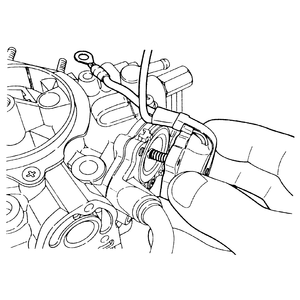
| Fig. 12: Removing the bowl vent solenoid — feedback
carburetor
|
| Fig. 13: Removing the Bowl Vent Valve (BVV) — feedback
carburetor
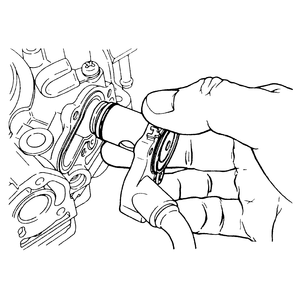
|
- Remove the retainer and remove the Slow Cut Solenoid Valve (SCSV) from the
carburetor top. Hold the solenoid by the body and avoid pulling on the wiring.
- Using the same small screwdriver technique as in Step 11, disconnect the
SCSV terminals from the plastic connector body and remove the SCSV from the
carburetor.
- Use a hand grinder or similar tool to remove the heads of the rivets holding
the cover of the choke assembly. Remove the small screw in the bottom of the
cover.
- Remove the packing (gasket), bimetal assembly and plate.
- Using a pin punch or similar tool, remove the remainder of the rivets from
each hole. Take care not to damage the surrounding material.
- Remove the bimetal terminal from the wiring connector.
- Remove the bowl vent valve.
NOTE: There are small springs within this unit. Take note
of their location and placement, and be careful not to lose them.
- Remove the choke breaker cover.
| Fig. 14: Removing the choke breaker cover — feedback
carburetor
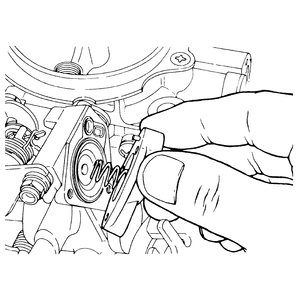
|
| Fig. 15: Removing the depression chamber — feedback
carburetor
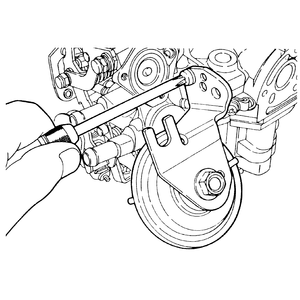
|
| Fig. 16: Removing the accelerator pump rod — feedback
carburetor
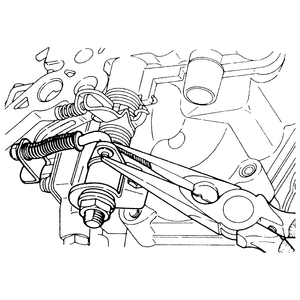
|
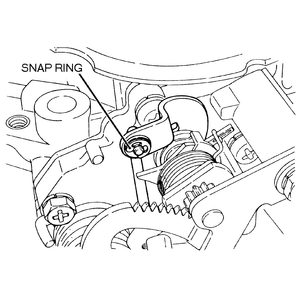
| Fig. 17: Remove the snapring and then the choke rod — feedback
carburetor
|
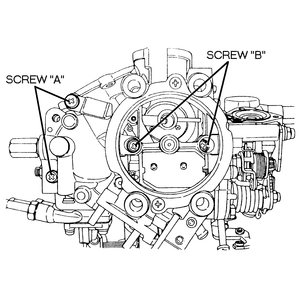
| Fig. 18: Remove the float chamber cover — feedback
carburetor
|
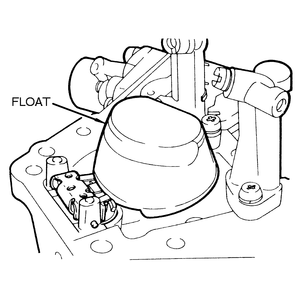
| Fig. 19: Remove the pin, then remove the float and
needle — feedback carburetor
|
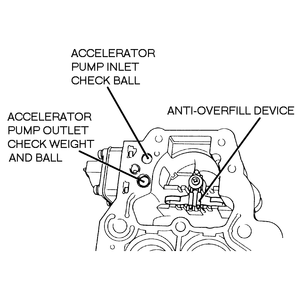
- Remove the check weight and its ball and remove the steel ball from the
anti-overfill device.
- Remove the accelerator pump rod from the throttle shaft lever.
- Remove the screw from the throttle body assembly, taking care not to raise
burrs on the head of the screw. Any deformation will prevent the base from
mating to the manifold properly.
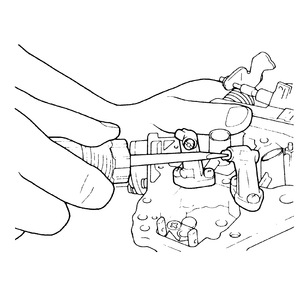
- Using a screwdriver which exactly matches the groove, remove the main jets.
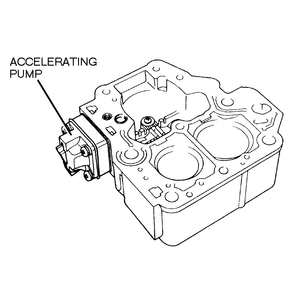
- Remove the accelerator pump mounting screws and remove the pump cover link
assembly, the diaphragm, spring, pump body and gasket from the carburetor
body.
- Remove the three attaching screws from the enrichment valve and remove the
cover, spring, and diaphragm assembly from the main body of the carburetor.
- Remove the vacuum hose running between the depression chamber and the throttle
body.
- Disconnect the depression chamber rod from the secondary throttle lever.
Unbolt and remove the depression chamber.
- Using a screwdriver that exactly matches the screw heads, remove the throttle
position sensor from the throttle body (base) of the carburetor.
- Wearing eye protection and gloves, carefully clean the fuel and air passages
with a spray cleaner and, if available, compressed air. A majority of carburetor
problems are caused by very small bits of dirt lodging in the air or fuel
passages. Do NOT use metal wire or similar to clean the passages.
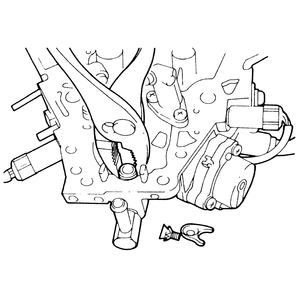
| Fig. 20: Use a pair of pliers to remove the needle
seat — feedback carburetor
|
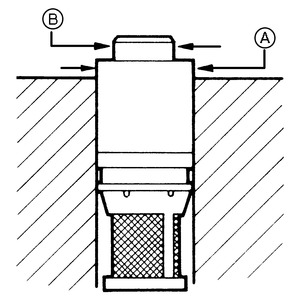
| Fig. 21: When removing the needle seat, grasp it
by area A, not area B — feedback carburetor
|
| Fig. 22: Remove the main jet with a screwdriver equipped
with the proper-sized blade for the main jet slot — feedback
carburetor
|
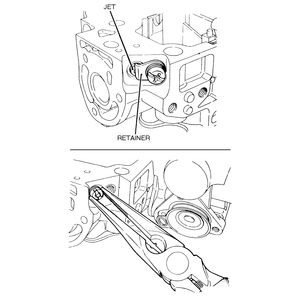
| Fig. 23: Remove the pilot jet retainer and pull the
secondary jet out with pliers — feedback carburetor
|
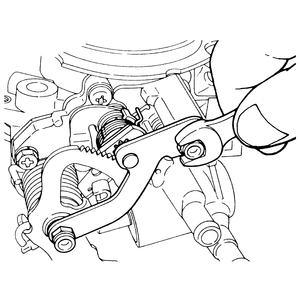
| Fig. 24: Remove the two lockscrews, then remove the
choke pinion assembly — feedback carburetor
|
| Fig. 25: Remove the check weight and ball, as well
as the steel ball of the anti-overfill device — feedback
carburetor
|
| Fig. 26: Remove the accelerator pump mounting screws,
then remove the pump cover link assembly, diaphragm, spring, body
and gasket from the main body — feedback carburetor
|
- Check the diaphragms carefully for any sign of damage or cracking.
- Check the operation of the needle valve; it should move lightly and smoothly.
If any binding is felt, replace it.
- Check the fuel inlet filter (above the needle valve) for clogging.
- Check the float for cracks, deformation or internal leakage.
- Inspect the motion of the various linkages and pivots. If any binding is
felt, clean the system thoroughly and apply a light coat of lubricant.
- Check the operation of both solenoid valves. Apply battery voltage to the
terminals; the solenoid should operate with a distinct click each time power
is applied or removed. Inspect the tip of the FBSV to insure the jet is open
and clean.
- Use an ohmmeter to check the solenoids' resistance. The SCSV should have
a resistance of 48–60 ohms at 68°F (20°C); the FBSV should
have 54–66 ohms resistance at the same temperature.
NOTE: Resistance will increase or decrease as the temperature
rises or falls. Make common sense allowances for the temperature in which
you are testing the units.
- Hold one lead of the ohmmeter against the case of each solenoid and touch
the other lead to each terminal. There should NOT be continuity between the
case and the terminals.
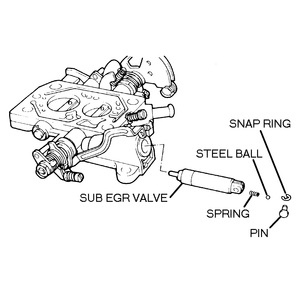
| Fig. 27: After removing the snapring from the sub-EGR
control valve pin, remove the pin and the link from the valve. Take
the little steel ball and spring out of the sub-EGR control valve — feedback
carburetor
|
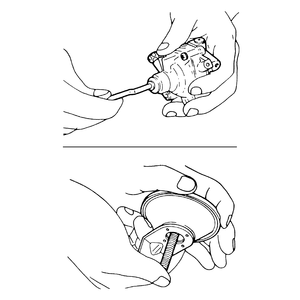
| Fig. 28: Inspect the function of the dashpot and
depression chamber — feedback carburetor
|
| Fig. 29: Sizes are marked on each jet; exact replacements
must be used — feedback carburetor
|
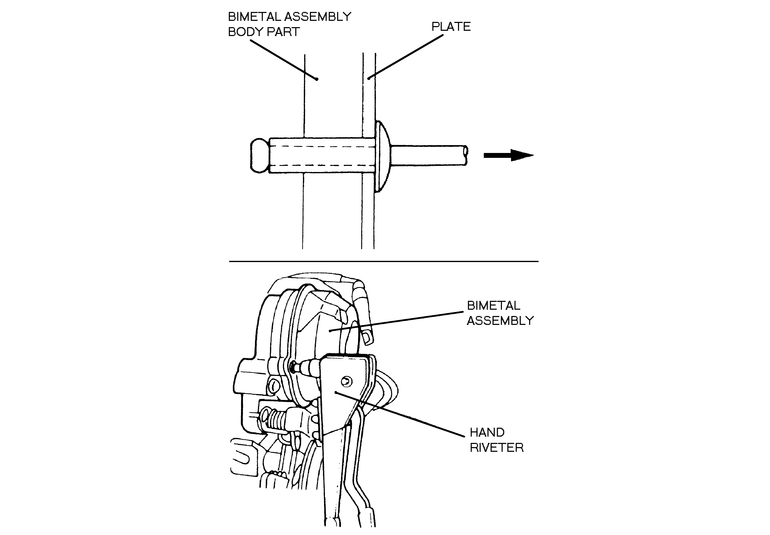
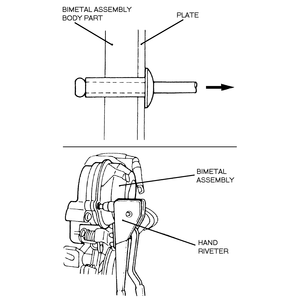
| Fig. 30: Use a hand riveter to refasten the bimetal
choke cover back onto the choke body — feedback carburetor
|
- Use the ohmmeter to check the bimetal assembly. Connect one lead to the
wire terminal and the other lead to the body of the assembly. Correct resistance
is approximately 6 ohms at 68°F (20°C).
- The dashpot should be inspected by pulling outward on the rod. Resistance
should be felt; when released, the lever should return quickly to its original
position.
- The depression chamber is checked by pushing the rod all the way into the
unit and then blocking the vacuum port firmly with a finger. Release the rod;
if it stays in place (with the vacuum port blocked), the unit is good. If
the rod returns to its original extended position, the diaphragm inside has
failed.
- Before reassembly, make certain that all parts are clean and dry. Any gasket
or O-ring which was removed MUST be replaced with a new one during reinstallation.
NOTE: If the jets are to be replaced, the new ones must
be exact replacements. The jets have a number stamped on them for identification.
Jet size is selected based on sophisticated air flow measurements during
assembly of the carburetor; changing the jets will lead to extreme driveability
and emission problems.
To assemble:
- Install the throttle position sensor onto the throttle body and tighten
the screws without causing damage.
- Install the depression chamber. Connect the chamber rod to the secondary
throttle lever.
- Install the vacuum hose from the depression chamber to the throttle body.
- Assemble the diaphragm, spring and cover for the enrichment valve. Install
the valve and cover assembly onto the main body.
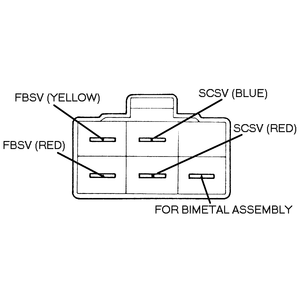
| Fig. 31: The terminals must be correctly installed
in the connector body — feedback carburetor
|
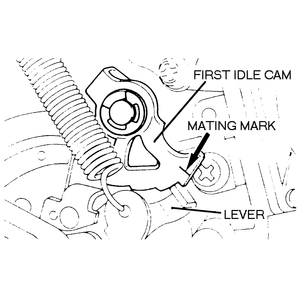
| Fig. 32: The throttle plate clearance must be checked
after the high idle cam is correctly set — feedback
carburetor
|
| Fig. 33: Use a drill or feeler gauge to check the
throttle plate clearance — feedback carburetor
|
| Fig. 34: Check the choke plate clearance with the
throttle wide open; make needed adjustments by carefully bending the
lever — feedback carburetor
|
- Assemble the accelerator pump and install it to the body with a new gasket.
- Install the main jets without damaging them.
- Install the screw into the throttle body assembly without damaging the head
of the screw.
- Install the accelerator pump rod to the throttle shaft lever.
- Install the check weight and ball and the steel ball for the anti-overfill
device.
- Install the choke breaker cover.
- Install the bowl vent valve, taking care to assemble the small springs and
diaphragm correctly.
- Loosely hold the bimetal choke assembly in place. Route the terminal and
wiring correctly to the plastic connector. Install the terminal in the connector
by pushing it into the correct location. The stopper pin will engage the terminal
automatically. A slight click may be heard or felt when the terminal is in
position.
- To install the bimetal assembly:
- Using a new gasket, place the cup on the top of the spiral spring in
line with the choke lever. Fit the cap into place and use the small screw
to hold it in place.
- Line up the mating marks on the case and body.
- Once aligned, install the rivets to hold the case in place. A hand riveter
is required; the use of nuts and bolts is NOT recommended.
- Route the wiring for the FBSV and SCSV correctly. Install terminals into
the correct connector port by pushing them in firmly.
- Install the SCSV and its retainer into the top of the carburetor. Handle
the unit only by the body and avoid pulling on the wire.
- Install the FBSV into the carburetor. Install the retainer and attaching
screw as well as a new grommet.
- Install the seat and needle valve, making sure each is correctly placed
and securely installed.
- Install the float and pivot pin, taking great care not to put any undue
force on the float. Refer to the carburetor adjustment section for float level
adjustment procedure.
- Install the carburetor top to the main body (with a new gasket) and install
the five screws. Make sure each screw is tight without deforming the head.
- Install the vacuum hose and delay valve running from the base of the carburetor
to the choke breaker.
- Install the connector bracket.
- Install the ISC servo if it was removed (automatic transmission only).
- Install either the dashpot or throttle opener unit and connect the rod to
the free lever.
- Install the throttle return spring and damper spring.
- Move the carburetor linkages by hand, checking that motions are smooth and
there is no binding in any of the mechanisms.
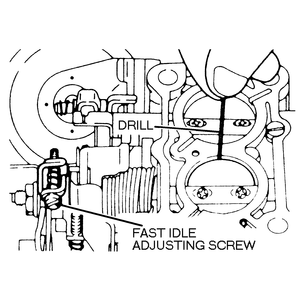
- With the carburetor correctly assembled, some adjustments must be made on
the bench. Set the high idle cam to the second highest position and turn the
carburetor upside down. Using a drill bit of known diameter or a clearance
tool, check the clearance between the primary throttle plate and the throttle
bore. Correct clearances are:
- 2.0L engine with manual transmission: 0.025 in. (0.63mm)
- 2.0L engine with automatic transmission: 0.028 in. (0.71mm)
- 2.6L engine with manual transmission: 0.028 in. (0.71mm)
- 2.6L engine with automatic transmission: 0.031 in. (0.80mm)
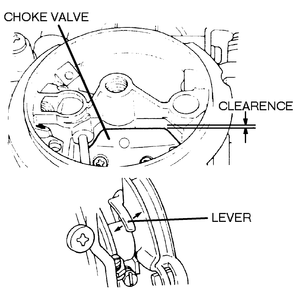
- Check the choke unloader clearance by using your finger to lightly press
and set the choke plate. When it is fully closed, move the throttle linkage
to open the throttle plate(s) all the way; the throttle plates should be vertical
in their bores. Measure the clearance between the choke plate and the choke
bore. Correct clearance is 0.079 in. (2mm) for Pick-ups and Monteros. If adjustment
is needed, gently bend the throttle lever to achieve the correct clearance.
Bending the lever upwards increases the clearance and bending it downward
reduces the clearance.
NOTE: Generally, the choke unloader clearance should not
change after an overhaul. Adjusting this clearance greatly affects cold
driveability; check the clearance after an overhaul, but don't adjust it
unless necessary.
- Install a new base gasket and reinstall the carburetor on the engine, following
instructions given previously in this section.