WARNING
In almost every case, replacing the Mitsubishi electric fuel pump requires removal
of the fuel tank. Please refer to the fuel tank removal and installation procedure
at the end of this section.
- Lift or move aside the carpet in the rear cargo area.
- Remove the oval cover plate from the access hole.
- Disconnect the fuel pump harness connector at the rear of the fuel tank.
- Start the engine, allowing it to run until it runs out of fuel. This relieves
pressure within the fuel system.
- Turn the ignition switch OFF and disconnect the negative
battery cable.
- Remove the fuel filler cap.
- Drain the fuel from the fuel tank into suitable container(s), each with
an airtight lid.
- Carefully, and using two wrenches on the fittings, disconnect the high pressure
fuel line and the main fuel line from the pump. Remove the high pressure fuel
hose at the body-side main pipe connection, unfasten the pump-side connection.
Wrap each joint in a rag before loosening; some pressure may remain within
the system.
- Remove the fuel pump retaining nuts and carefully remove the pump from the
tank.
NOTE: The fuel pump may still contain liquid fuel. Drain
it into a suitable container with an airtight lid before performing any
tests or inspections.
To install:
- Carefully install the pump into the tank and install the 6 retaining nuts
onto the studs. Tighten the nuts evenly and in a crisscross pattern to 12
ft. lbs. (16 Nm).
- Reinstall the high pressure and supply line to the pump.
WARNING
Take great care when connecting the threaded high pressure lines. Start
the threads by hand, then, while holding the hose side to keep it from turning,
tighten the flare nut to 27 ft. lbs. (37 Nm).
- Connect the pump wiring harness.
- Connect the negative battery cable. Turn the ignition key to ON but
do not start the engine. You should hear the pump running. Allow it to run
for about 10 seconds to build line pressure, then start the engine.
- After the engine has run smoothly for a minute or two, shut the ignition
off and check the work area for any trace of leakage. Attend to any fuel leaks
immediately, remembering that the system has repressurized and must be handled
safely.
- Reinstall the cover on the access hole and replace the carpet in the cargo
area.
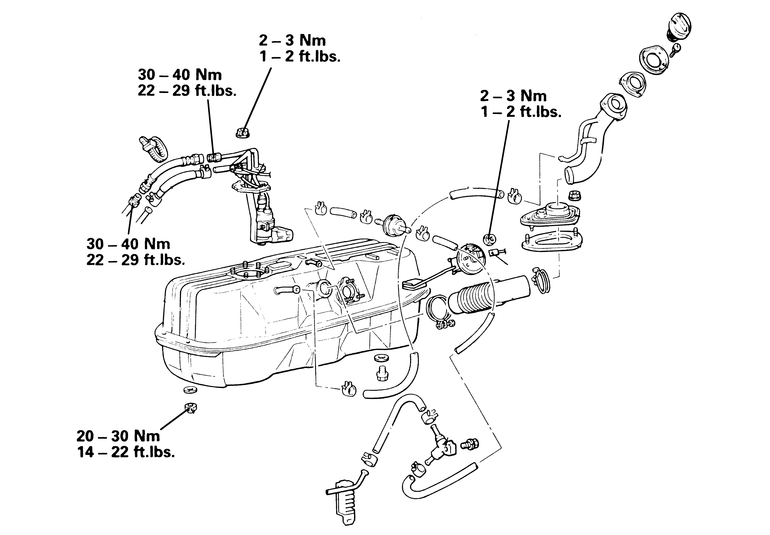
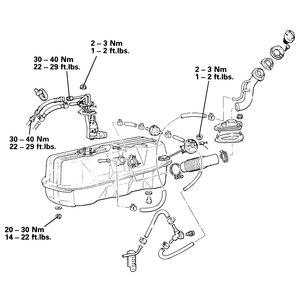
| Fig. 1: Components of the fuel pump and fuel tank
|
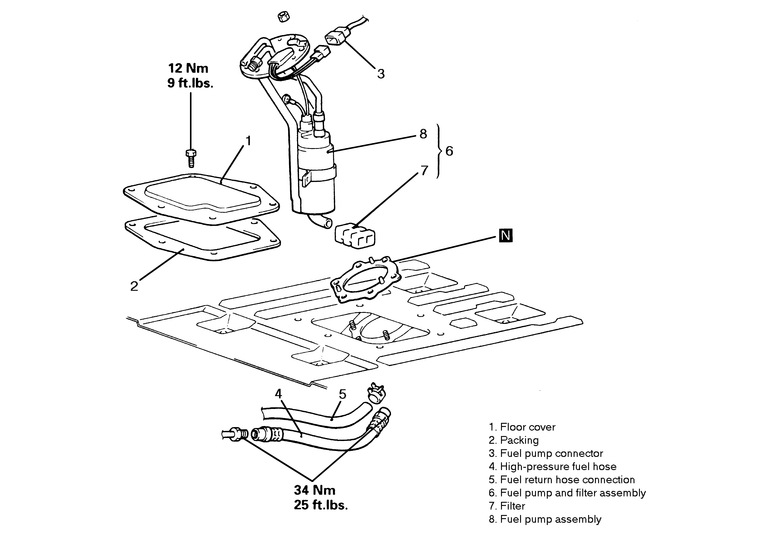
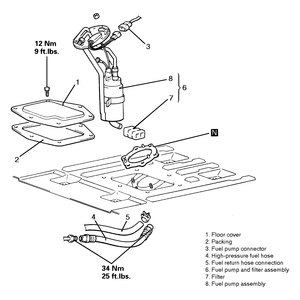
| Fig. 2: Components of the fuel pump — all
models similar
|