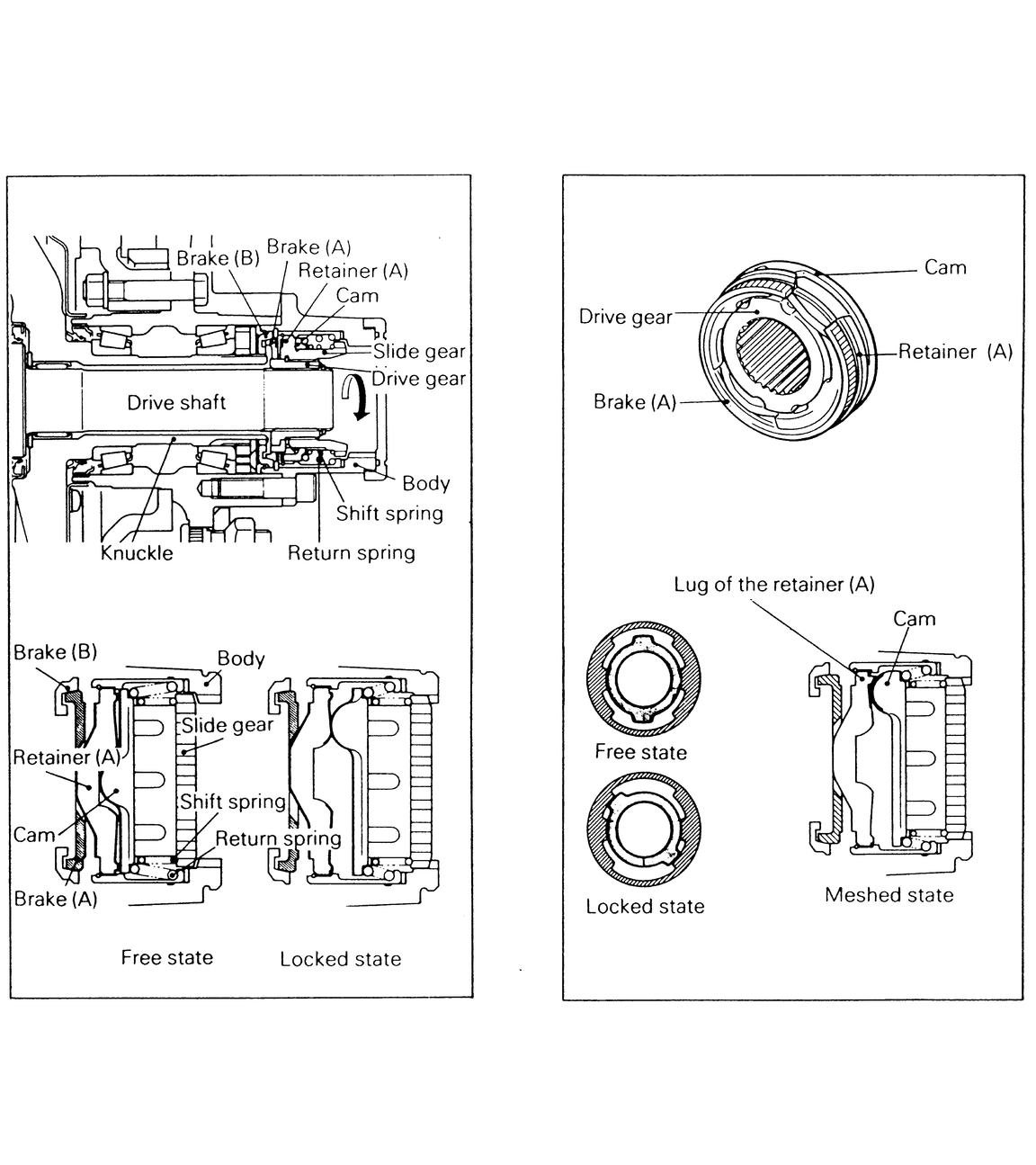
When the transfer is shifted from 2WD to 4WD and riving is begun, rotation of the driveshaft is transmitted from the drive gear to the slide gear to the cam to retainer (A) to brake (A). When this happens, brake (A) is pressed against brake (B) by the function of the cam of retainer (A), and friction force is generated.
Because brake (B) is secured to the knuckle, retainer (A) ceases to rotate, and therefore, the cam, while compressing the return spring, rises out of the cam groove of the retainer (A) and compresses the shift spring. The slide gear is pushed by the shift spring, and then engages with the gear of the housing when the two are in phase and enters the locked state.
The cam turns until the lug of the drive gear contacts the lug of the brake (A). Because of this contact, brake (A) is turned by the drive gear, and therefore, there is also no longer any force of retainer (A) with a tendency to turn brake (A). As a result, there is also no longer any force which presses brake (A) against brake (B) and the drive gear causes brake (A) to turn lightly (there is no friction force).
| Fig. 4: Internal workings of the automatic-change 4WD
free-wheeling hub assembly — all 1983–95 Pick-ups
(4WD) and some 1983–95 Monteros
|
Because the cam remains meshed, it turns until it contacts the lug of retainer (A), and is locked.
When the transfer is shifted from 4WD to 2WD and the vehicle is driven in reverse, rotation of the gear of the body is transmitted from the slide gear to the cam to the retainer (A) to the brake (A), but retainer (A) ceases to turn, just as when the shift is made from the free state to the locked state. The cam, therefore, turns as far as the cam groove of retainer (A) and is pushed into the cam groove by the return spring.
The slide gear moves with the cam, disengages from the gear of the body, and enters a free state.