Before an overhaul is possible, remove the front drive axles — refer
to the removal procedures described earlier.
NOTE: The front axle shafts of Montero and 4WD Pick-ups have
the serviceable joints (TJ or DOJ) at the outside and the BJ or RJ at the inner
end.
The drive axle assembly is a flexible unit consisting of an inner and outer
constant velocity (CV) joint joined by the axle shaft. Some cars may have a
center bearing or carrier but the inner and outer joint remain. The inner joint,
because of its design, is completely flexible and allows the joint to flex left/right,
up/down and compress/extend while the joint is turning. This range of motion
is necessary to allow the car to accelerate during all possible positions of
the car's front wheels.
Because of the inner joints' flexibility, care must be taken not to over-extend
the joint during repairs or handling. When either end of the shaft is disconnected
from the car, support the shaft with wire to prevent joint damage.
CV-joints are protected by rubber boots or seals, designed to keep the high
temperature grease in and the road grime and water out. The most common cause
of joint failure is a ripped boot which allows the lubricant to leave the joint,
thus causing heavy wear, noise and ultimate failure. The boots are constantly
exposed to road hazards and should be inspected frequently. Any time a boot
is found to be damaged or slit, it should be replaced immediately.
This is another very good example of maintenance being cheaper than repair.
A replacement boot kit is generally under $35 while a new joint can range above
$150.
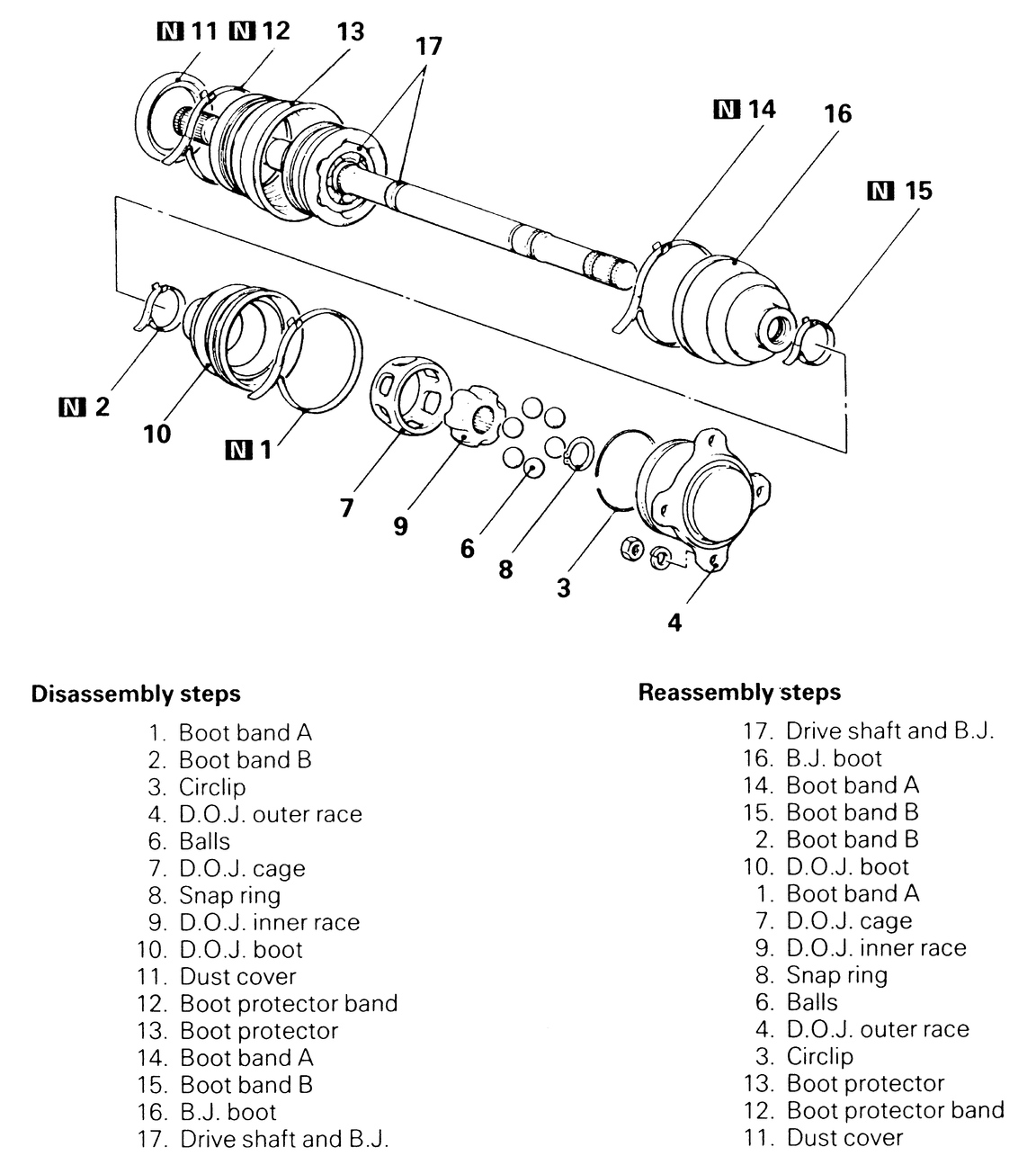
| Fig. 1: Right driveshaft disassembly and reassembly components
|
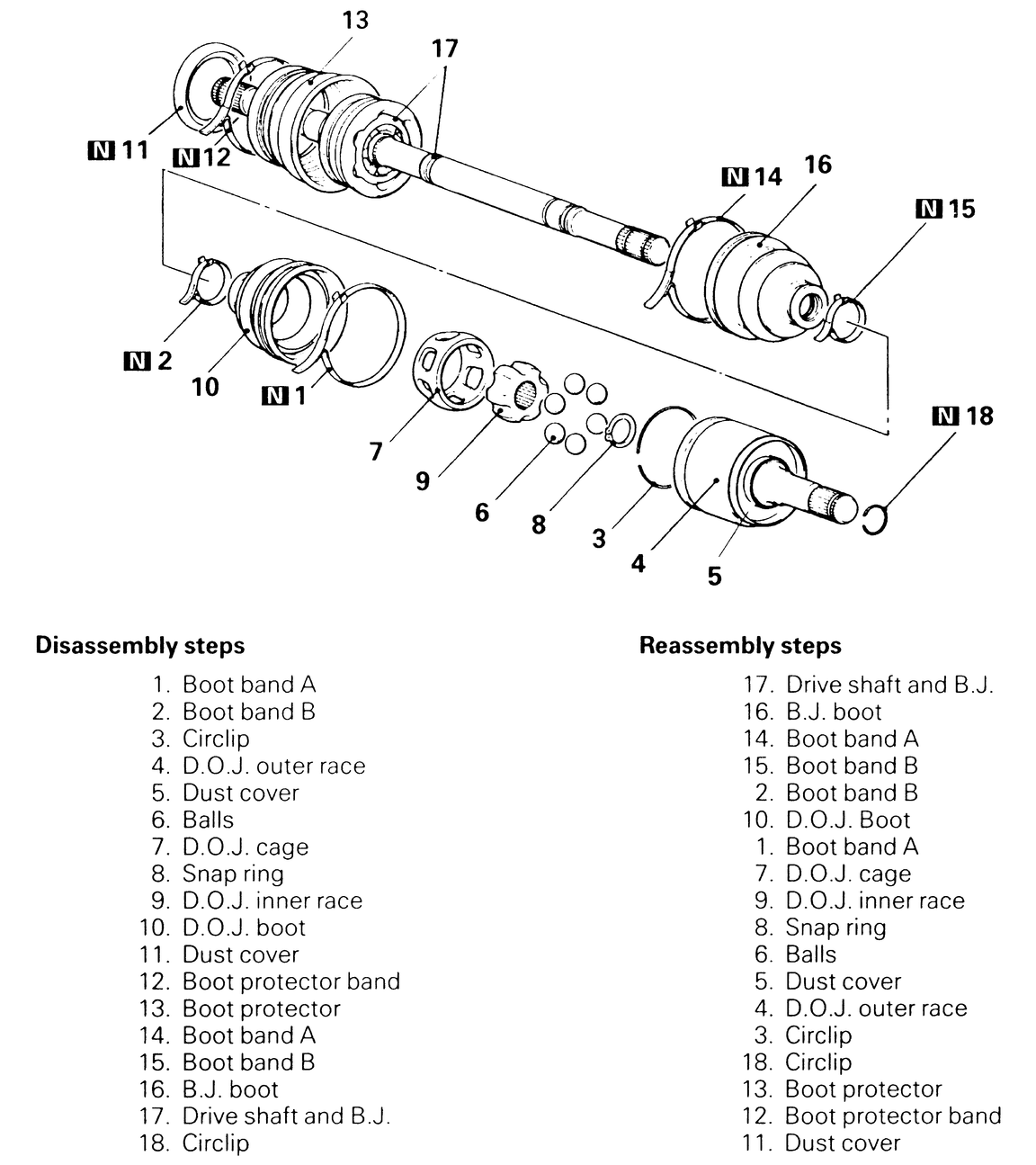
| Fig. 2: Left driveshaft disassembly and reassembly components
|
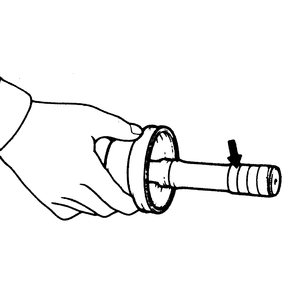
| Fig. 3: Wrap vinyl tape around the spline part of the
DOJ side of the driveshaft so that the DOJ boots are not damaged when
removed
|
| Fig. 4: Install the BJ and DOJ boots and bands in the
order as shown in the illustration
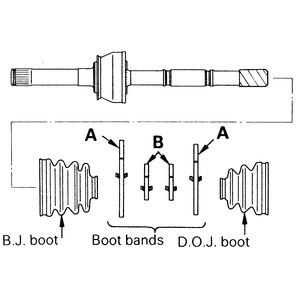
|
| Fig. 5: The internal components of the DOJ joint
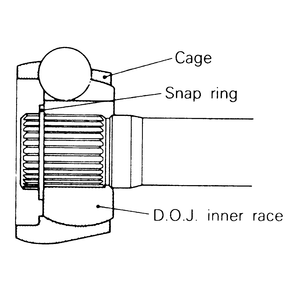
|
| Fig. 6: Apply 1.9 oz. (55 gr) of Repair kit grease to
the DOJ outer race, insert the driveshaft into the race, then apply the
same amount of grease on top of the race
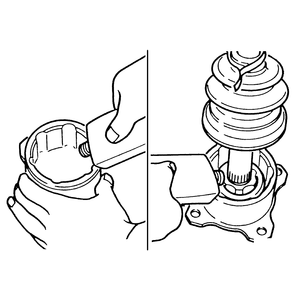
|
Mitsubishi uses no fewer than 4 types of CV-joint on its cars; they appear
in various combinations on various driveshafts. The types of joints and their
abbreviations are:
- Tripod joint (TJ) — commonly found as an inboard joint,
the three sided spider inside can be replaced on the bench.
- Rzepppa joint (RJ) — named for its inventor, it almost always
shows up as an outer joint. The joint is not replaceable under most conditions
but comes installed on a new axle.
- Double Offset joint (DOJ) — identified by its ball-in-cage
arrangement, this highly flexible inner joint can be dismantled and rebuilt.
- Birfield joint (BJ) — outer joint with good reliability.
Cannot be disassembled from the axle. A new joint will include a new shaft.
This section will use these abbreviations for each joint. Additionally, any
reference to an outer or outboard joint indicates the joint at or near the wheel/hub/knuckle
assembly. Not surprisingly, inner or inboard refers to the joint at or closest
to the transaxle.
WARNING
Bands and snaprings are not reusable. Parts are not interchangeable. Each band
and boot for each model and type of joint has an identifying code on it. Obtain
this code and shop for exact replacements. A few cents saved on the wrong part
may cost you a second repair when the boot doesn't seal correctly.The grease
that comes in the repair kit should be used throughout the joint. Do not substitute
other lubricants; they will not withstand the heat and pressure within the joint.
- Remove the driveshaft from the car, following directions outlined earlier.
- Remove the large band holding the boot to the joint and the smaller band
holding the boot to the shaft. Slide the boot off the joint and down the shaft,
out of the way.
- Gently pull the TJ case off the joint.
- Remove the small snapring on the end of the shaft and remove the spider
assembly. Clean the spider assembly thoroughly but do not disassemble it.
- Wrap several turns of vinyl or electrician's tape around the splines on
the driveshaft. Slide the boot off the shaft.
- Clean and examine the parts carefully. All traces of the old grease should
be removed and the parts should be totally dry before reinstallation.
To install:
- Slide the new boot onto the axle. Use tape to cover the shaft splines.
- Apply a liberal coating of the special CV-joint grease (comes in the overhaul
kit) to the spider assembly and install the assembly on the shaft.
- Install a new snapring to hold the spider.
- Use the remainder of the grease inside the joint case and fit the case over
the spider.
- Slide the boot into place and install new boot clamps. Make certain the
joint is straight when placing the boot; if the joint is cocked, the boot
may not seal correctly.
- Install a new snapring on the transaxle end of the inner joint.
- Reinstall the driveshaft.
- Remove the driveshaft from the car, following directions outlined earlier.
- Remove the small band holding the boot to the shaft and the larger band
holding the boot to the joint. Slide the boot off the joint and down the shaft,
out of the way.
- Gently pull the DOJ case off the joint. There is a large circular spring
clip within the case holding it in place. Carefully work this spring free
before disassembly.
- Make reliable matching marks on the end of the shaft, the inner race and
the outer cage. A metal scribe is handy for this marking.
- Remove the balls from the DOJ cage.
- Remove the cage from the inner race. Turn the cage so that the projections
of the inner race align with the recesses of the cage. Slide the cage toward
the center of the shaft, not to the outside.
- Remove the snapring from the shaft. Mount the shaft in a vise with protected
jaws.
- Use a brass bar and small hammer, tap evenly all around the inner race and
remove it from the shaft.
- Apply several turns of tape over the shaft splines. Remove the cage and
boot from the shaft.
- Check the shaft and splines for damage or wear. Inspect the cage, race and
balls for any sign of corrosion, wear, cracking or damage. Clean all the parts
thoroughly and air dry them completely before installation. Any remaining
cleaning solvent can dissolve the lubricating grease.
To install:
- Wrap the splines in tape; install a new boot and slide it down the shaft.
- Place the cage onto the driveshaft so that the smaller diameter side is
installed first.
- Align the matchmarks of the inner race and the shaft. Use the small hammer
and brass bar to tap the race into position until it contacts the rib of the
shaft. Install a new snapring.
- Apply grease liberally to the inner race and the DOJ cage. Align the matchmarks
and fit the two together using the same alignment method as during disassembly.
- Apply grease to the ball areas of the cage and race and insert the balls.
- Fill the outer race about 1⁄3 full
of grease. Install a new large circlip and install the ball and cage assembly.
Use the remainder of the grease to fill the back of the joint or the boot.
- Slide the boot into place over the joint and install new bands. The boot
should be neither stretched nor compressed when the bands are applied. The
bands should be 3.15 in. (80mm) apart. Too much or too little air within the
boot may cause premature boot failure.
- Install the driveshaft into the car.