Previous Next

OVERHAUL

NOTE: To overhaul the brake calipers, you must have a controlled source of compressed air to force the pistons out. You should also have a generous supply of clean brake fluid or commercial brake cleaning spray to clean parts.

  1. Drain the remaining fluid from the caliper.
  2. Carefully remove the dust boot from around the piston by prying the boot ring out of its groove. Remove the piston and piston boot by applying compressed air through the brake hose fitting hole.

    CAUTION
    Do not hold the caliper during this procedure, and do not place fingers in front of the piston in an attempt to catch it or protect it when applying compressed air. Place a piece of cloth in front of the piston, and slowly increase the force of the compressed air to prevent the piston from springing out abruptly; use just enough air pressure to ease the piston out.

  3. Remove the seal from the inside of the caliper bore. Clean the caliper bore with brake cleaner, alcohol or brake fluid.

    WARNING
    Never use a screwdriver or similar tools, because doing so could damage the cylinder surface.

  4. Check all the parts for wear, deterioration, cracking or other abnormal conditions. Corrosion, generally caused by water in the system, will appear as white deposits on the metal, similar to what may be found on an old aluminum storm door around the house. Pay close attention to the condition of the inside of the caliper bore and the outside of the piston. Any sign of corrosion or scoring requires new parts; do not attempt to clean or resurface either face if there is damage present.

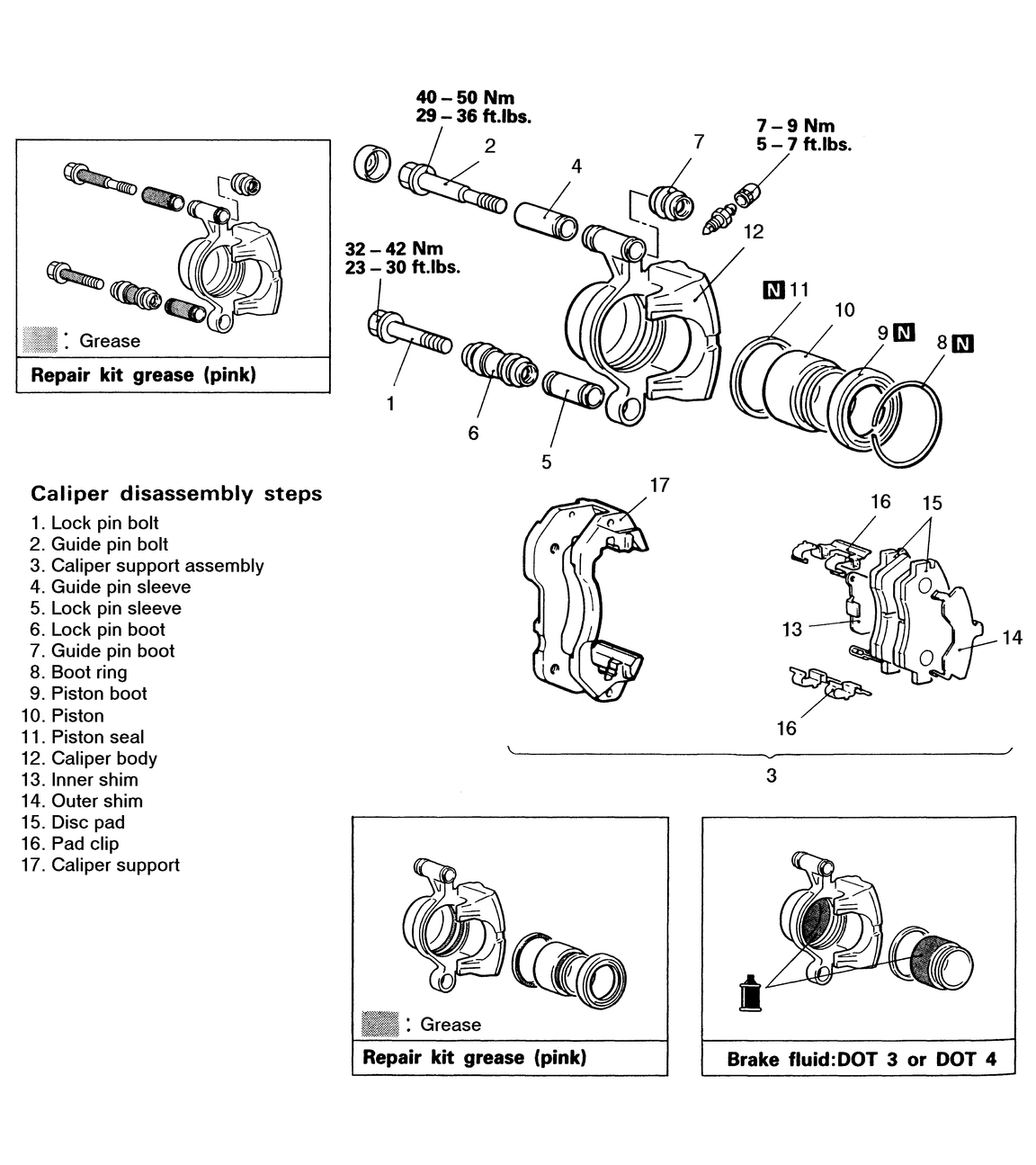
    Fig. 1: Front disc brake caliper disassembly and assembly components — all Pick-ups and Monteros

    Fig. 2: Remove the boot ring with a pointed prytool

    Fig. 3: After removing the boot ring, use compressed air to push the boot and piston out of the caliper

    Fig. 4: Check the piston for signs of corrosion and other damage; if none is found, clean the piston and bore with brake cleaner, alcohol or clean brake fluid

    Fig. 5: If the boot did not come out with the piston, remove it using your fingers — tools could scratch the bore

    Fig. 6: If using a prytool to remove the piston seal, be extremely careful not to scratch the piston bore

  5. The caliper overhaul kit will, at minimum, contain new seals and dust boots. A good kit will contain a new piston as well, but you may have to buy the piston separately. Any time the caliper is disassembled, a new piston is highly recommended in addition to the seals.
  6. Clean all the components to be reused with a brake cleaner, alcohol or clean brake fluid and dry them thoroughly. Take any steps necessary to eliminate moisture or water vapor from the parts.
  7. Coat all the caliper components with fresh brake fluid from an unopened can.

    NOTE: Some kits come with special assembly lubricants for the piston seals and slides or guidepins. Use these lubricants according to the directions within the kit.

  8. Install the piston seal and piston into the caliper bore. This is an exacting job; the clearances are very small. Make sure the seal is seated in its groove and that the piston is not cocked when inserted into the bore.
  9. Install the new dust boot and new boot ring.
  10. Install the slide bushings and rubber boots onto the caliper if they were removed during disassembly.
  11. The guide and lockpin sleeves should be coated inside with the grease supplied with the rebuilding kit, and boots should all be replaced. Also coat the lips of the boots and the surface of the caliper which bears (and turns) against the caliper support with grease.

    NOTE: Two kinds of grease may be packed in a rebuilding kit; use the grease recommended for use with the guide and lockpins. On all the systems, coat the sliding parts of the caliper body and the sleeves with the grease specified.
  12. Install the brake caliper to the wheel assembly.

Previous Next