CAUTION
Brake pads and shoes may contain asbestos, which has been determined to be a
cancer causing agent. Never clean the brake surfaces with compressed air! Avoid
inhaling any dust from brake surfaces! When cleaning brakes, use commercially
available brake cleaning fluids.
- Block the front wheels, raise the vehicle at the rear and support it safely
on jackstands. Make sure the parking brake is released.
- Remove the rear wheels.
- Remove the brake drum by pulling it towards you. If the drum is difficult
to remove, first check that the parking brake is fully released and that the
cables to the wheels are not binding. Then follow either of these procedures:
- Remove the cover from the adjustment hole at the rear or back face of
the backing plate.
- Insert a small prytool into the adjustment hole and use it to separate
the adjustment lever from the adjuster.
- Use a brake adjusting tool or prytool to turn the star wheel and loosen
the brake adjustment. Turning the wheel in the correct direction will
contract the shoes away from the drum.
- If the drum has additional holes drilled in it (not all do), insert
two M8x1.25 bolts.
- Turn the bolts tighter; they will press on the hub and force the drum
off the brake shoes. Remember to turn the bolts alternately and evenly;
if the drum is cocked, it can cause damage as it comes off (if it comes
off at all).
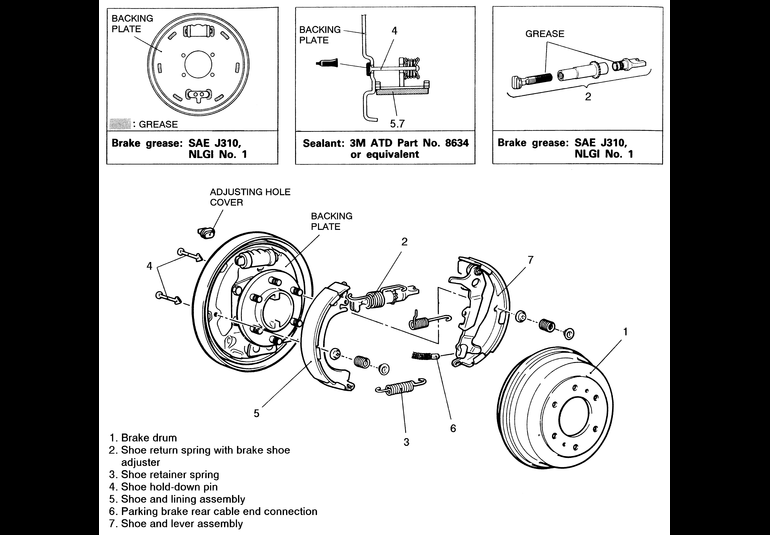
| Fig. 1: Rear brake drum and shoe removal and
installation components — rear drum brake equipped
Pick-ups and Monteros
|
- Before reinstalling the drum, the brake shoes must be in the correct position.
If the shoes are expanded too far the drum simply won't go over them. Refer
to the brake shoe removal and installation procedures in this section for
detailed instructions on setting the shoe clearance.
- Install the drum onto the rear axle lug studs. Push it until it is set flat
and completely in as far as it will go.