Previous Next

REMOVAL & INSTALLATION

  1. Remove the brake drums and shoes as described previously. Although some vehicles will allow the cylinder to be removed with the brake shoes in place, this is not recommended. Chances are good that the brake shoes will become soaked with brake fluid. Contaminated brake shoes will need replacement so you'll have to take them off anyway.
  2. Place a drain pan under the work area and disconnect the brake line at its connection to the wheel cylinder (behind the backing plate). Plug the open end of the brake line.

    NOTE: Work carefully and use a line wrench on the fitting. This fitting is usually rusted or otherwise difficult to turn. Don't damage the brake line.

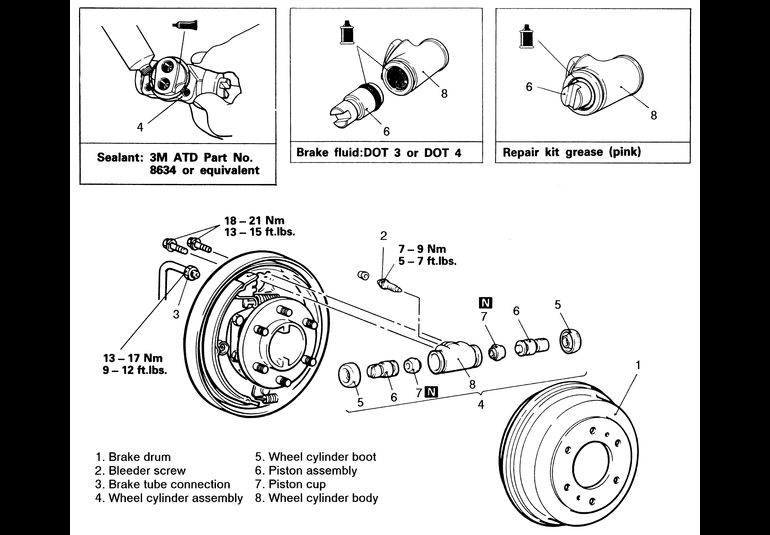
  3. Remove the two bolts that fasten the wheel cylinder to the backing plate and remove the wheel cylinder. Again, these bolts may be harder than usual to turn.
  4. Install the cylinder and tighten the mounting bolts to 13 ft. lbs. (18 Nm). This is just enough to hold the cylinder in place; overtightening will strip the bolt holes.

    Fig. 1: Rear brake wheel cylinder removal and installation components — all rear drum brake Pick-ups and Monteros

    Fig. 2: Disconnect the brake line and the retaining bolts from the rear of the wheel cylinder

    Fig. 3: Remove the wheel cylinder from the backing plate to rebuild or replace with a new unit

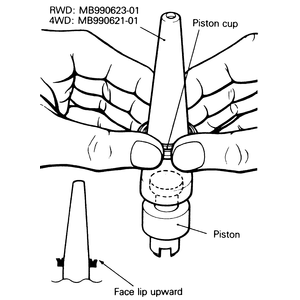
    Fig. 4: Use the special tools to install the piston cup to the piston

  5. Connect the brake line to the cylinder.
  6. Install the shoes and drums correctly. Make sure the self-adjusters have taken up play so the brakes actuate normally.
  7. Bleed the system thoroughly before operating the vehicle.

Previous Next