CORROSION PROTECTION
Description
To provide improved corrosion prevention, the following anti-corrosive measures have been implemented in NISSAN production plants. When repairing or replacing body panels, it is necessary to use the same anti-corrosive measures.
 Anti-Corrosive Precoated Steel (Galvannealed Steel)
To improve repairability and corrosion resistance, a new type of anti-corrosive precoated steel sheet is adopted replacing conventional zinc-coated steel sheet.
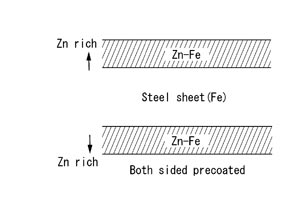
Galvannealed steel is electroplated and heated to form Zinc-iron alloy, which provides excellent and long term corrosion resistance with cationic electrodeposition primer.
NISSAN genuine parts are fabricated from galvannealed steel. Therefore, it is recommended that NISSAN genuine parts or an equivalent be used for panel replacement to maintain the anti-corrosive performance built into the vehicle at the factory.
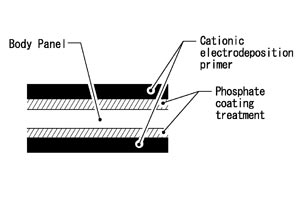
Phosphate Coating Treatment and Cationic Electrodeposition PrimerA phosphate coating treatment and a cationic electrodeposition primer, which provide excellent corrosion protection, are applied to all body components.
■ CAUTION ■
Confine paint removal during welding operation to an absolute minimum.NISSAN genuine parts are also treated in the same manner. Therefore, it is recommended that NISSAN genuine parts or an equivalent be used for panel replacement to maintain anti-corrosive performance built into the vehicle at the factory.
Undercoating
The underside of the floor and wheelhouse are undercoated to prevent rust, vibration, noise and stone chipping. Therefore, when such a panel is replaced or repaired, apply undercoating to that part. Use an undercoating which is rust resistant, soundproof, vibration-proof, shock-resistant, adhesive, and durable.
Precautions in Undercoating- 1.Never apply undercoating to any place unless specified (such as the areas above the muffler and three way catalyst that are subjected to heat).
- 2.Never undercoat the exhaust pipe or other parts that become hot.
- 3.Never undercoat rotating parts.
- 4.Apply bitumen wax after applying undercoating.
- 5.After putting seal on the vehicle, put undercoating on it.
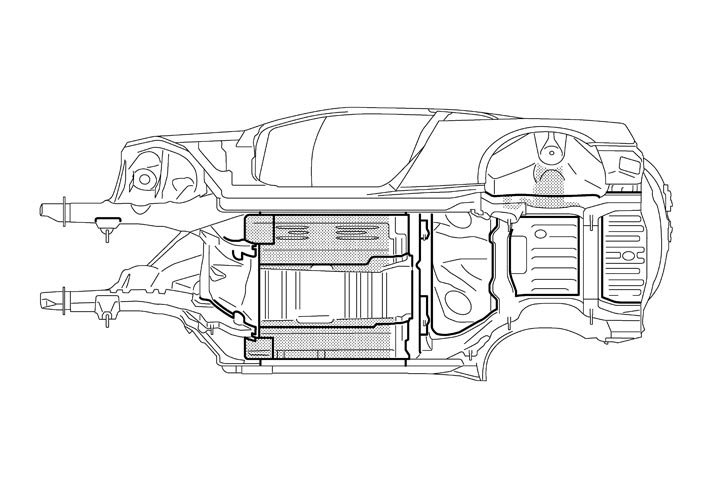
 | : Undercoated areas | ||||
 | : Sealed portions |
Body Sealing
DESCRIPTIONThe following figure shows the areas that are sealed at the factory. Sealant that is applied to these areas should be smooth and free from cuts or gaps. Care should be taken not to apply an excess amount of sealant and not to allow other unaffected parts to come into contact with the sealant.
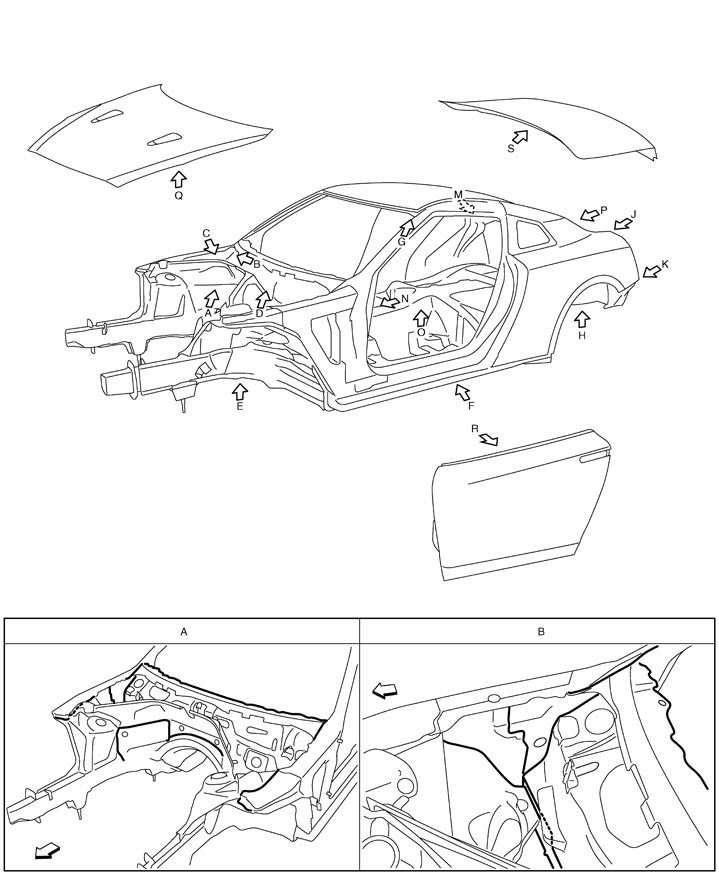
 | : Vehicle front | ||||
| : Sealed portions |
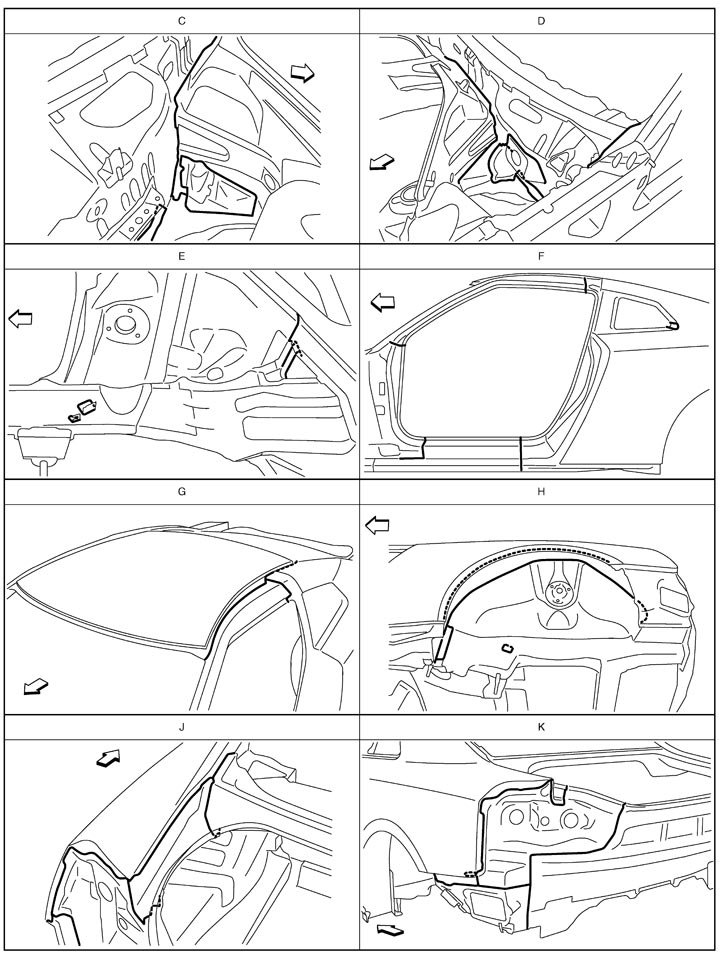
|
|
: Vehicle front |
|
|
|
|
|
|
: Sealed portions |
|
|
|
|
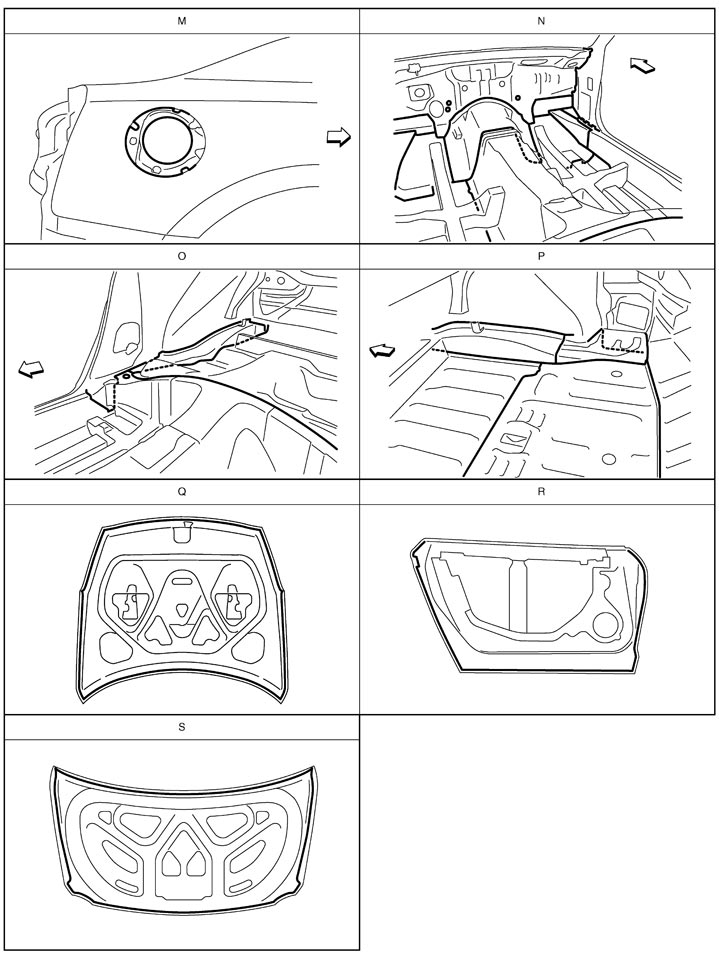
|
|
: Vehicle front |
|
|
|
|
|
|
: Sealed portions |
|
|
|
|