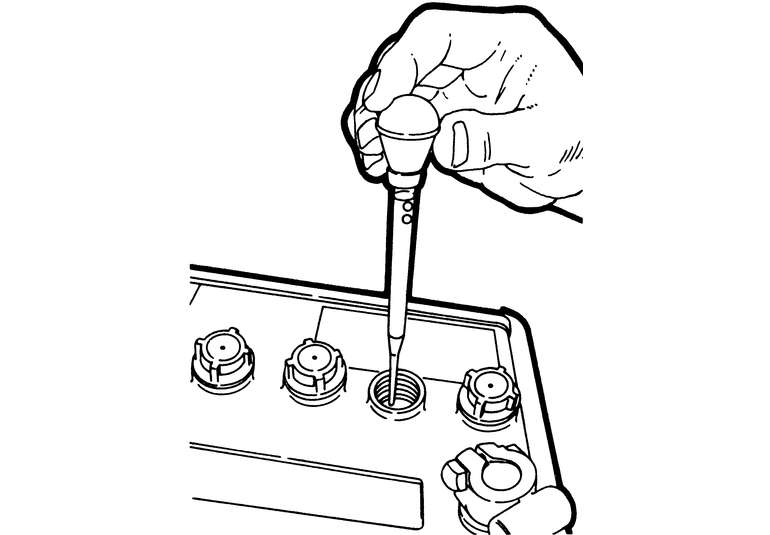
Check the specific gravity of the battery at every tune-up. It should be between 1.20 and 1.30 at room temperature. The specific gravity is checked with a hydrometer, an inexpensive instrument available in most auto parts stores, auto departments and many hardware stores. The hydrometer looks like a turkey baster, having a rubber squeeze bulb on one end and a nozzle at the other. Insert the nozzle end into each battery cell and suck enough electrolyte (battery water) into the hydrometer to just lift the float. The specific gravity is then read by the graduations on the float. Some hydrometers are color coded, with each color signifying a certain range of specific gravity.
All cells of your battery should produce nearly equal specific gravity readings. Do not be extremely alarmed if all of your battery's cells are equally low (but check to see if your alternator belt is tight); however, a big difference between two or more cells should be a concern. Generally, if after charging, the specific gravity between any two cells varies more than 50 points (0.050), the battery is bad and should be replaced.
| Fig. 1: An inexpensive hydrometer will check the battery
state of charge
|
Batteries should be checked for proper electrolyte level at least once a month or more frequently. Keep a close eye on any cell or cells that are unusually low or seem to constantly need water. This may indicate a battery on its last legs, a leak, or a problem with the charging system.
The maintenance-free battery cannot be checked for charge by checking the specific gravity using a hand-held hydrometer. Instead, the built-in hydrometer must be used in order to determine the current state of charge. Check your owners manual or with your local car dealer for the proper color of the "eye" on your battery. Most (not all) built in hydrometers are a green color when the battery is charging properly. If you are unable to see the hydrometer color make sure that the "eye" is clean by wiping it with a paper towel or clean rag. If you are still unable to read the hydrometer gently shake the battery. If the eye on top of the battery is green, the battery electrolyte level is all right. If the eye is dark, the electrolyte level is too low and the battery must be replaced.