NOTE: Special tools are occasionally necessary to perform a specific job or are recommended to make a job easier. Their use has been kept to a minimum. When a special tool is indicated, it will be referred to by manufacturer's part number, and, where possible, an illustration of the tool will be provided so that an equivalent tool may be used. Subaru manufacturers its' own line of special tools. For information as to where to purchase these tools, contact your local dealer.
It would be impossible to catalog each and every tool that you may need to perform all the operations included in this book. It would also not be wise for the amateur to rush out and buy an expensive set of tools on the theory that he/she may need one of them at some time. The best approach is to proceed slowly, gathering together a good quality set of those tools that are used most frequently. Don't be misled by the low cost of bargain tools. It is far better to spend a little more for quality, name brand tools. Forged wrenches, 10 or 12 point sockets and fine-tooth ratchets are by far preferred to their less expensive counterparts. As any good mechanic can tell you, there are few worse experiences than trying to work on a vehicle or truck with bad tools. Your monetary savings will be far outweighed by frustration and mangled knuckles.
Begin accumulating those tools that are used most frequently; those associated with routine maintenance and tune-up. In addition to the normal assortment of screwdrivers and pliers, you should have the following tools for routine maintenance jobs:
In addition to the above items, there are several others that are not absolutely necessary, but are handy to have around. These include oil drying compound, a transmission funnel, and the usual supply of lubricants, antifreeze and fluids, although these can be purchased as needed. This is a basic list for routine maintenance, but only your personal needs can accurately determine your list of tools.
The second list of tools is for tune-ups. While the tools involved here are slightly more sophisticated, they need not be outrageously expensive. There are several inexpensive tach/dwell meters on the market that are every bit as god for the average mechanic as a professional model. Just be sure that it goes to at least 1200–1500 rpm on the tach scale, and that it works on 4, 6, and 8 cylinder engines. A basic list of tune-up equipment could include:
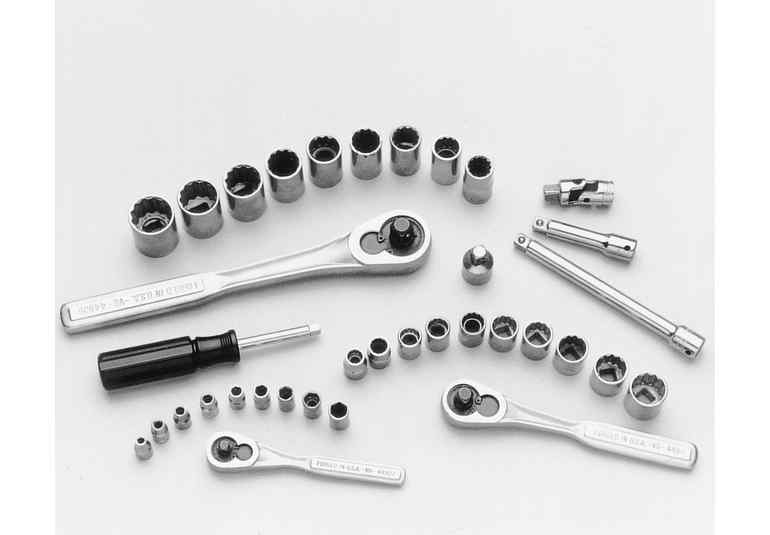
| Fig. 1: All but the most basic procedures will require
an assortment of rachets and sockets
|
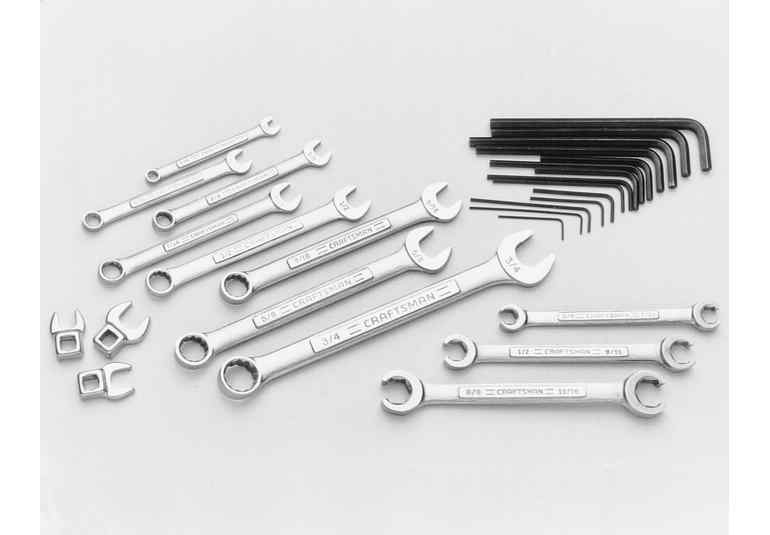
| Fig. 2: In addition to rachets, a good set of wrenches
and hex keys will be necessary
|
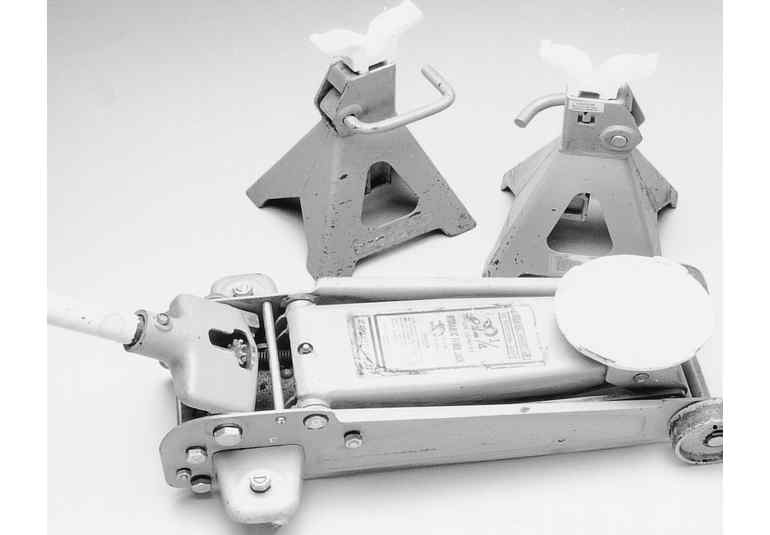
| Fig. 3: A hydraulic floor jack and a set of jackstands
are essential for lifting and supporting the vehicle
|
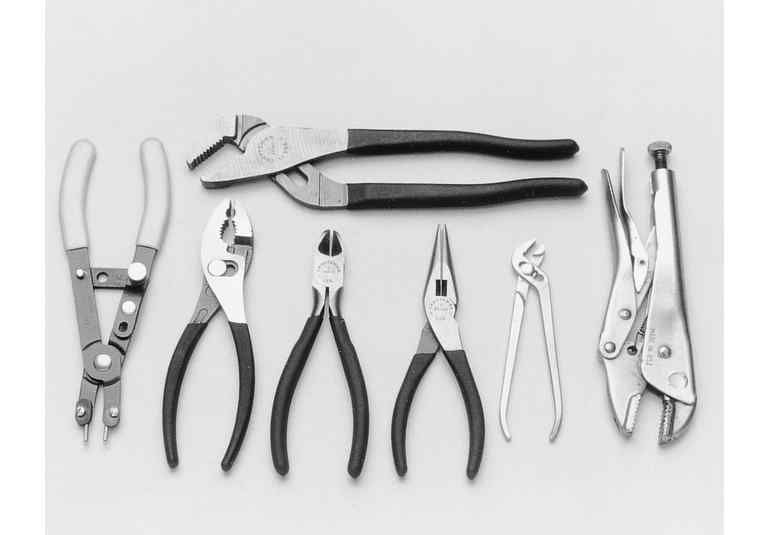
| Fig. 4: An assortment of pliers will be handy, especially
for old rusted parts and stripped bolt heads
|
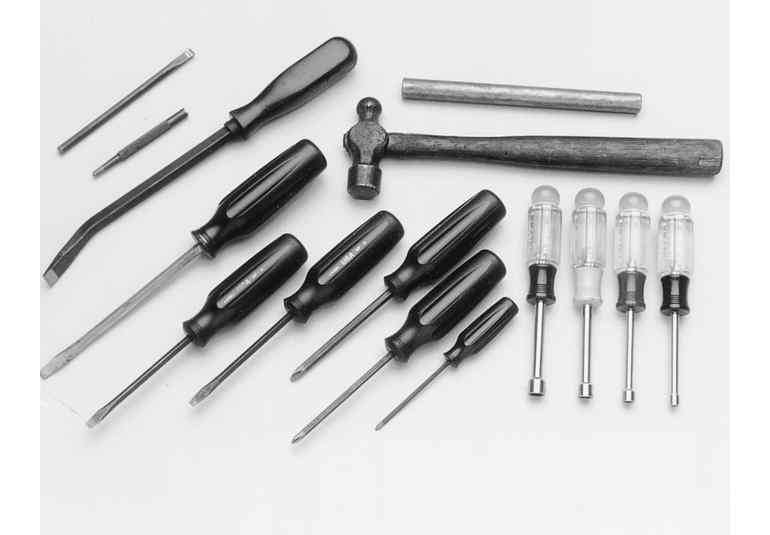
| Fig. 5: Various screwdrivers, a hammer, chisels and
prybars are necessary to have in your toolbox
|
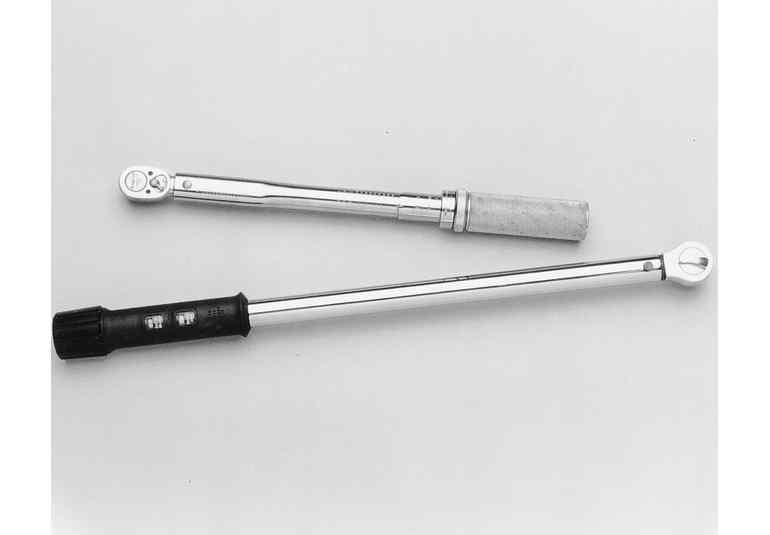
| Fig. 6: Many repairs will require the use of a torque
wrench to assure the components are properly fastened
|
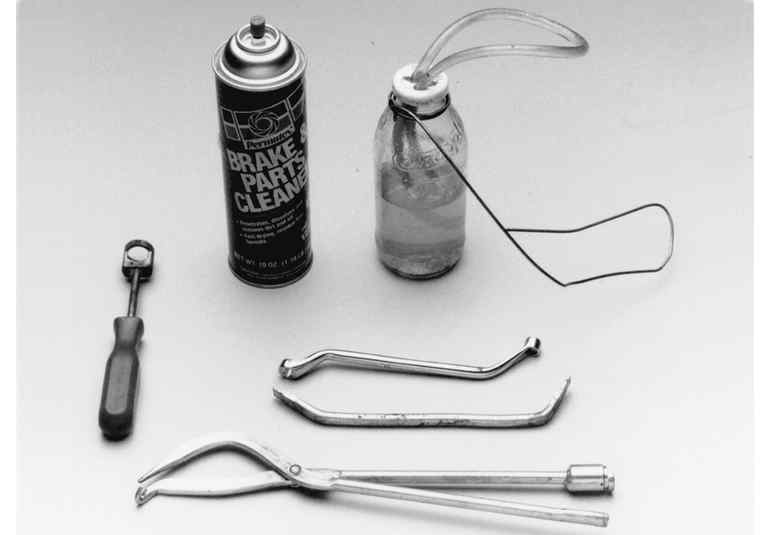
| Fig. 7: Although not always necessary, using specialized
brake tools will save time
|
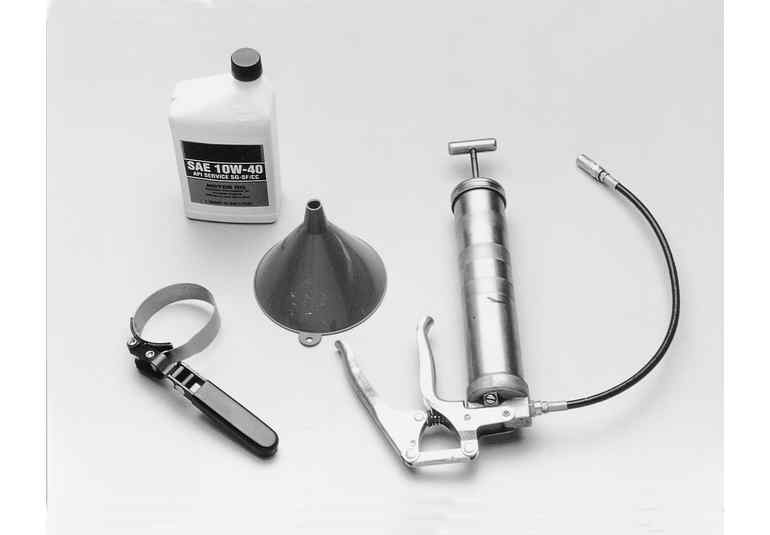
| Fig. 8: A few inexpensive lubrication tools will
make regular service easier
|
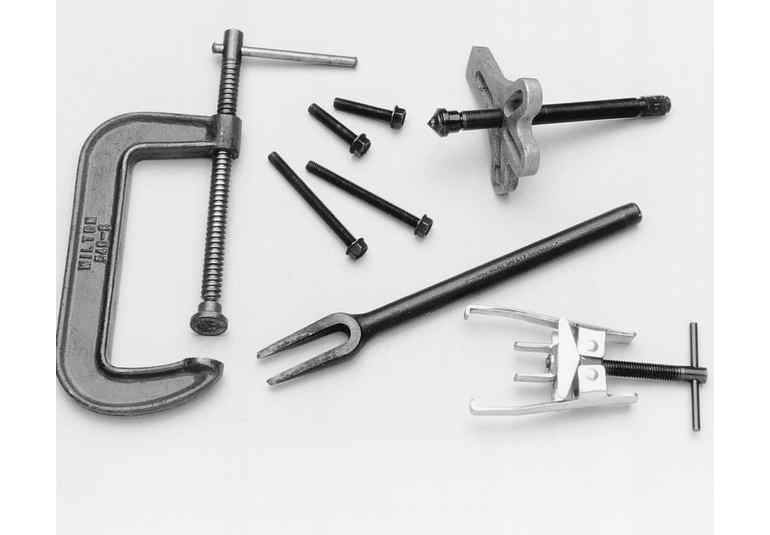
| Fig. 9: Various pullers, clamps and separator tools
are needed for the repair of many components
|
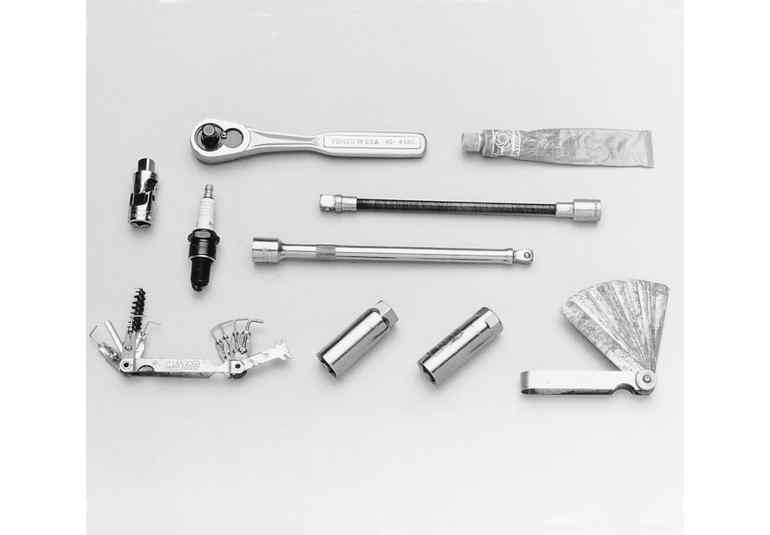
| Fig. 10: A variety of tools and gauges are needed
for spark plug service
|
In addition to these basic tools, there are several other tools and gauges you may find useful. These include:
These are handy for use if a wire is broken somewhere in a wiring harness. As a final note, you will probably find a torque wrench necessary for all but the most basic work. The beam type models are perfectly adequate, although the newer click type are more precise.