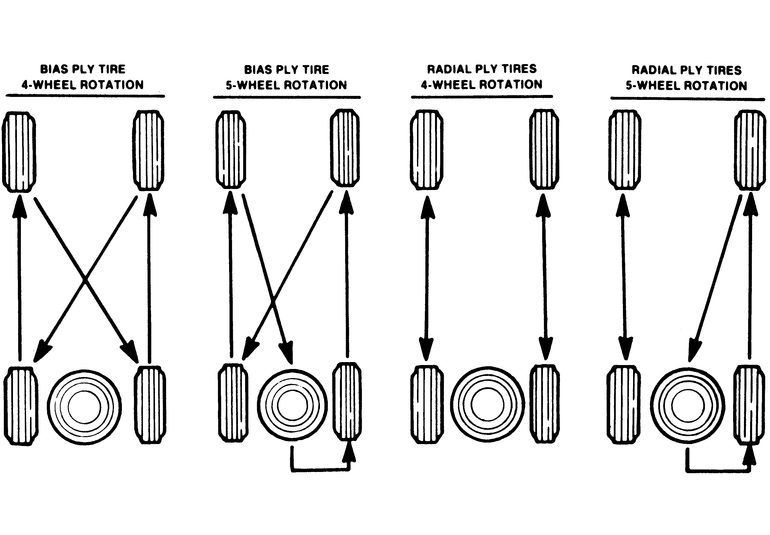
Tire wear can be equalized by switching the position of the tires about every 6000 miles, (9700 km). Including a conventional spare in the rotation pattern can give up to 20% more tire life.
Due to their design, radial tires tend to wear faster in the shoulder area, particularly in the front positions. Radial tires in non-drive locations, may develop an irregular wear pattern that can generate tire noise. It was originally thought the radial tires should not be cross-switched (from one side of the vehicle to the other); because of their wear patterns and because they would last longer if their direction of rotation is not changed. The manufacturer's tire rotation recommendations for most late model vehicles covered by this manual now allows for, and even suggests, cross-switching radial tires to allow for more uniform tire wear.
| Fig. 1: Common tire rotation patterns
|
NOTE: Some specialty tires may be directional (certain snow or performance tires), meaning they may only be mounted to rotate in one direction. Some special performance tires/wheels will fall into this category and will be marked with directional rotation arrows on the tire sidewalls. NEVER switch the direction of rotation on tires so marked or poor performance/tire damage could occur. This should be taken into consideration in choosing a rotation pattern for directional tires.
If you have any doubt as to the correct rotation pattern for the tires which are currently mounted on your vehicle, consult the tire manufacturer or one of their facilities for recommendations
NOTE: When radials or studded snows are taken off the car, mark them, so you can maintain the same direction of rotation.