The dwell angle is the number of degrees of distributor cam rotation through
which the points remain closed (conducting electricity). Increasing the point
gap decreases dwell, while decreasing the gap increases dwell.
The dwell angle may be checked with the distributor cap and rotor installed
and the engine running, or with the cap and rotor removed and the engine cranking
at starter speed. The meter gives a constant reading with the engine running.
With the engine cranking, the meter will fluctuate between zero degrees dwell
and the maximum figure for that setting. Never attempt to adjust the points
when the ignition is on, or you may receive a shock.
- Connect a meter as per the manufacturer's instructions (usually one lead
to the distributor's terminal of the coil and the other lead to a ground).
Zero the meter, if necessary.
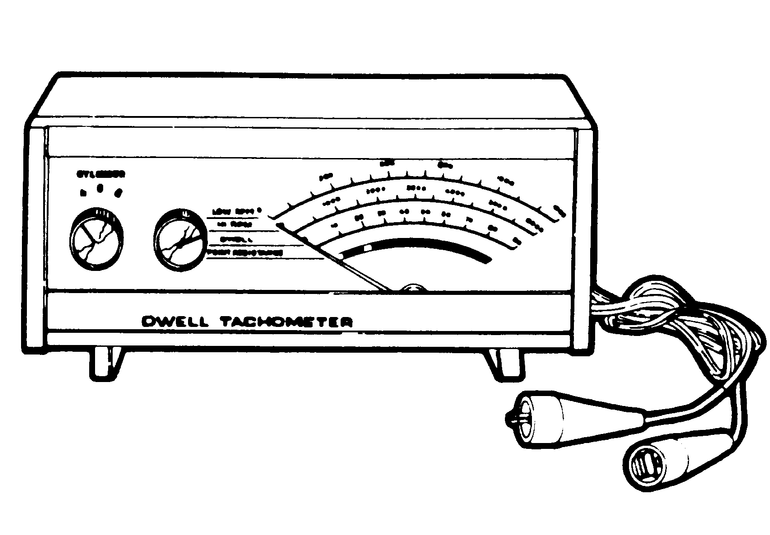
| Fig. 1: Combination dwell/tachometer unit
|
- Check the dwell by either the cranking method, or with the engine running.
If the setting is incorrect, the points must be adjusted.
CAUTION
Keep your hands, hair and clothing clear of the engine fan and pulleys.
Be sure the wires from the dwell meter are routed out of the way. If the
engine is running, block the front wheels, put the transmission in Neutral,
and set the parking brake.
- To change the dwell angle, turn the ignition off, loosen the points hold-down
screw and adjust the point gap; increase the gap to decrease dwell, and vice-versa.
Tighten the hold-down screw and check the dwell angle with the engine cranking.
If it seems to be correct, replace the cap and rotor and check dwell with
the engine running. Readjust as necessary.
- Run the engine speed up to about 2000 rpm, and then let the speed drop abruptly.
The dwell reading should not change. If it does, a worn distributor shaft,
bushing or cam, or a worn breaker plate is indicated. The parts must be inspected
and replaced, if necessary.
- Ignition timing must be checked after adjusting the point gap, as a 1°increase
in dwell results in an ignition timing retard of 2°.