At every tune-up, visually inspect the spark plug cables for burns, cuts, or breaks in the insulation. Check the boots and the nipples on the distributor cap and coil. Replace any damaged wiring.
Every 36,000 miles (58,000 km) or so, the resistance of the wires should be checked with an ohmmeter. Wires with excessive resistance will cause misfiring, and may make the engine difficult to start in damp weather. Generally, the useful life of the cables is 36,000–50,000 miles (57,000–80,000 km).
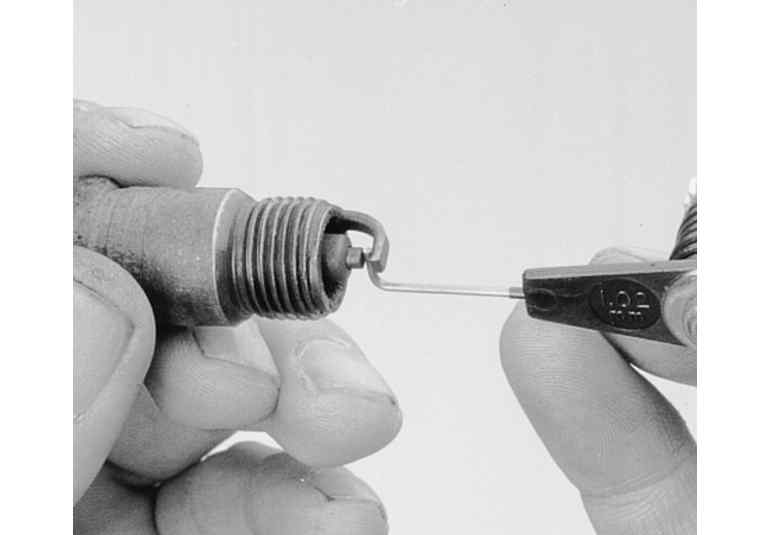
| Fig. 1: Always use a wire gauge to check the electrode
gap
|
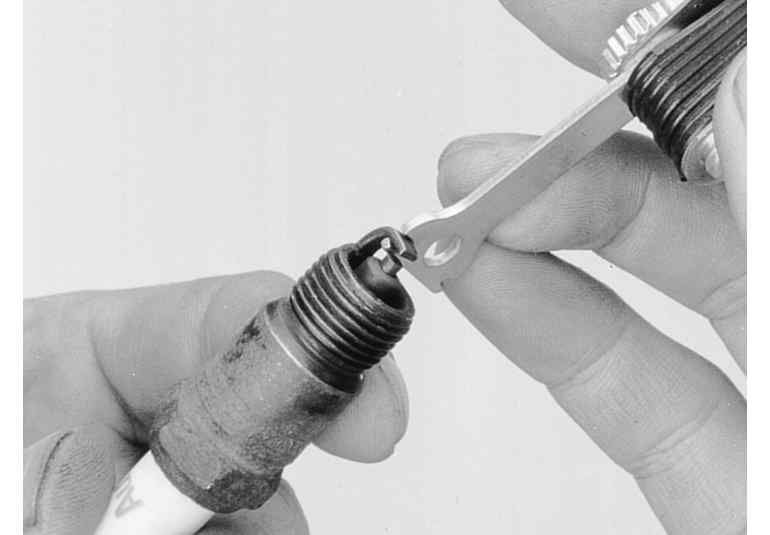
| Fig. 2: Adjust the electrode gap by bending the side
electrode
|
To check resistance, remove the distributor cap, leaving the wires attached. Connect one lead of an ohmmeter to an electrode within the cap. Connect the other lead to the corresponding spark plug terminal (remove it from the plug for this test). Replace any wire which shows a resistance over 50,000ω. Generally speaking, however, resistance should not be over 30,000ω, and 50,000ω must be considered the outer limit of acceptability. Test the high tension lead from the coil by connecting the ohmmeter between the center contact in the distributor cap and either of the primary terminals of the coil. If resistance is more than 25,000ω, remove the cable from the coil and check the resistance of the cable alone. Anything over 15,000ω is cause for replacement. It should be remembered that resistance is also a function of length; the longer the cable, the greater the resistance. Thus, if the cables on your car are longer than the factory originals, resistance will be higher, quite possibly outside these limits.