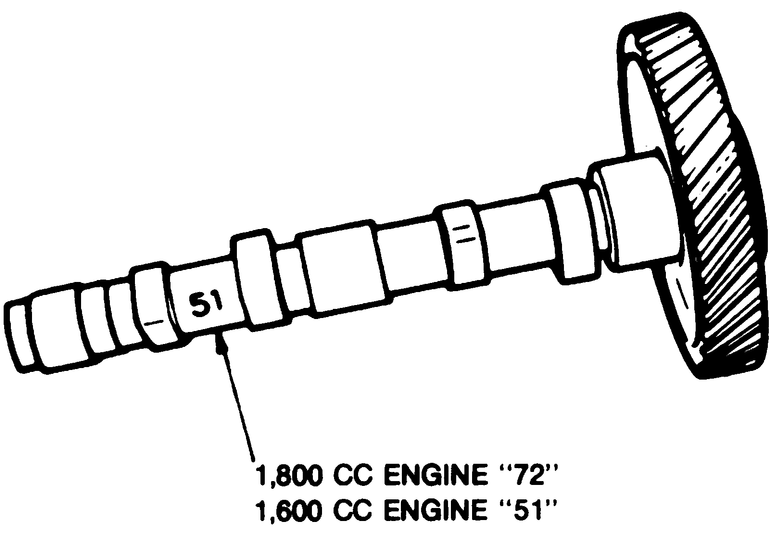
The camshaft turns on journals that are machined directly into the crankcase.
- Refer to the engine removal and Installation procedures in this section
and remove the engine from the vehicle, then separate the transaxle from the
engine.
| Fig. 1: The camshaft is stamped by identification
marks
|
- Remove the clutch assembly/flywheel (MT) or the torque converter drive plate
(AT).
- Remove the flywheel housing–to–engine bolts and the housing
from the engine.
- Remove the crankshaft gear from the crankshaft.
- Straighten the lockwashers and remove the camshaft thrust plate–to–engine
bolts.
NOTE: The lockwashers are straightened and the bolts removed
through the access holes in the camshaft gear.
- Remove the rocker arm–to–cylinder head covers, the rocker arm–to–cylinder
head assemblies, the pushrods and valve lifters.
NOTE: When removing the pushrods and valve lifters, be
sure to keep the items in order for reassembly purposes.
- Pull the camshaft toward the rear of the engine and remove it from the engine;
be careful not to damage the bearing journals and/or the camshaft lobes.
NOTE: Remove the oil seal; be sure to replace it with a
new one when reassembling the engine.
- Inspect the camshaft.
To install:
- Using a putty knife, clean the gasket mounting surfaces.
- Install the camshaft and tighten the thrust plate bolts. Using a feeler
gauge or a dial indicator, move the camshaft (fore and aft), then measure
the end–play, it should be 0.008 in. (0.2032mm) or less.
- To complete the installation, use new gaskets and sealant where necessary.
Assemble the engine and reverse the removal procedures. Refill the cooling
system and the crankcase. Start the engine, allow it to reach normal operating
temperatures and check for leaks.