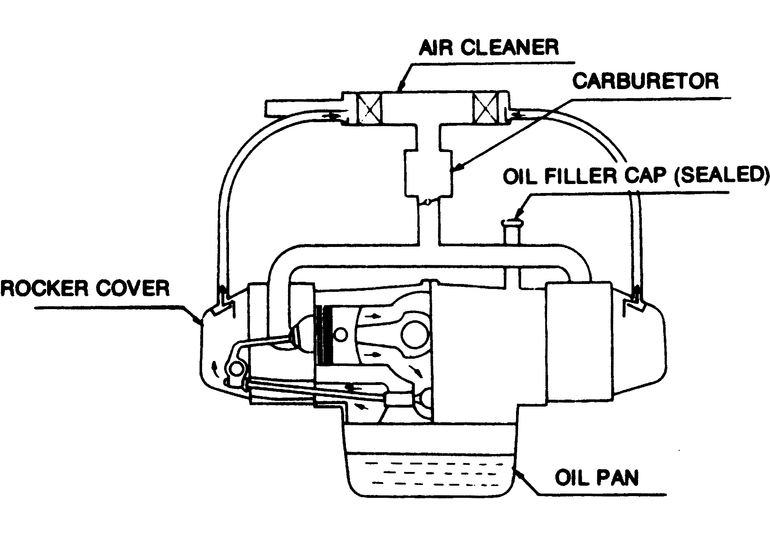
On EA61 engines (ff–1) the closed crankcase ventilation system consists of a sealed oil filler cap, a valve cover with a hose outlet, an oil separator, and a special oil pan.
Blow-by gases pass from the outlet in the valve cover to the oil separator, where they are sucked into the air cleaner through a hose, and the oil is returned to the oil pan via another hose. The gases sucked into the air cleaner are burned along with the regular air/fuel mixture.
| Fig. 1: Typical closed crankcase ventilation system
|
The crankcase ventilation system used on the EA62 and EA63 engines (1300G, GL, and DL models) is similar to that described above for EA61 engines. Only two hoses are used instead of one and the oil separator is integral with the air cleaner.
Blow-by gases from the crankcase are routed to the air cleaner via the two hoses, where they are pulled into the carburetor and burned with the air/fuel mixture.
The oil, which is trapped by the oil separator in the air cleaner, returns through the crankcase ventilation system hoses to the valve covers, where it is mixed with the oil used to lubricate the valve train.
A sealed crankcase emission system is used, which prevents blow-by gases from being emitted into the air.
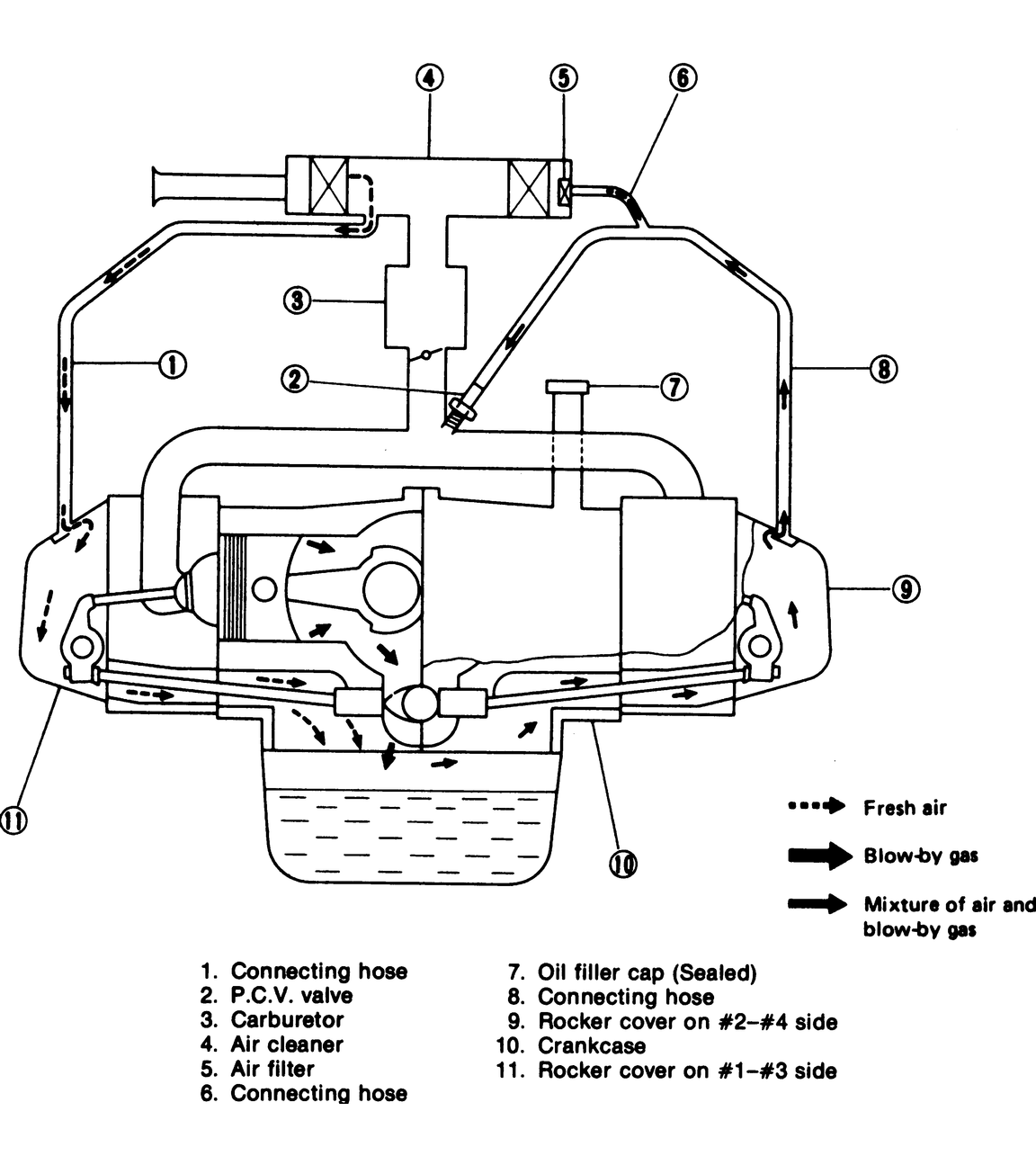
The system consists of a sealed oil filler cap, valve covers with an emission outlet and a fresh air inlet, connecting hoses, a Positive Crankcase Ventilation (PCV) valve and an air cleaner.
Strong intake vacuum at part throttle suck blow-by gases from the crankcase, through a connecting hose (on the single valve cover on the 1200 engine, the #2 and #4 valve cover on the 1600 and 1800 engines), into the intake manifold via the PCV valve.
However, at wide open throttle, the increase in volume of blow-by and the decrease in manifold vacuum make the flow through the PCV valve inadequate. Under these conditions excess vapors are drawn into the air cleaner (via a connecting hose from the #1 and #3 valve cover on the 1600 and 1800 engines) and pass through the carburetor into the engine.
| Fig. 2: Crankcase ventilation system on engines equipped
with a PCV valve
|