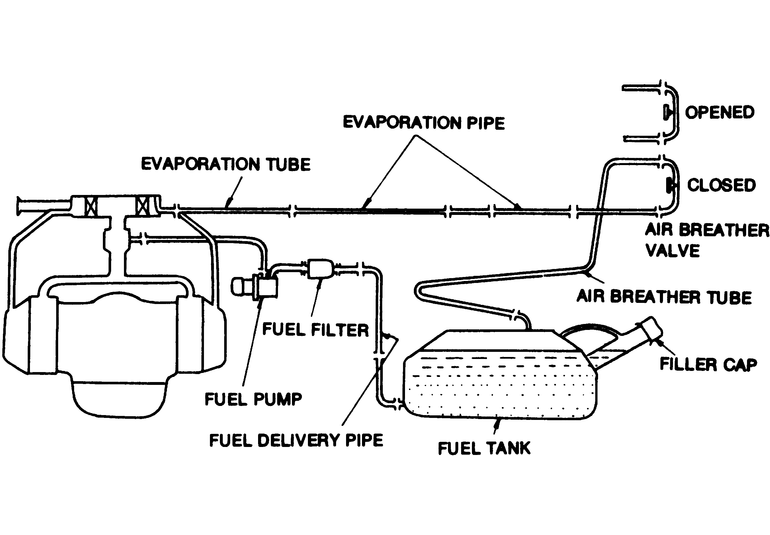
Evaporative gas from the fuel tank is not discharged into the surrounding atmosphere but conducted to the air cleaner unit and then burned in the combustion chamber. No absorbent (charcoal) is used.
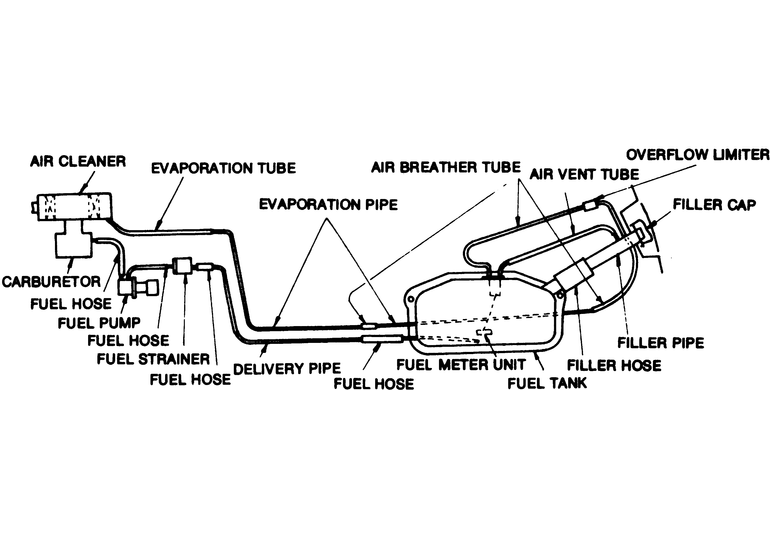
The system consists of a sealed fuel tank and filler cap, two reservoir tanks on the station wagon, an air breather valve, breather hoses, breather pipe and the air cleaner with fixtures to receive the breather hoses.
While the engine is running, evaporative gas is absorbed into the intake manifold due to the suction pressure of the manifold, and never discharged directly into the atmosphere.
While the engine is stopped, the gases collect on the inner wall of the element of the air cleaner.
There is an air breather valve located at the filler cap. When the flap (door) is opened, a spring exerts pressure on the rubber breather hose and pinches it shut.
The evaporative emission control system remains much the same as for 1970–72 models, except that an orifice on the sedans and thin nylon tube on wagons, replaces the air breather valve (which functioned as an overflow limiter). Also, a vacuum relief gas filler cap is used.
| Fig. 1: Common evaporative emission control system without
an overflow limiter valve
|
| Fig. 2: Common evaporative emission control system with
an overflow limiter valve
|
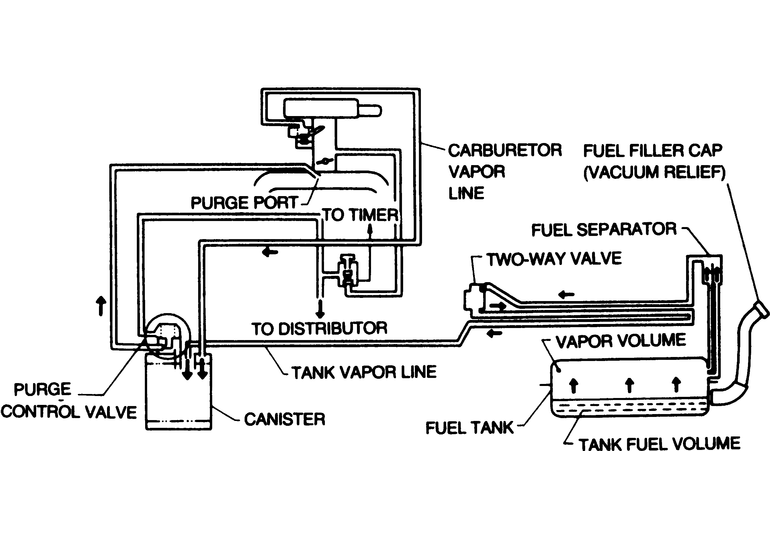
| Fig. 3: Common evaporative emission control system 1982–84
models
|
On 1974–76 models, the orifice and thin nylon tube (1973) are replaced by an overflow limiter valve. The overflow limiter has two functions:
The EEC system was revised to include a vapor canister which collects the fuel vapor before it reaches the carburetor. Once in the canister, the fuel vapor is absorbed on a supply of activated charcoal particles. These particles hold the vapor until the engine idle speed increases to a point where the carburetor vacuum is sufficient to open the purge control valve on the canister. On late models a solenoid controls the vacuum flow. With the valve open the fuel vapor is sucked out of the charcoal particles and into the intake manifold. Fresh air is drawn through a filter at the bottom of the canister to displace the escaping fuel vapor.
The system also incorporates two orifices located on the line between the fuel tank and vapor canister. These prevent fuel spillage in the event of impact. On station wagons (1977–79), two small reserve tanks on both sides of the fuel tank are employed to prevent liquid fuel from flowing into the air cleaner in case of an abrupt stop, etc. Some models have a check valve on the line between the canister and the intake manifold to prevent a build-up of vapor in the manifold when the engine is stopped. A carburetor vapor line connects the float chamber and canister as well as a tank vapor line. A two-way valve is located between the fuel tank and canister. It functions to control the flow of fuel vapor to the canister according to pressure in the fuel tank.