The transaxle and engine are removed as an assembly on these models. The transaxle
is then separated from the engine. For these procedures, see Section 3.
NOTE: The transaxle can be removed separately from the engine.
- Open the hood and secure it.
- Remove the spare wheel from engine compartment, if equipped.
- Disconnect the negative battery cable.
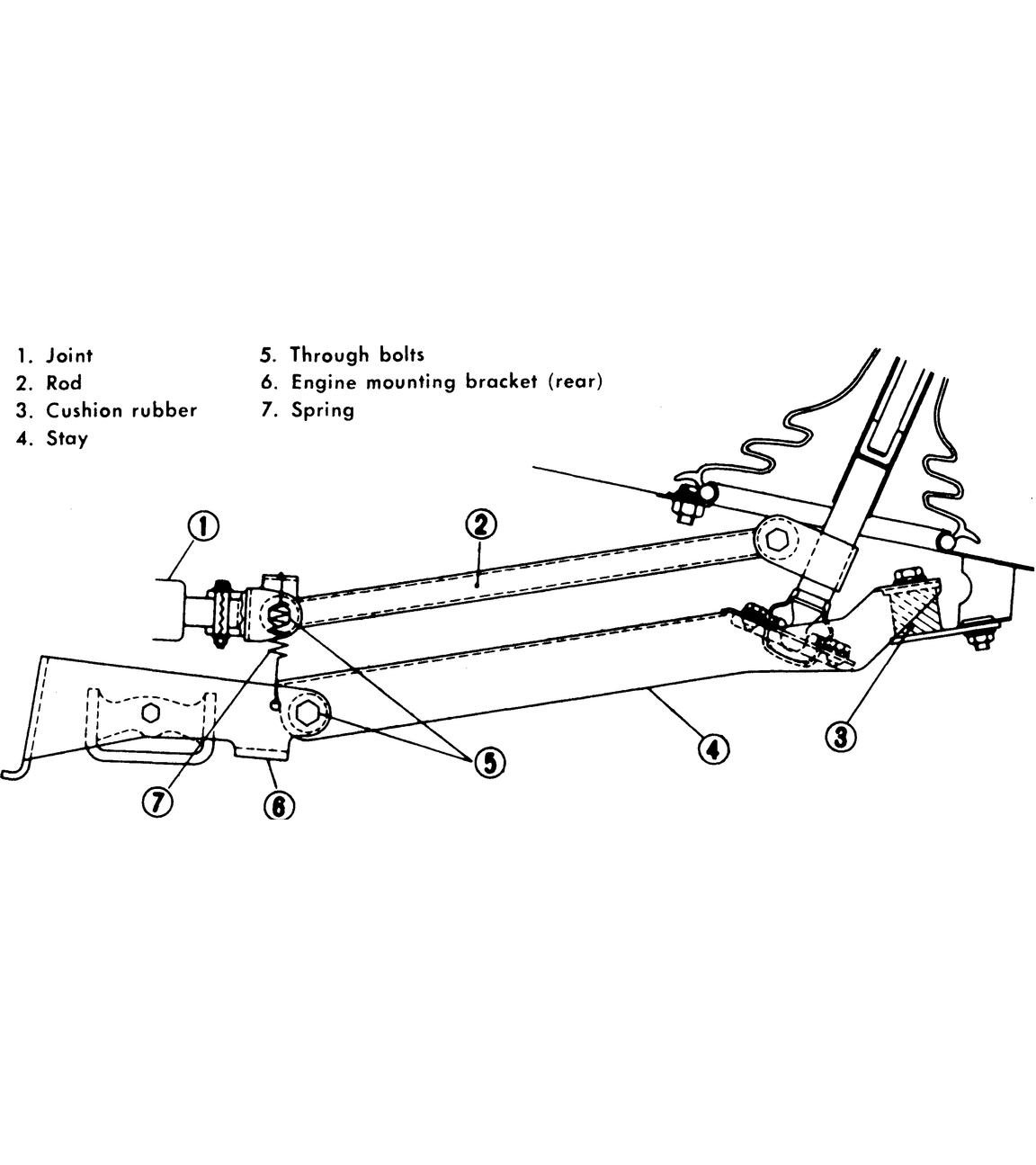
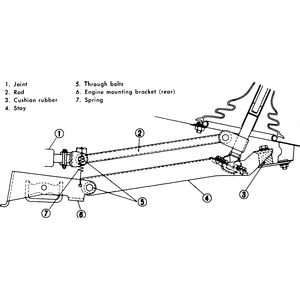
| Fig. 1: Gear shift system found on 2WD models with
manual transaxle
|
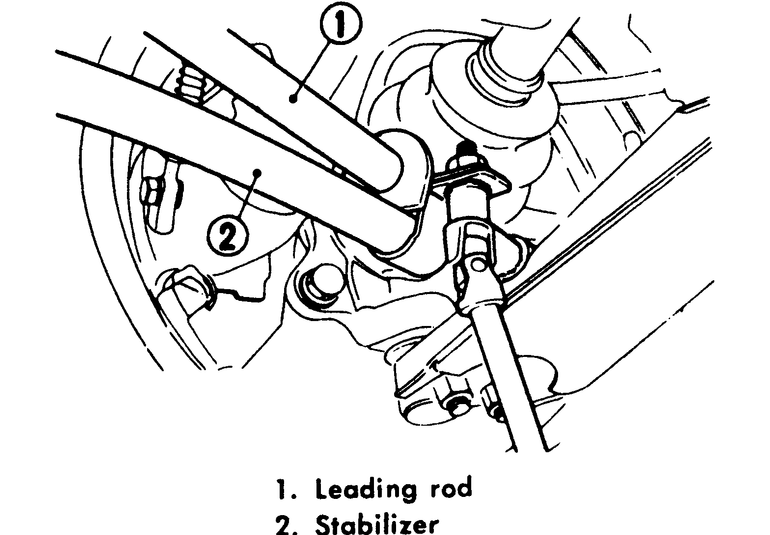
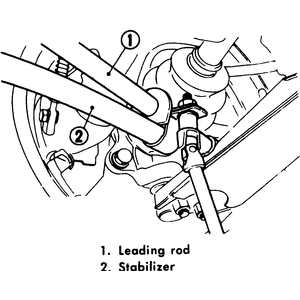
| Fig. 2: Use an extension to remove the stabilizer
mounting brackets
|
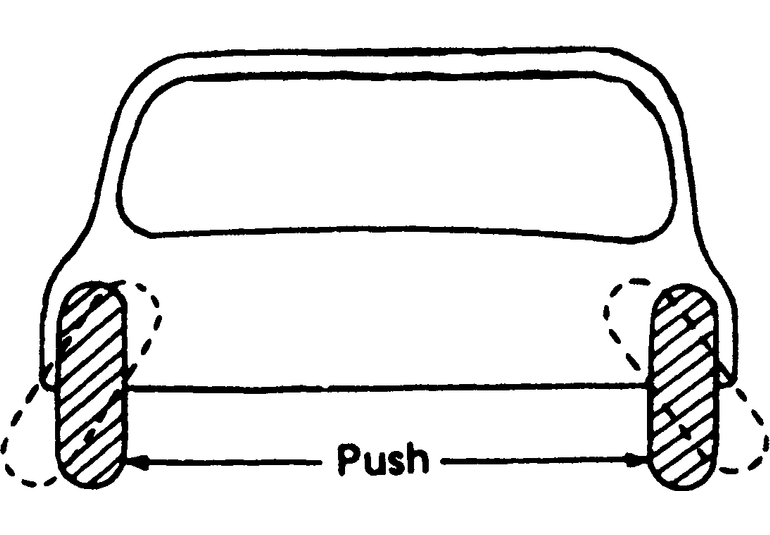
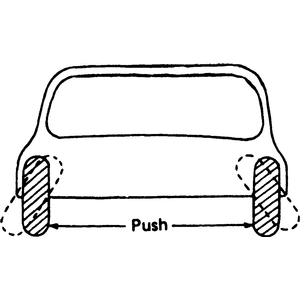
| Fig. 3: Push the wheels outward to separate the axle
shafts from the transaxle
|
- Remove the spare wheel supporter.
- Disengage the clutch cable as follows:
- Remove the clutch cable return spring.
- Remove both the locknut and adjusting nut from the clutch cable.
- Unfasten the clip which retains the outer cable.
- Detach the rubber boot.
- Disconnect the speedometer cable from the transaxle. Unfasten the clip on
the speedometer cable.
- Disengage the following wiring connections.
- Back-up lamp switch connector.
- Ground cable (on the car body).
- Starter harness (black and white).
- Remove the starter with the battery cable, and put the starter on the bulkhead.
- Remove the upper bolts which secure the engine to the transaxle. Loosen
the lower nuts.
- Loosen the nut retaining the pitching stopper to the transaxle side, and
tighten the nut by an equal amount on the engine side. Slightly tilt the engine
backward in order to facilitate removal of the transaxle.
WARNING
Do not loosen or tighten the nuts more than 0.39 in. (10mm).
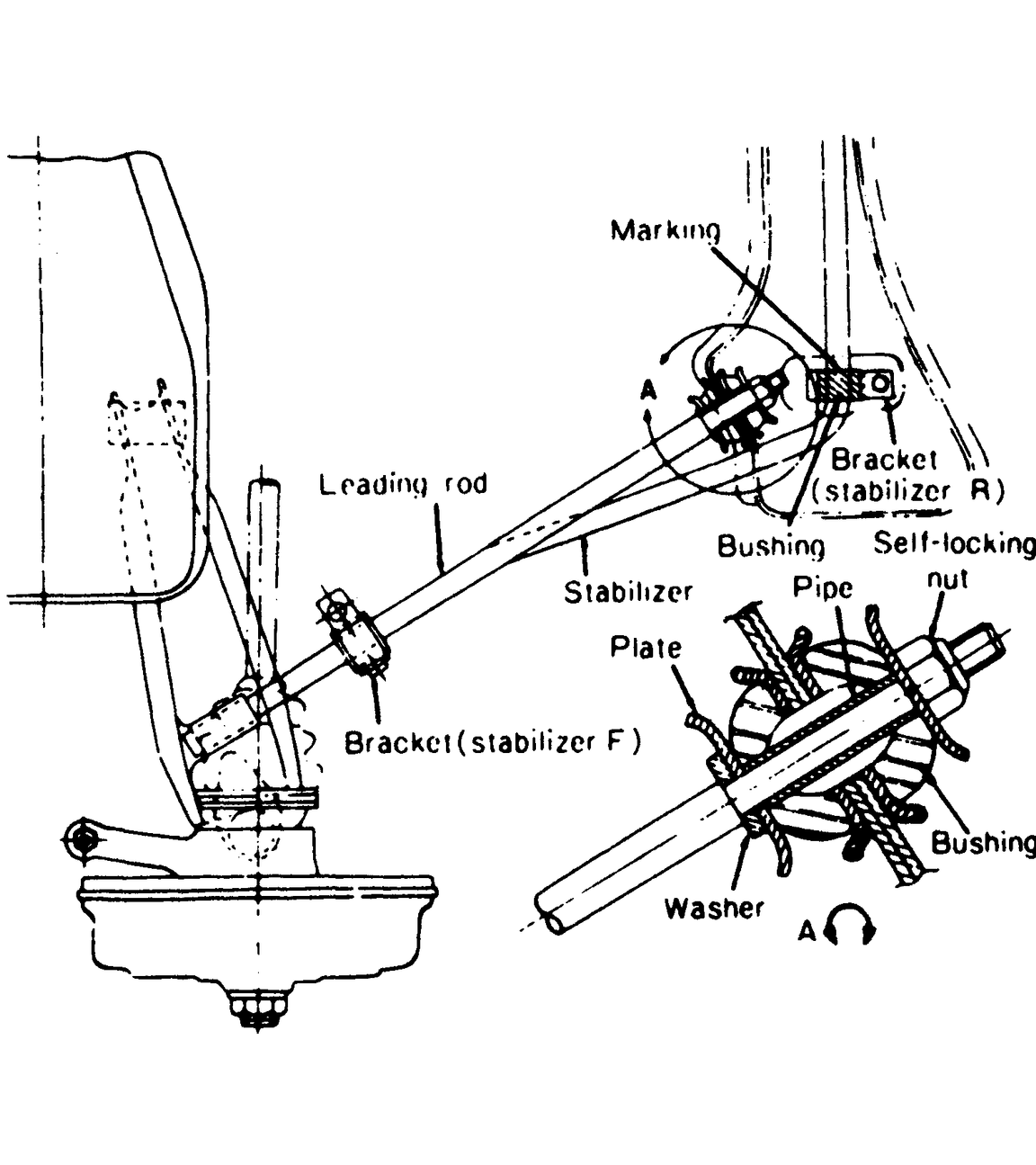
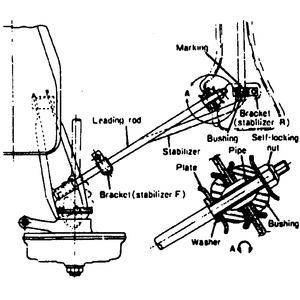
| Fig. 4: Position the bushings for the stabilizer
and leading rod as shown
|
- On the 4WD model, separate both the 4WD selector system and gearshift system
from transaxle as follows:
- Remove hand brake tray cover, and the hand brake cover.
- Remove rod cover.
- Set the drive selector lever at 4WD position.
- Remove the nut connecting the two rods.
- Remove the two nuts to separate the rod and drive selector lever from
the plate.
- Remove the boot installing screws.
- Remove nut connecting gearshift lever with lever, and pull up gearshift
lever with boot.
- Disconnect O2sensor harness and unclamp it, if equipped.
- Block the rear wheels, raise the front end of the car and support it with
jackstands.
- Remove the front exhaust pipe assembly as follows:
- Disconnect the hot air intake hose.
- Loosen the nuts which secure the exhaust pipe assembly to the exhaust
port of the engine.
- Remove the bolts which secure the front exhaust pipe to the rear exhaust
pipe.
- Remove the bolts which secure the front exhaust pipe to the bracket
on the car body.
- Supporting the front exhaust pipe assembly, remove the nuts from the
exhaust port of the engine. The exhaust pipe assembly can now be removed.
NOTE: Be careful not to strike the oxygen sensor against
any adjacent parts during removal, if equipped.
- Drain the transaxle fluid.
- On the 4WD models remove the transaxle shield.
- On the 4WD models, remove the bolts which secure the propeller shaft to
the rear differential gear, and detach the propeller shaft.
WARNING
When disconnecting the propeller shaft, plug the open end of the driveshaft
with a cap to prevent the oil from running out. Be careful not to damage
the oil seal located at the end of the propeller shaft.
- Remove the exhaust cover, if equipped.
- Remove the bolts which secure the gearshift system to free it from the transaxle.
(All manual transaxle models except 4WD).
- Remove the stabilizer.
- Remove the bolts which secure the left and right transverse links to the
front crossmember, and lower the transverse links.
- Drive both the left and right spring pins out of the axle shaft.
WARNING
Discard and do not re-use the spring pins.
- Push the wheels toward the outer side, separate the axle shaft from the
driveshaft.
- Unfasten the clamp on the left side of the hand brake cable, in order to
facilitate the removal of the center crossmember.
- Remove the nuts which secure the left and right transaxle mount rubber cushions.
- Securely support the transaxle by placing a jack under it.
- Remove the crossmember.
- Remove the two nuts which secure the engine to the transaxle
- Move the transaxle away from the engine just enough so that the transaxle
mainshaft does not interfere with the engine. Lower the jack and remove the
transaxle.
To install:
- Position the transaxle on the jack and raise it up into the vehicle. Align
the transaxle mainshaft with the engine. Attach the transaxle to the engine
and tighten the two attaching nuts to 34–40 ft. lbs. (46–54 Nm)
NOTE: Apply a slight coat of grease on the transaxle mainshaft
before installation. If the mainshaft is hard to align, turn the left and
right shafts until the mainshaft engages.
- Install the crossmember and tighten the retaining nuts to 7–13 ft.
lbs. (9–17 Nm) for the 8mm nuts and 65–87 ft. lbs. (88–117
Nm) for 12mm nuts.
- Install the left and right transaxle mount cushions and tighten the retaining
nuts securely.
- Fasten the clamp on the left side of the hand brake cable.
- Install the axle shafts into the drive shaft and install new spring retainer
pins.
- Install the left and right transverse links to the front crossmember and
tighten the retaining bolts to 13–16 ft. lbs. (17–21 Nm)
- Install the stabilizer.
- Install the bolts which secure the gearshift system to the transaxle and
tighten securely. (All manual transaxle models except 4WD).
- Install the exhaust cover.
- On the 4WD models, connect the propeller shaft to the rear differential
gear, install the bolts and tighten securely.
- Install the transaxle shield (4WD models only).
- Fill the transaxle using the proper fluid.
- Install the exhaust assembly and the hot air intake hose.
- Remove the jackstands and lower the front end of the vehicle.
- Connect the O2sensor.
- On the 4WD model, connect both the 4WD selector system and gearshift system
to the transaxle.
WARNING
Do not tighten the nuts more than 0.39 in. (10mm).
- Loosen the nut on the engine side and tighten the nut retaining the pitching
stopper on the transaxle side by an equal amount.
- Tighten the pitcher stopper to 6.5–9.4 ft. lbs. (8–12 Nm) and
adjust the clearance to 0.07 in. (2mm).
- Install the upper and lower bolts and nuts which secure the engine to the
transaxle. Tighten the transaxle-to-engine nuts to 34–40 ft. lbs. (46–54
Nm)
- Install the starter and battery cable. Tighten the starter-to-transaxle
and engine to 34–40 ft. lbs. (46–54 Nm).
- Engage the starter harness (black and white), ground cable (on the car body),
and back-up lamp switch connector.
- Connect the speedometer cable to the transaxle.
- Connect the clutch cable on the transaxle.
- Install the spare wheel supporter.
- Place the spare tire in the engine compartment.
- Connect the negative battery cable.
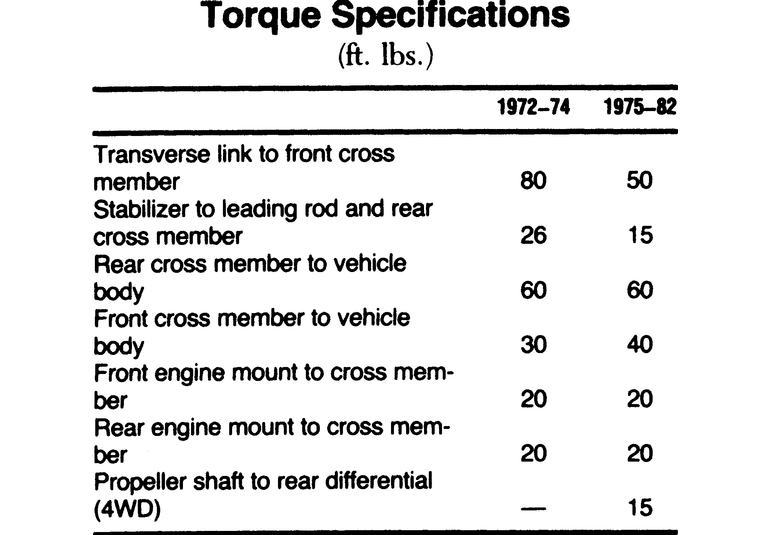
Additional torque figures are:
- Driveshaft bolts/nuts: 13–18 ft. lbs. (17–24 Nm)
- Rear mount nuts: 14–25 ft. lbs. (18–33 Nm)
- Transverse link bolts (use new self-locking nuts): 13–16 ft. lbs.
(17–21 Nm)
- Stabilizer (make sure slits on bushings face inward): 13–16 ft.
lbs. (17–21 Nm)
- Linkage rod nut: 5.8–8.7 ft. lbs. (7–11 Nm)