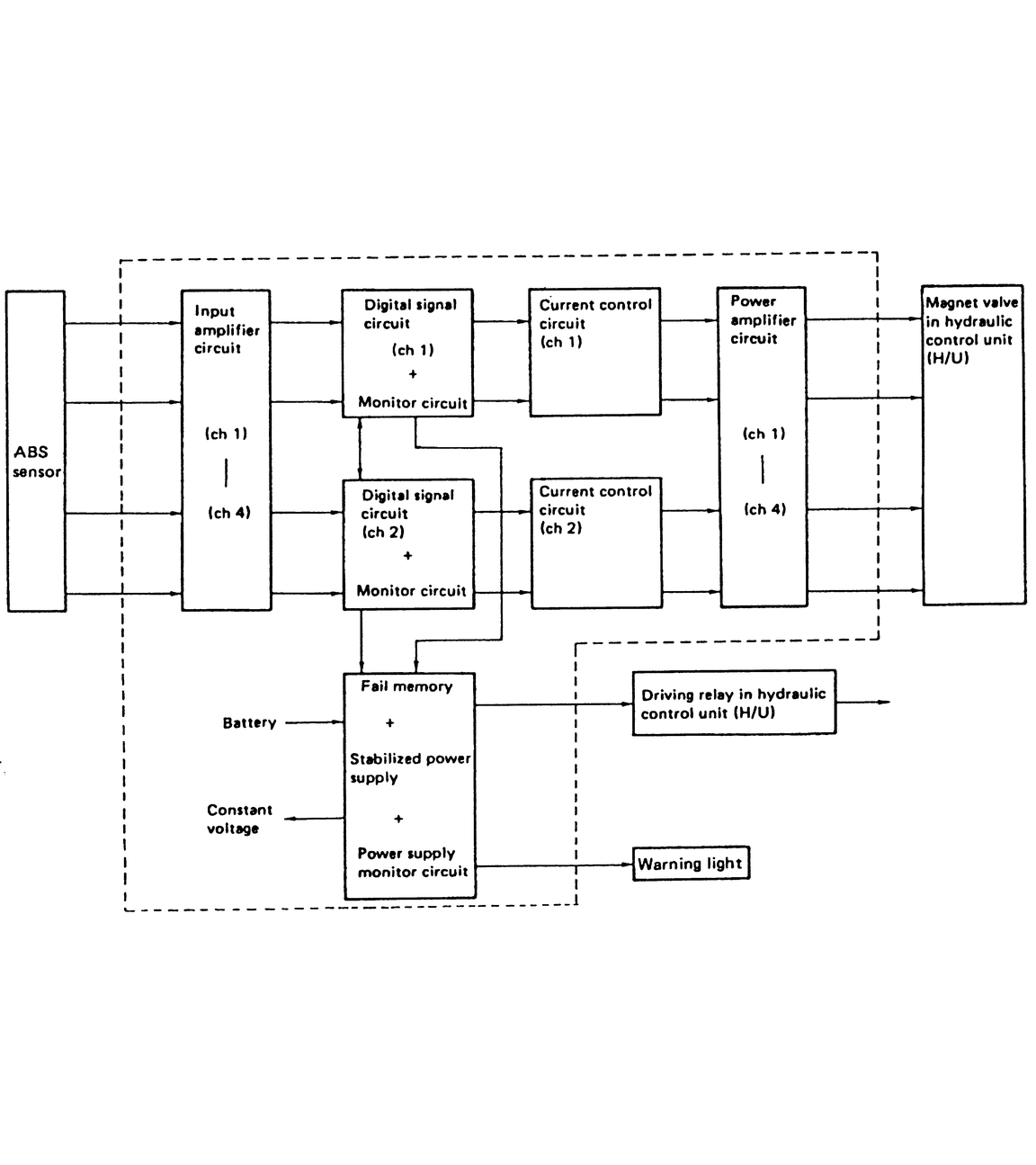
| Fig. 1: ABS operational schematic
|
Anti-lock Braking Systems (ABS) are designed to prevent locked-wheel skidding during hard braking or during braking on slippery surfaces. The front wheels of a vehicle cannot apply steering force if they are locked and sliding; the vehicle will continue in its previous direction of travel. The four wheel anti-lock brake systems found on Subaru vehicles hold the wheels just below the point of locking, thereby allowing some steering response and preventing the rear of the vehicle from sliding sideways while braking.
There are conditions for which the ABS system provides no benefit. Hydroplaning is possible when the tires ride on a film of water, losing contact with the paved surface. This renders the vehicle totally uncontrollable until road contact is regained. Extreme steering maneuvers at high speed or cornering beyond the limits of tire adhesion can result in skidding which is independent of vehicle braking. For this reason, the system is named anti–lock rather than anti–skid.
Under normal braking conditions, the ABS system functions in the same manner as a standard brake system. The system is a combination of electrical and hydraulic components, working together to control the flow of brake fluid to the wheels when necessary.
The anti-lock brake system's Electronic Control Unit (ECU) is the electronic brain of the system, receiving and interpreting speed signals from the speed sensors. The ECU will enter anti-lock mode when it senses impending wheel lock at any wheel and immediately control the brake line pressure(s) to the affected wheel(s). The hydraulic actuator assembly is separate from the master cylinder and booster. It contains the wheel circuit valves used to control the brake fluid pressure to each wheel circuit. If the ABS becomes inoperative for any reason, the fail-safe system insures that the normal braking system is operative. The dashboard warning lamp is activated to show that the ABS is disabled.