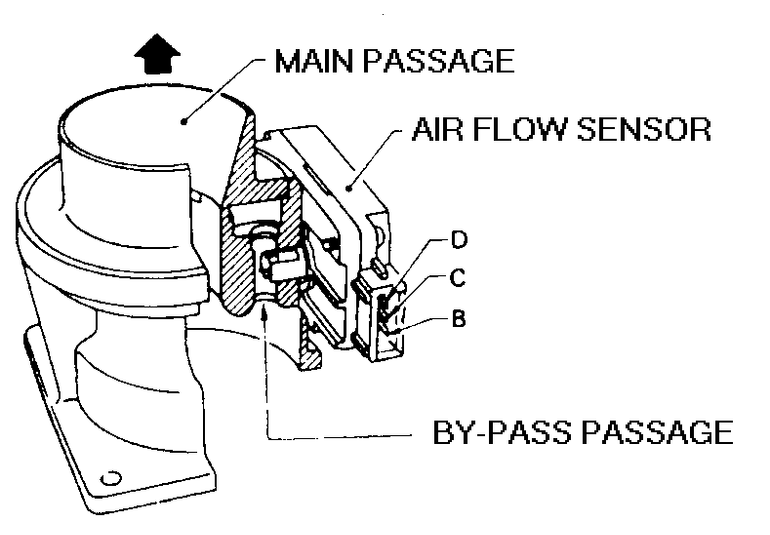
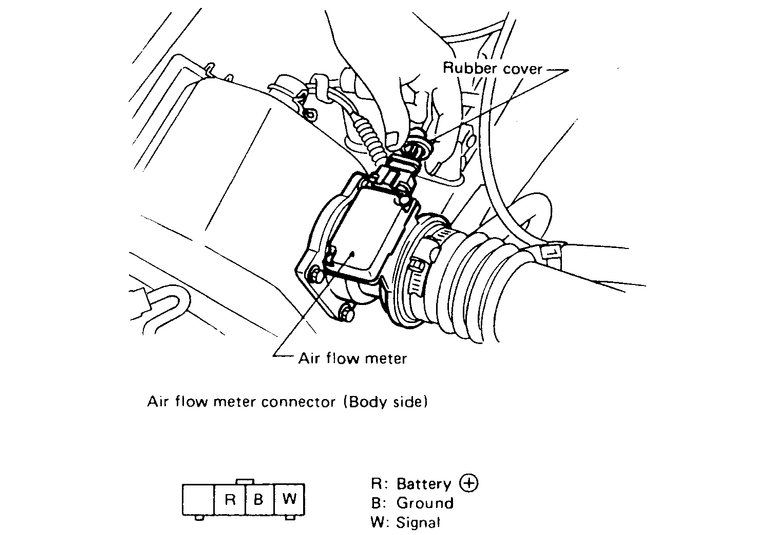
| Fig. 1: MAF sensor terminal identification — 1985–86
models with SPFI
|
WARNING
Be careful not to short-circuit the power source. Do not apply voltage greater
than 12V.
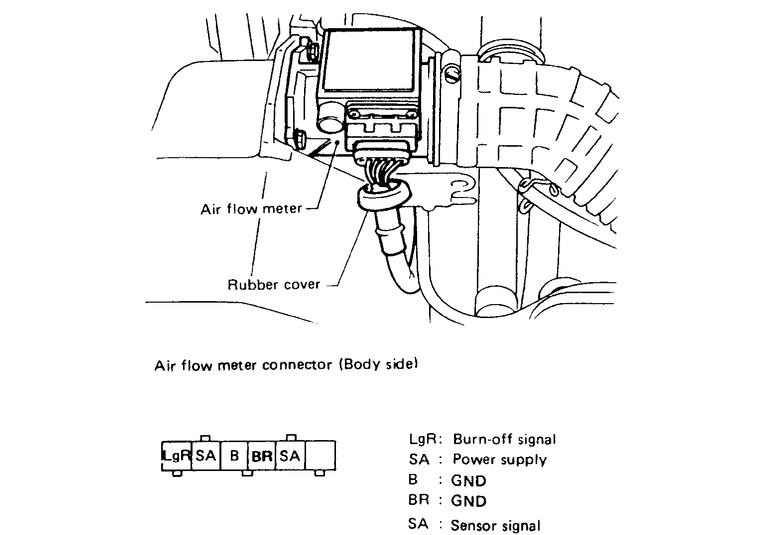
| Fig. 2: MAF sensor terminal identification — 1987–89
models with SPFI
|
NOTE: If resistance is greater than 10 ohms, check the harness and internal circuits of the control unit for discontinuity.
NOTE: If the voltage is not within specifications, check the condition of the battery, fuse, control unit harness and/or connector in the power line.
NOTE: If the voltage is not within specifications, replace the mass airflow sensor.
| Fig. 3: MAF sensor terminal identification — 1988–89
models with MPFI
|
NOTE: If resistance is greater than 10 ohms, check the harness and internal circuits of the control unit for discontinuity and/or the ground terminal on the intake manifold for poor contact.
NOTE: If the voltage is not within specifications, check the condition of the battery, fuse, control unit harness and/or connector in the power line.
NOTE: If the voltage is not within specifications, replace the mass airflow sensor.
NOTE: If the voltage is not within specifications, check the harness from the control unit to the MAF sensor for discontinuity.
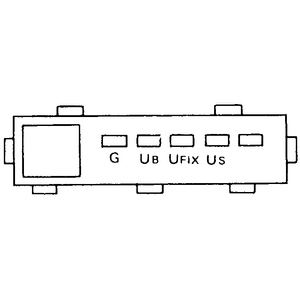
| Fig. 4: MAF sensor terminal identification — 1987
Sedan, Coupe and Wagon With MPFI, 1987–89 XT and 1988–89 XT6
|
NOTE: If resistance is greater than 10 ohms, check the harness and internal circuits of the control unit for discontinuity and/or the ground terminal on the intake manifold for poor contact.
NOTE: If the voltage is not within specifications, check the condition of the battery, fuse, control unit harness and/or connector in the power line.
NOTE: If the voltage is not within specifications, replace the mass airflow sensor.
NOTE: If the voltage is not within specifications, check the harness from the control unit to the MAF sensor for discontinuity.