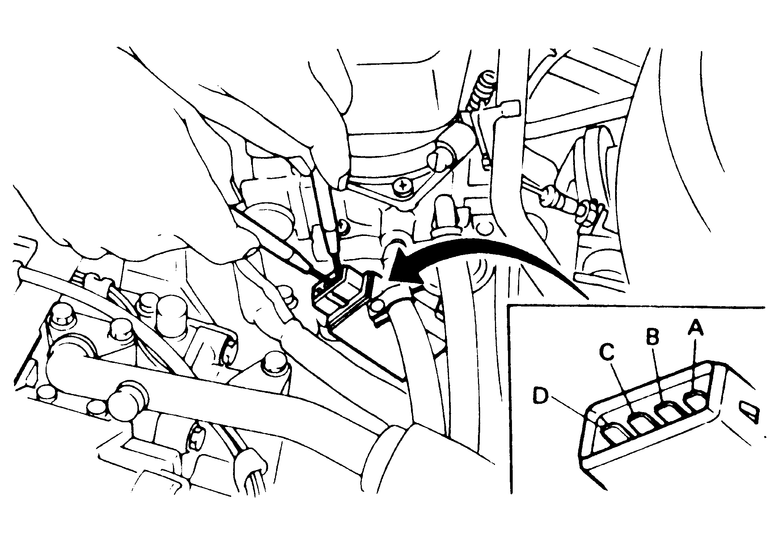
Fig. 1: Checking continuity between terminals A and B
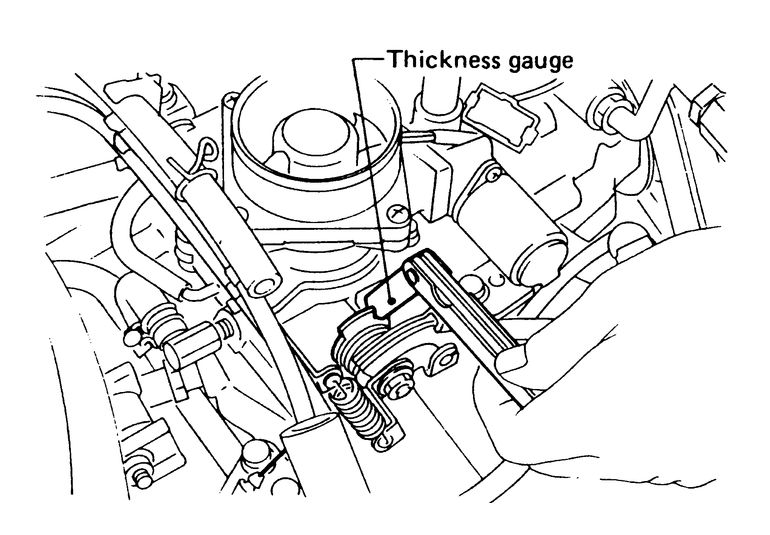
Fig. 2: Check for continuity after inserting a thickness
gauge between the stopper screw and stopper
Using an ohmmeter, check that continuity exists between terminals A and
B, when the throttle is fully closed, and that no continuity exists when the
throttle is fully opened.
Adjust the throttle sensor by turning it slowly.
Insert a feeler gauge (thickness gauge) of 0.0122 in. (0.31mm) between the
stopper screw on the throttle chamber and the stopper (this corresponds to
the throttle opening of 1.0 degree). Ensure that continuity exists between
terminals A and B.
Insert a feeler gauge (thickness gauge) of 0.0311 in. (0.79mm) between the
stopper screw on the throttle chamber and the stopper (this corresponds to
a throttle opening of 2.5 degrees). Ensure that continuity exists between
terminals A and B.
If above specifications are not as specified, loosen the throttle sensor
attaching screws, then turn the throttle sensor body until the correct adjustment
is obtained.
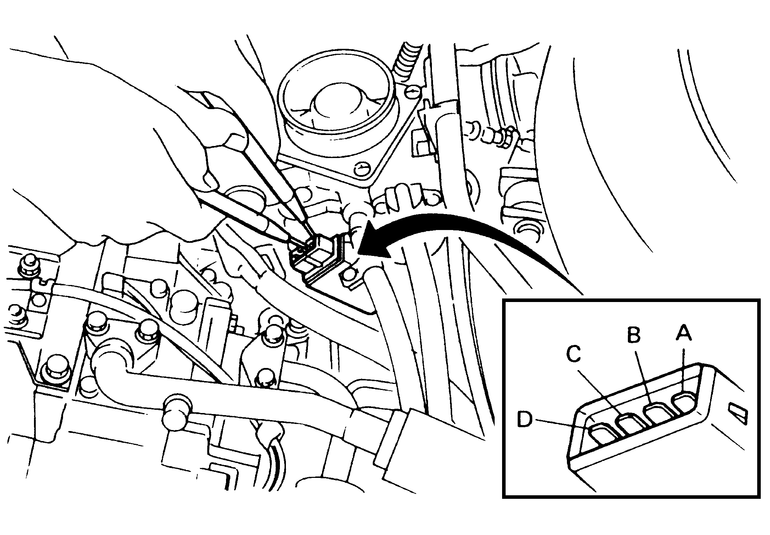
Fig. 3: Check continuity between terminals B and D, then
terminals B and C
Using an ohmmeter, measure resistance between terminals B and D, then between
B and C (changes with the opening of the throttle valve).
The ohmmeter should read 3.5–6.5 kilo-ohms between terminals B and
D.
Check that the ohmmeter reading between terminals B and C is less than 1
kilo-ohm with the throttle valve fully closed, and 2.4 kilo-ohms with the
throttle valve fully opened.
When the throttle valve is moved from the fully closed to the fully opened
position, check that resistance between terminals B and C increases continuously.
When the throttle valve is moved from the fully opened to the fully closed
position, check that resistance between terminals B and C decreases continuously.
If any of the above faults are noted, replace the throttle sensor.