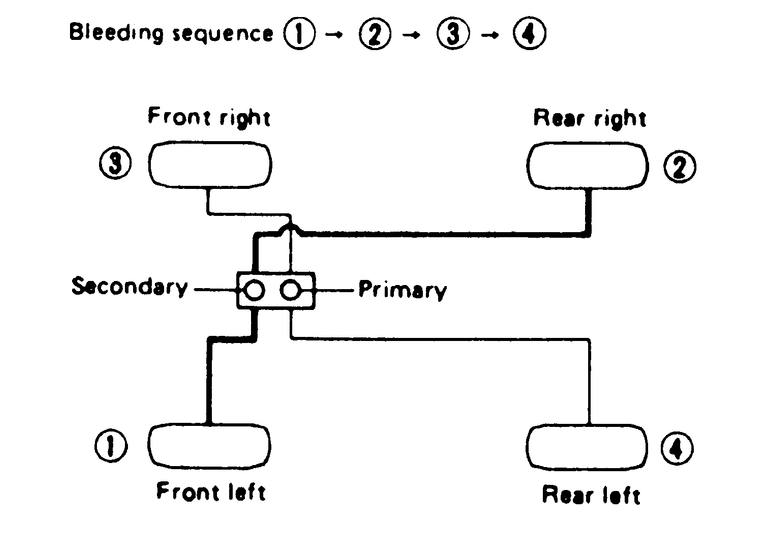
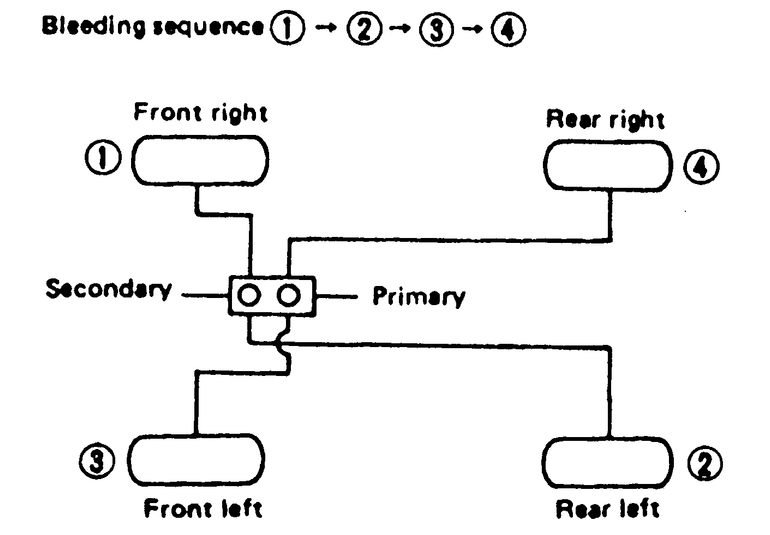
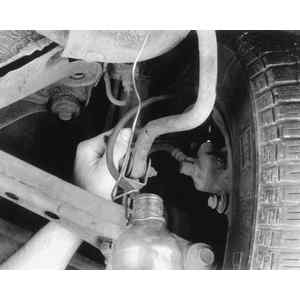
| Fig. 1: Bleeding a rear brake caliper
|
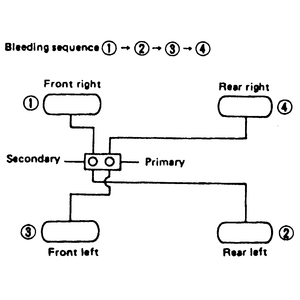
| Fig. 2: Brake bleeding sequence — Justy,
Coupe, Sedan, XT, Wagon, Loyale and Brat
|
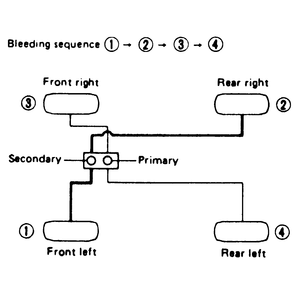
| Fig. 3: Brake bleeding sequence — Legacy,
Impreza and SVX
|
NOTE: For anti-lock brake system bleeding, refer to the anti-lock
brake system service procedures later in this section.
WARNING
Clean, high quality brake fluid is essential to the safe and proper operation
of the brake system. You should always buy the highest quality brake fluid that
is available. If the brake fluid becomes contaminated, drain and flush the system,
then refill the master cylinder with new fluid. Never reuse any brake fluid.
Any brake fluid that is removed from the system should be discarded.
- Set the parking brake and start the engine.
NOTE: The vacuum booster will be damaged if the bleeding
operation is performed with the engine OFF.
- Remove the master cylinder reservoir cap and fill the reservoir with brake
fluid. Keep the reservoir at least half full during the bleeding operation.
- If the master cylinder is replaced or overhauled, first bleed the air from
the master cylinder and then from each caliper or wheel cylinder. Bleed the
master cylinder as follows:
- Disconnect the left front wheel brake line from the master cylinder.
- Have an assistant depress the brake pedal slowly once and hold it depressed.
- Seal the delivery port of the master cylinder where the line was disconnected
with a finger, then release the brake pedal slowly.
- Release the finger from the delivery port when the brake pedal returns
completely.
- Reconnect the brake line to the master cylinder.
- Have an assistant depress the brake pedal slowly once and hold it depressed.
- Loosen the left front wheel brake line at the master cylinder.
- Retighten the brake line, then release the brake pedal slowly.
- Repeat Steps 3g–h, until no air comes out from the port when the
brake line is loosened.
- Bleed the air from the right front wheel brake line connection by repeating
Steps 3a–i, but this time disconnect/loosen the right front wheel
brake line.
- Bleed the air from each wheel as follows:
- Place the proper size flare or box-end wrench over the bleeder screw.
- Cover the bleeder screw with a transparent tube and submerge the free
end of the tube in a transparent container containing brake fluid.
- Have an assistant pump the brake pedal 3 times, then hold it depressed.
- Remove the air along with the brake fluid by loosening the bleeder screw.
- Retighten the bleeder screw, then release the brake pedal slowly.
- Repeat Steps 3c–e until the air is completely removed. It may
be necessary to repeat the bleeding procedure 10 or more times for front
wheels and 15 or more times for rear wheels.
- After the bleeding operation is completed on each individual wheel,
check the level of brake fluid in the reservoir and replenish up to the MAX level,
if necessary.
- Go to the next wheel in sequence after each wheel is bled.
- Depress the brake pedal to check if sponginess is felt after the air has
been removed from all wheel cylinders and calipers. If the pedal feels spongy,
the entire bleeding procedure must be repeated.
- Install the master cylinder reservoir cap.