Previous Next

TROUBLESHOOTING

Always begin with the visual inspection; many apparent ABS faults may be traced to the conventional brake system. After the visual inspection, put the vehicle into self-diagnostics and record any fault code displayed. Refer to the appropriate diagnostic chart for the code transmitted.

After repairs have been made based on the diagnostic code, again use self-diagnostics to check for additional codes.

If the ABS dash warning lamp is lit but no fault codes are present, refer to the General Troubleshooting charts for further guidance.

Self-Diagnostics and Reading Codes

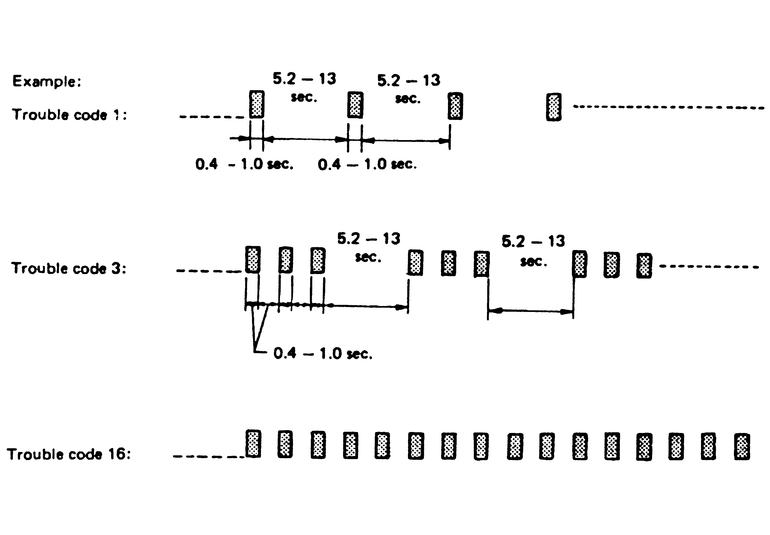
Fig. 1: Example of ABS trouble code as read from the ABS dash lamp

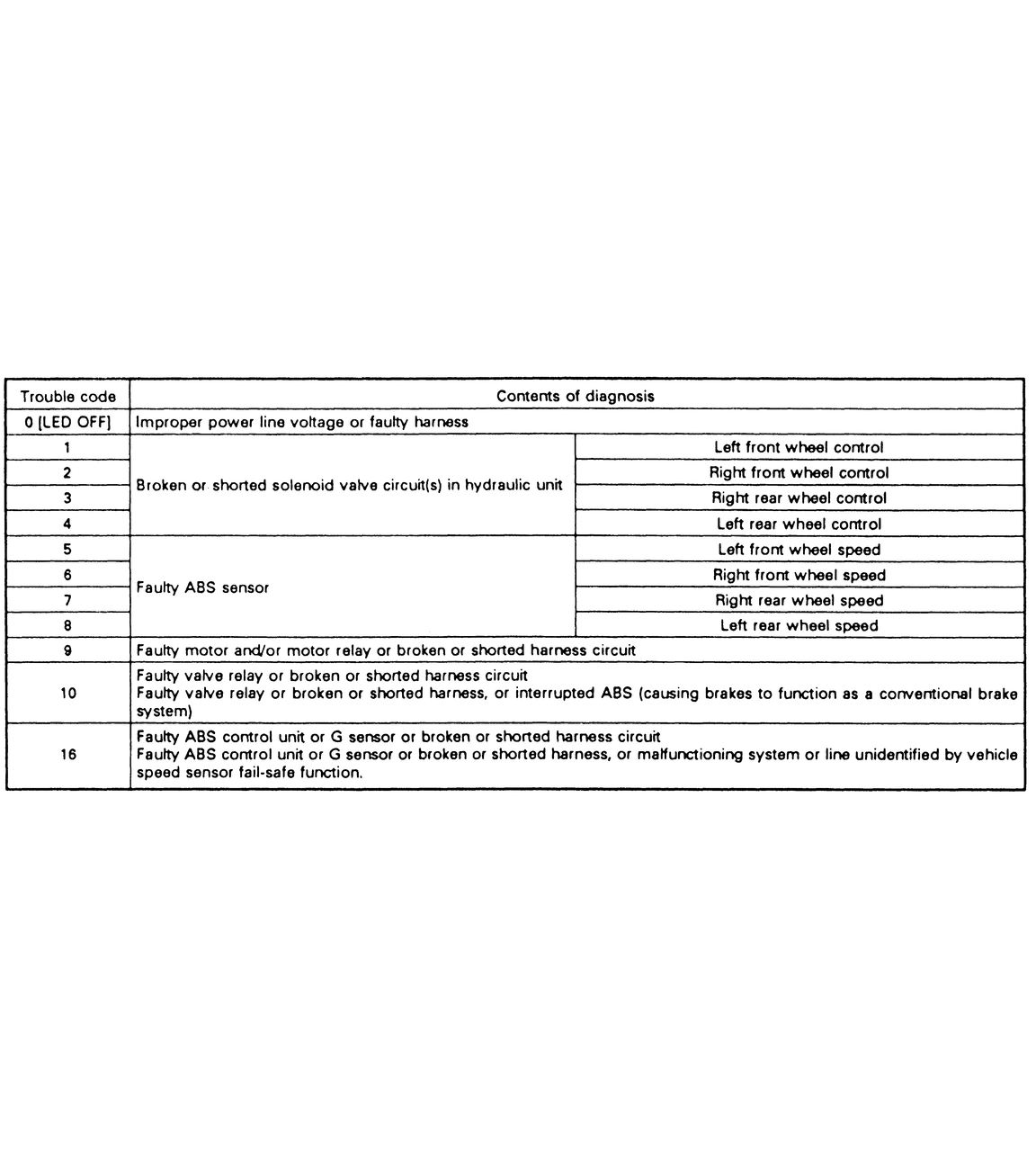
Fig. 2: ABS trouble code list

Drive the vehicle over 20 mph (32 km/h) for at least one minute. Stop the vehicle in a safe location with the engine running. If the self-diagnostic circuit detects a fault, the dash warning lamp will come on.
  1. The fault code will be transmitted by the flashing of the LED display on the electronic control unit under the right passenger's seat.
  2. The code will be transmitted automatically about 10–12 seconds after the ABS dashboard warning lamp comes on.
  3. Read the number of short flashes as the number of the code; for example, 16 flashes represents Code 16. The flash pattern will repeat after a 5–13 second pause. Viewing the output several times is recommended for accuracy.
  4. Both the LED and the dash warning lamp remain activated until the ignition key is switched OFF. When the ignition is switched OFF, the memory is erased and the code is lost. The vehicle must be re-driven and placed into self-diagnostics.
  5. If the LED does not activate when the dash warning lamp is lit, the power supply may be inoperative.

Previous Next