Previous Next

REMOVAL & INSTALLATION

Subaru Forester
2.5L DOHC ENGINE

When servicing the timing belt, note the following:

  1. Remove all necessary components to gain access to the timing belt.
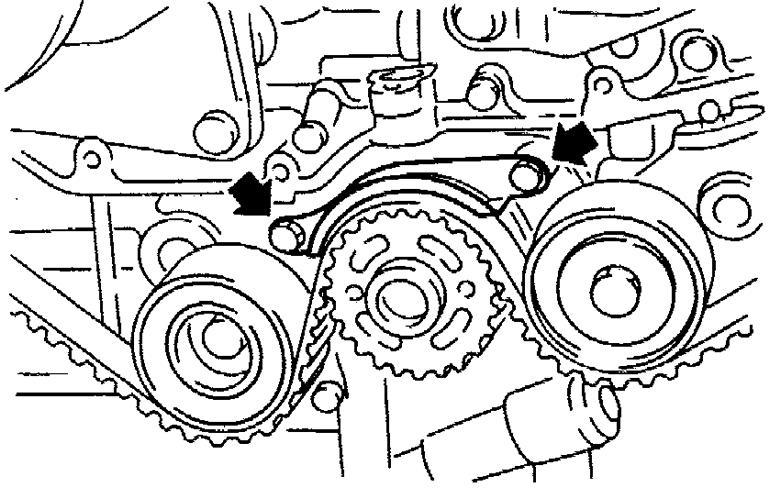
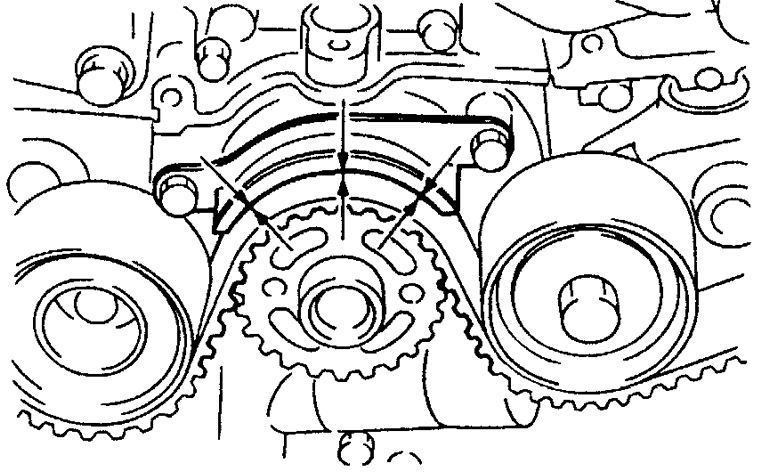
  2. If equipped with manual transmissions, loosen the 2 timing belt guide mounting bolts, then separate the guide from the engine block.
  3. If the directional arrow and alignment marks on the timing belt are faded, and the belt is to be reused, remark the belt with white paint or a grease pencil as follows:
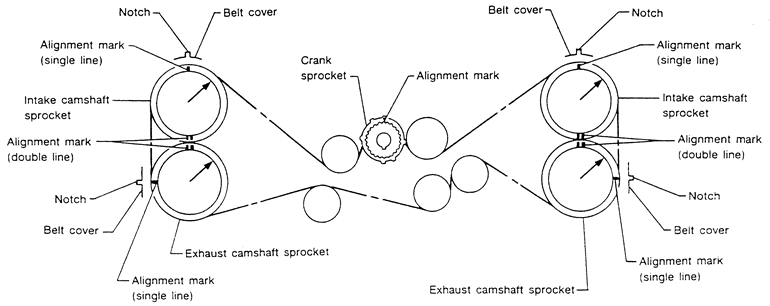
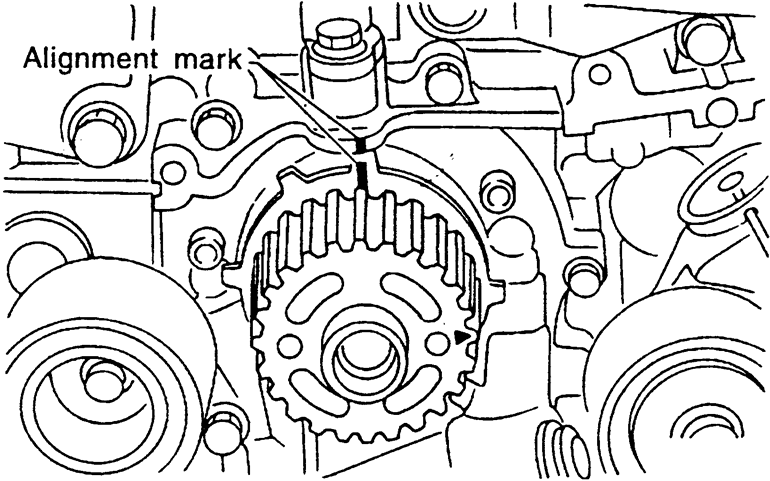
    1. Using a Subaru tool No. ST-499987500 Crankshaft Socket, or equivalent, installed on the crankshaft sprocket, rotate the crankshaft until the crankshaft sprocket, left-hand exhaust camshaft sprocket, left-hand intake camshaft sprocket, right-hand intake camshaft sprocket and right-hand exhaust camshaft sprocket timing mark notches are aligned with the respective marks on the belt cover and engine block.

      Fig. 4: On models equipped with a manual transmission, loosen the 2 timing belt guide bolts and separate the guide from the engine block — Subaru Forester 2.5L DOHC engine

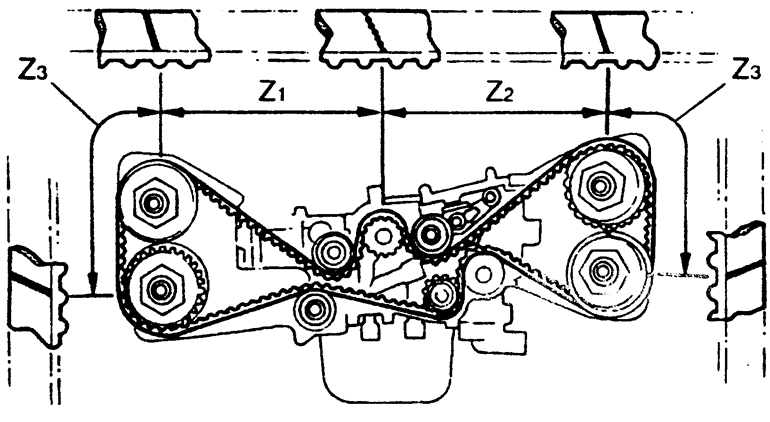
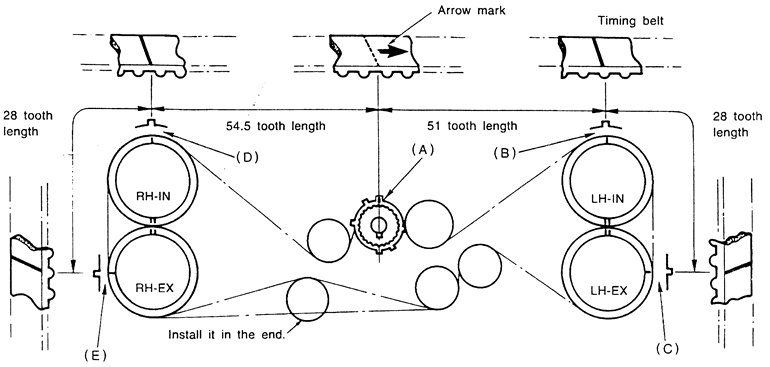
      Fig. 5: If the original marks on the timing belt are worn or faded, make new alignment marks in the positions indicated — Subaru Forester 2.5L DOHC engine

    2. Make alignment and/or arrow marks on the timing belt in relation to the sprockets as indicated in the accompanying illustration.
      • Z1: 54.5 tooth length
      • Z2: 51 tooth length
      • Z3: 28 tooth length
  4. Loosen the center bolt from the timing belt idler pulley, then remove the idler pulley from the engine block.

    WARNING
    After removing the timing belt, DO NOT rotate the camshafts. Damage to the valves may occur.

  5. Carefully remove the timing belt from all of the sprockets.

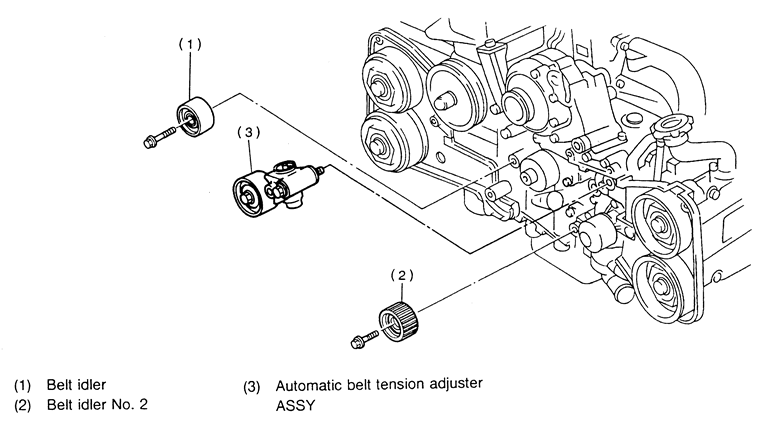
    Fig. 6: It is necessary to remove the automatic adjuster assembly and reset the pushrod for timing belt installation — Subaru Forester 2.5L DOHC engine

  6. Remove the automatic belt tension adjuster assembly as follows:
    1. Remove the 2 timing belt idler pulleys, as indicated in the accompanying illustration.
    2. Loosen the automatic tension adjuster assembly mounting bolts, then separate the adjuster assembly from the engine block.

      To install:

      WARNING
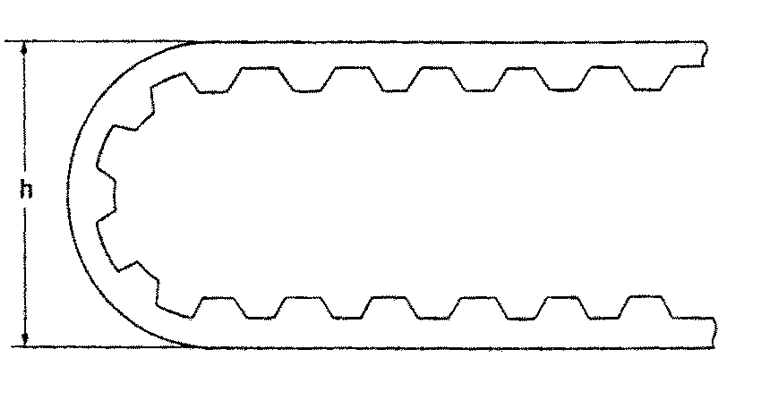
      Do not allow oil, grease, or coolant to come in contact with the timing belt. If this occurs, quickly and thoroughly remove all traces of the compound. Also, never bend the timing belt sharply; the minimum bending radius is 2.36 in. (60mm).

      Fig. 7: Never bend the timing belt into a radius tighter than 2.36 in./60mm (h), otherwise it will be damaged beyond use — Subaru Forester 2.5L DOHC engine

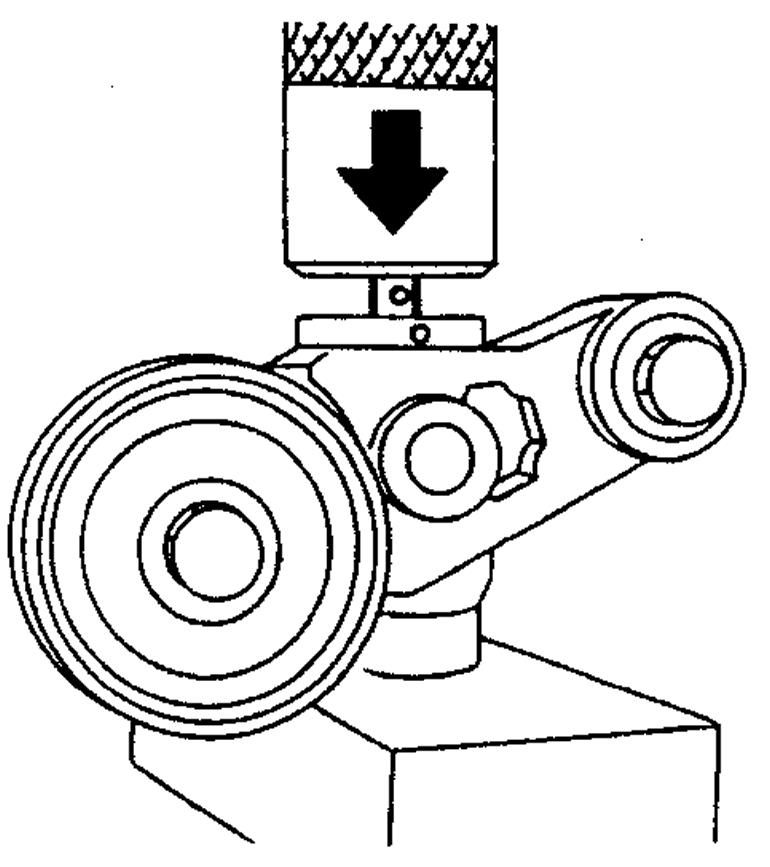
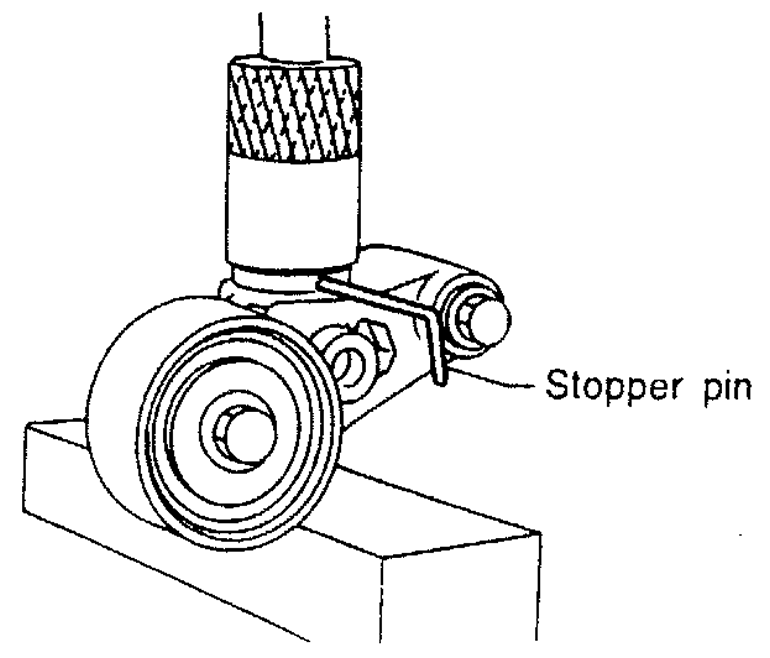
      Fig. 8: Use a vertical press to push the adjuster rod into its housing until it is flush with the assembly's outer surface . . . — Subaru Forester 2.5L DOHC engine

      Fig. 9: . . . then insert a 0.08 in. (2mm) diameter pin or Allen wrench into the housing and rod holes to hold it in position — Subaru Forester 2.5L DOHC engine

  7. Inspect the camshaft and crankshaft sprocket teeth for abnormal or excessive wear or scratches. Ensure there is no free-play between the sprocket and the key. Inspect the crankshaft sprocket sensor notch for damage or contamination with debris or dirt.

    NOTE: When preparing the automatic tension adjuster assembly for installation, adhere to the following points:

  8. Prepare the automatic timing belt tension adjuster assembly for installation as follows:
    1. Position the adjuster assembly in a vertical press.
    2. Slowly depress the adjuster rod with a force of 66 lbs. (30 kg) until the hole in the rod is aligned with the hole in the adjuster cylinder housing.
    3. Insert a 0.08 in. (2mm) diameter stopper pin or Allen wrench through the hole in the cylinder housing and rod, then slowly release the press force from the adjuster rod.
  9. Install the adjuster assembly onto the engine block.
  10. Install timing belt idler pulley No. 2 on the engine block.
  11. Install the timing belt idler pulley No. 1 on the engine block.
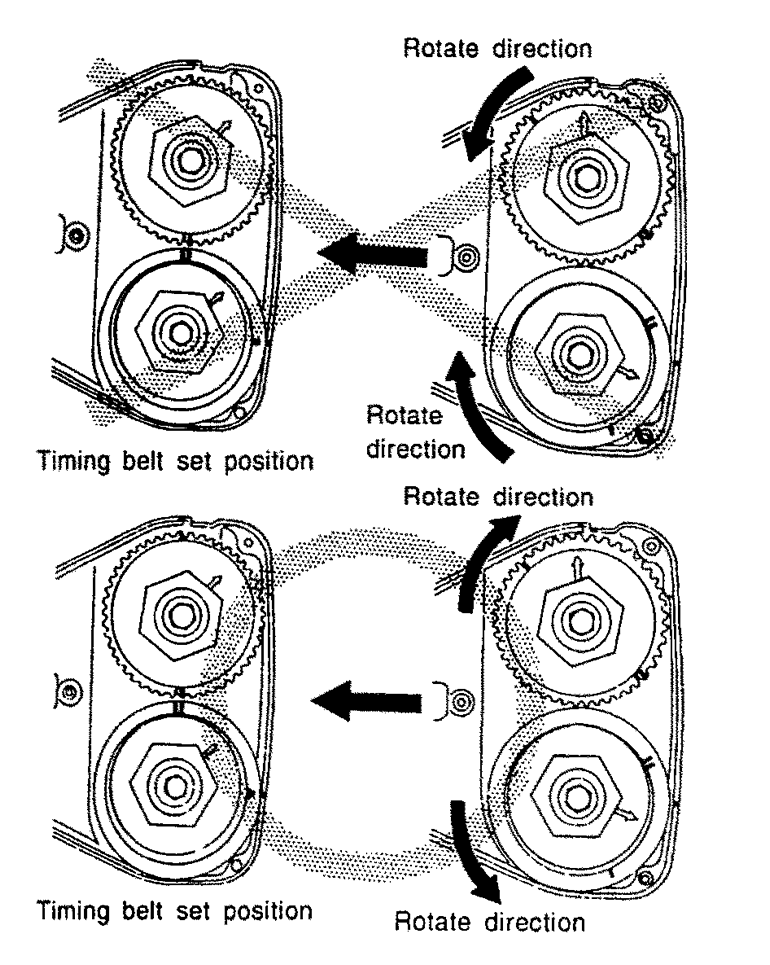
  12. If the camshaft and crankshaft timing marks are no longer aligned, perform the following:
    1. Position the crankshaft sprocket so that its mark is aligned with the mark on the oil pump cover on the engine block.

      Fig. 10: If the camshaft sprockets are no longer aligned, rotate the crankshaft sprocket until the marks are aligned . . . — Subaru Forester 2.5L DOHC engine

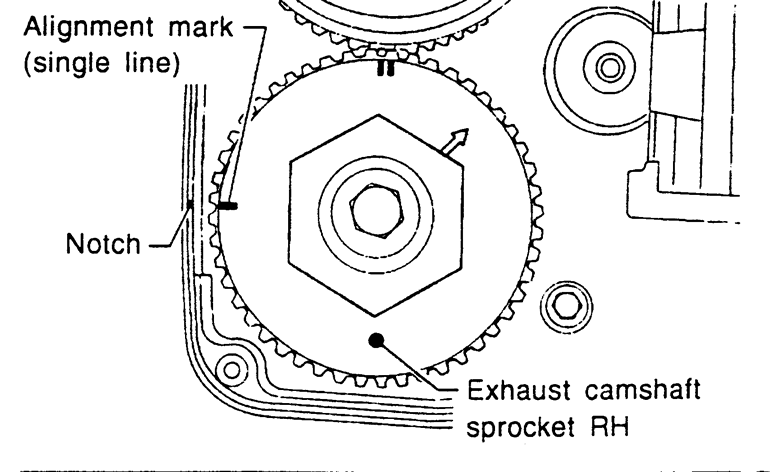
      Fig. 11: . . . then turn the right-hand exhaust camshaft until the single line mark is aligned with the notch in the belt cover — Subaru Forester 2.5L DOHC engine

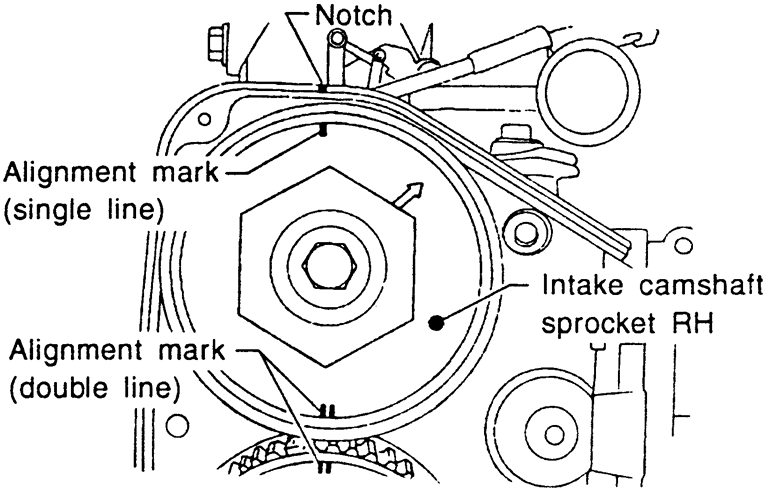
      Fig. 12: Spin the right-hand intake camshaft sprocket so that the single line mark is aligned with the notch in the belt cover — at this point, the double line marks on both right-hand camshaft sprockets must be aligned — Subaru Forester 2.5L DOHC engine

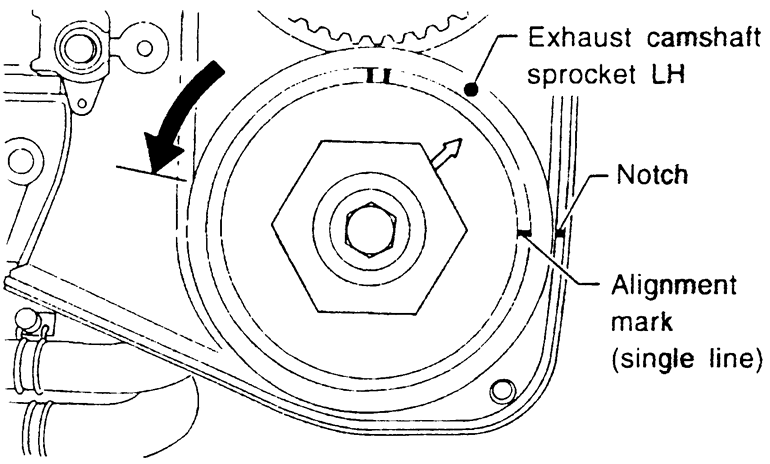
      Fig. 13: Rotate the left-hand exhaust camshaft until the single line mark is aligned with the notch in the belt cover . . . — Subaru Forester 2.5L DOHC engine

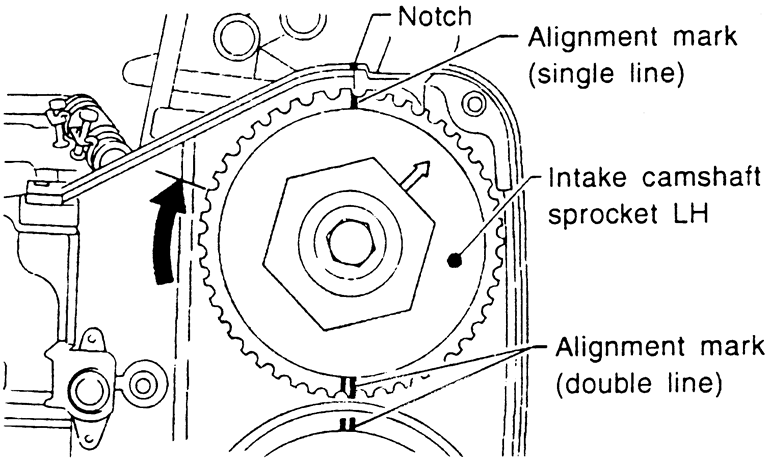
      Fig. 14: . . . then align the single line mark on the left-hand intake sprocket with the belt cover notch — Subaru Forester 2.5L DOHC engine

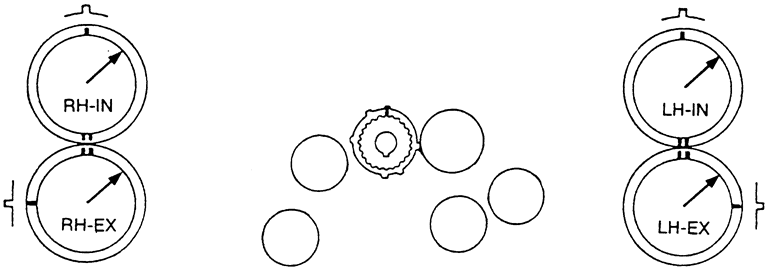
      Fig. 15: After orienting all 5 sprockets, the alignment marks should be positioned as shown — Subaru Forester 2.5L DOHC engine

    2. Align the single line mark on the right-hand exhaust camshaft sprocket with the notch on the belt cover.
    3. Rotate the right-hand intake camshaft so that the single line mark is aligned with the notch on the belt cover.

      NOTE: At this point, the double line marks on both right-hand camshaft sprockets should be aligned.

    4. Turn the left-hand exhaust (lower) camshaft counterclockwise (as viewed from the front of the engine) until the single line mark is aligned with the notch on the belt cover.
    5. Position the single line mark on the left-hand intake camshaft sprocket so that it is aligned with the notch on the belt cover. When rotating the camshaft, do so only in a clockwise direction (as viewed from the front of the engine).

      NOTE: At this point, the double line marks on both left-hand camshaft sprockets should be aligned.

    6. Ensure the timing marks are aligned as shown in the accompanying illustration. If they are not, repeat Substeps 12a through 12e until they are properly aligned.
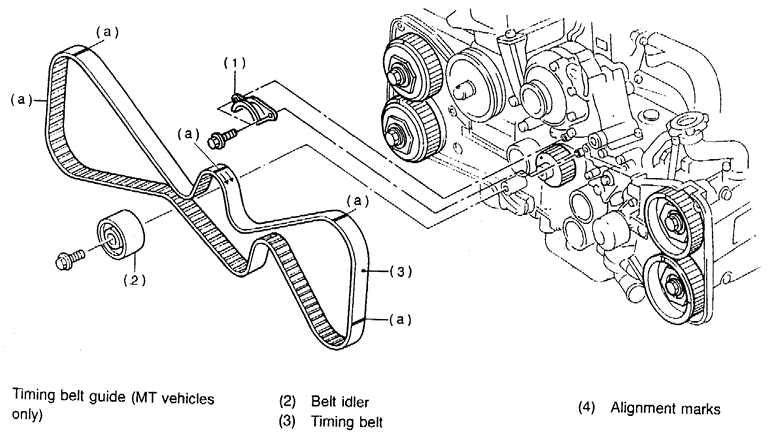
  13. Install the timing belt around the camshaft, crankshaft and idler pulleys so that the positioning marks on the timing belt are aligned with the marks on the sprockets as follows:
    1. Position the timing belt on the crankshaft sprocket so that the marks are aligned.
    2. Route the belt down and under the left-hand, upper idler pulley, then up and around the left-hand intake camshaft sprocket, ensuring the camshaft sprocket mark is aligned with the mark on the belt.
    3. Route the belt down and around the left-hand exhaust camshaft sprocket, making sure the marks are properly aligned, then up and over the first lower idler pulley and down and around the second lower idler pulley.

      Fig. 16: When installing the timing belt, be sure to route it in the proper order (a through e), and ensure that all of the matchmarks are properly aligned — Subaru Forester 2.5L DOHC engine

    4. While holding the timing belt on the inner, left-hand, lower idler pulley, route the other side of the timing belt (from the crankshaft sprocket) down and under the right-hand upper idler pulley.
    5. Route the timing belt up and around the right-hand intake camshaft sprocket so that the belt and sprocket marks are aligned.
    6. Position the belt down and around the right-hand exhaust camshaft sprocket, ensuring the positioning marks are aligned.
  14. Install the right-hand lower idler pulley so that the timing belt is routed over the top side of it.

    NOTE: Once the belt is completely installed on all of the pulleys and sprockets, ensure that the positioning marks are still all aligned.

  15. After ensuring all of the marks are still aligned, use a pair of pliers to withdraw the stopper pin or Allen wrench from the adjuster assembly housing.
  16. On models with manual transmissions, perform the following:
    1. Install the timing belt guide by temporarily tightening the mounting bolts.
    2. Position the timing belt guide so that there is 0.019–0.059 in. (0.5–1.5mm) clearance between the timing belt and the belt guide.

      Fig. 17: On models equipped with manual transmissions, ensure the timing belt-to-guide clearance (arrows) is correct before tightening the mounting bolts — Subaru Forester 2.5L DOHC engine

    3. Tighten the guide mounting bolts securely, then double check the guide clearance.
  17. Install the timing belt covers and all remaining engine components.

Previous Next