While testing the performance of the starter, it is important to maintain a battery with an adequate state of charge and specified capacity rating. The starter should be checked for the following three items:
- No-load test - Measure the maximum rotating speed and current under a no-load state.
- Load test - Measure the magnitude of current needed to generate the specified torque and rotating speed
- Stall test - Measure the torque and current when the armature is locked
WARNING
Performing the starter performance tests without proper bench test equipment can cause serious injury or impairment, please consult a professional if you are not sure!
| Performance test 1

|
- Complete the following steps to perform the Starter Unloaded test:
- Using the specified battery, measure its rotating speed and current
- Specification: Voltage/Current 11 V / 90 A at 3,000 rpm
- Complete the following steps to perform the Starter Loaded test:
- Using test bench which is able to apply brake load to starter, measure torque value and rotating speed under the specified voltage and current conditions while controlling braking force applied to starter, then change engagement position of overrunning clutch and make sure it is not slipping.
- Load test specification: Voltage/Load 8 V / 9.8 N.m (7.2 ft-lb) Current/Speed 280 A , or less / 900 rpm , or more Voltage/Load 8 V / 13.7 N.m (10.1 ft-lb) Current/Speed 370 A , or less / 880 rpm , or more
- To perform the Stall test, complete the following:
- Using the same test equipment used for load test, apply brake to lock starter armature. Then measure voltage, current, and torque values
- Measured value specifications: Voltage/Current 5 V / 800 A , or less Torque 27.5 N.m (20.3 ft-lb) , or more Voltage/Current 5 V / 1,050 A , or less Torque 27.5 N.m (20.3 ft-lb) , or more
Note: Low rotating speed or excessive current during no-load test may be attributable to high rotating resistance of starter due to improper assembling. Small current and no torque during stall test may be attributable to excessive contact resistance between brush and commutator; whereas, normal current and insufficient torque may be attributable to shorted commutator or poor insulation. Starter can be considered normal if it passes no-load and stall tests; therefore, load test may be omitted.
CAUTION
The following magnetic switch tests should be performed with specified voltage applied.
Each test should be conducted within 3 to 5 seconds. Power to be furnished should be one-half the rated voltage.
| Pinion test
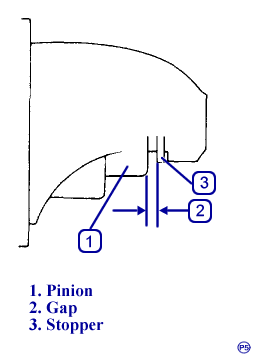
|
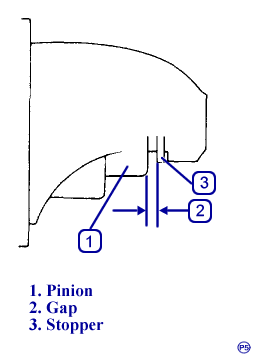
- After connecting two battery negative leads onto magnetic switch body and terminal C respectively, connect battery positive lead onto terminal 50 and pinion should extend when lead connections are made.
- After disconnecting lead from terminal C with pinion extended pinion should remain extended.
- After connecting two battery negative leads onto terminal 50 and onto switch body respectively, connect battery positive lead onto terminal C and then disconnect lead from terminal 50, pinion should return immediately.